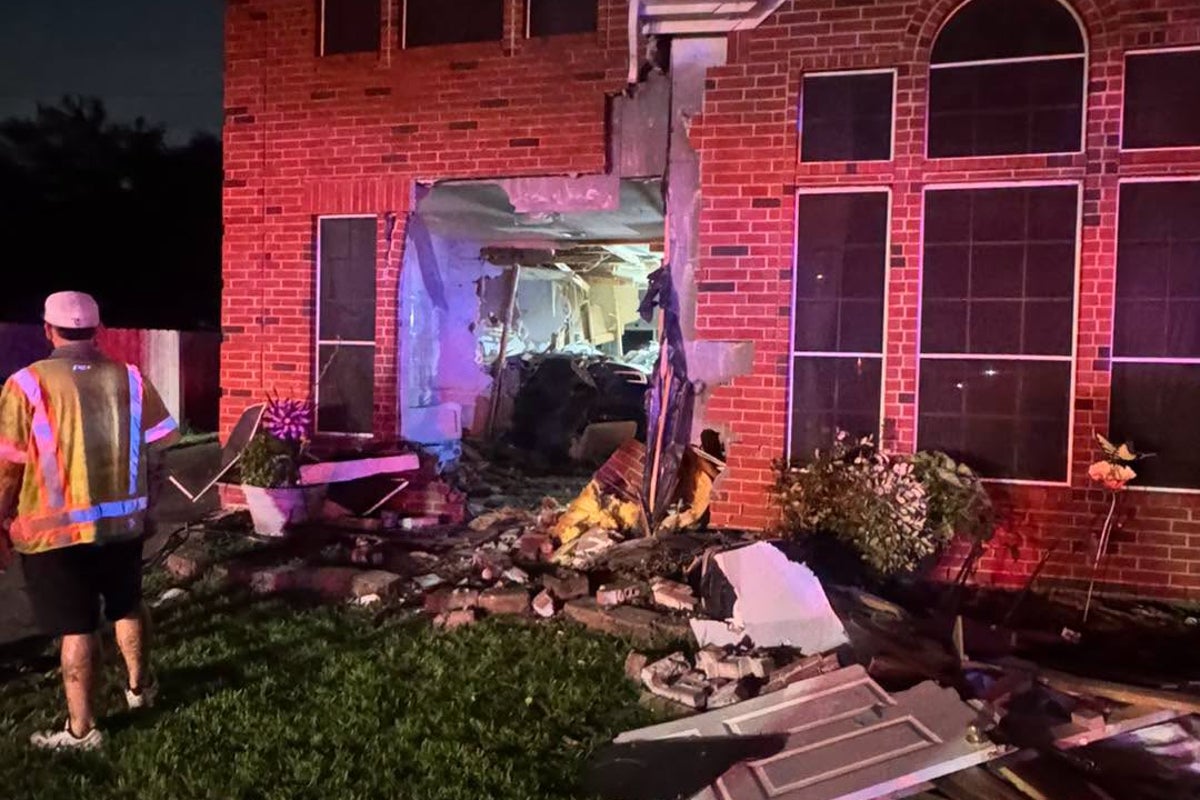
A white Tesla Model 3 careened down Rose Hollow Lane in Katy, Texas, at a speed witnesses estimated between 60 and 70 miles per hour. It did not slow down for the curve. Instead, the vehicle jumped the curb, crossed a residential lawn, and pulverized the brick facade of a suburban home. Inside, 76-year-old Martha Avila Mantilla was standing in the front room, completely unaware that a two-ton electric sedan was about to end her life. The aftermath resembled a bomb blast, with the vehicle buried deep inside the structure under splintered beams and shattered plaster. The driver, Michael Butler, emerged sober, cooperative, and quick to deliver a statement that has become a recurring nightmare for federal safety officials. He claimed the vehicle was operating on Autopilot.
The federal response was immediate. The National Highway Traffic Safety Administration launched a special crash investigation into the incident, adding to a burgeoning folder of federal probes into the automaker. This tragedy cuts through the tech-industry theater to expose the critical flaw in the consumer vehicle market. Drivers are buying a regular passenger vehicle but treating it like an uncrewed locomotive, operating under the assumption that the software is far more capable than its engineering allows.
The Illusion of Autonomy in Suburban America
The Texas crash highlights the deadly delta between what driver-assistance software can do and what users believe it can do. When a car travels at highway speeds down a quiet residential street, missing a fundamental turn so aggressively that it penetrates a brick house, it points to a total breakdown in situational awareness. If Autopilot was active, the system failed to recognize a basic dead end or curve. If it was not active, the driver had checked out so thoroughly that he failed to apply the brakes until it was too late.
The underlying problem remains the human interface. When a vehicle handles 95 percent of routine driving tasks without incident, the human operator naturally experiences cognitive drift. Brains are poorly wired to monitor an automation system that almost always works. A driver stops looking at the road and starts looking at a phone, or simply stares off into space, confident that the machine will handle the remaining five percent.
Tesla utilizes a vision-only system, relying entirely on optical cameras rather than radar or lidar sensors. Cameras see the world in two dimensions and rely on computational neural networks to infer depth and velocity. This method is cheaper to manufacture and easier to scale. It also introduces significant vulnerabilities when confronted with unmapped changes, unusual lighting, or sharp residential turns that do not match highway geometry.
The Mounting Federal Ledger
Washington is running out of patience. The special crash investigation in Texas is not an isolated file. It lands directly on top of an active Engineering Analysis by federal regulators covering roughly 3.2 million vehicles manufactured between 2017 and 2026. This is the final administrative step before the government can legally compel a safety recall.
NHTSA Automated Driving System Investigations (Tesla Inc.)
----------------------------------------------------------
Total Special Investigations (Past Decade): 46
Fatalities Logged in Special Probes:       12+
Active Vehicles Under Engineering Review:   3.2 Million
The regulatory framework has lagged behind Silicon Valley deployment strategies for a decade. The federal agency historically relied on voluntary compliance and retrospective data analysis, allowing automakers to test beta software on public roads using untrained consumers as test subjects. That era of regulatory deference is ending. The physical reality of a vehicle killing a citizen inside her own living room changes the political calculation for regulators who have faced intense pressure from consumer advocacy groups to clamp down on unproven automation.
The data recorder pulled from the wreckage in Katy will reveal the exact sequence of events. It will show the precise microsecond the driver or the software applied torque to the steering wheel, whether the accelerator pedal was pressed in error, and if the vehicle issued any auditory warnings before impact. Regardless of what the onboard logs show, the branding has already done its damage. Calling a Level 2 driver-assistance system Autopilot creates an implicit promise that the machinery cannot keep.
The High Stakes of the Autonomous Pivot
The technical pressure comes at a moment of profound corporate restructuring. Vehicle delivery numbers have fluctuated wildly, and consumer interest has cooled amid shifting political realities and a highly competitive global electric vehicle market. The corporate strategy has explicitly pivoted away from being viewed as a mere manufacturing entity and toward being valued as an artificial intelligence powerhouse.
The financial valuation of the enterprise relies almost entirely on the promise of an uncrewed robotaxi fleet. To maintain investor confidence, the narrative must insist that full autonomy is just around the corner. If the public or regulators lose faith in the current suite of driver-assist features, the economic foundation of this multi-billion-dollar valuation begins to erode.
This creates an environment where software updates are pushed rapidly, sometimes altering how a vehicle behaves overnight. Owners wake up to a car that handles steering or braking differently than it did the previous afternoon. This continuous iteration turns public infrastructure into a live laboratory, where the costs of a system failure are borne not by the engineers who wrote the code, but by regular citizens who happen to be standing on the other side of a living room wall.
The Engineering Limits of Pure Vision
The technical community remains deeply split over the choice to abandon radar and lidar. Lidar emits light pulses to measure distances with millimeter precision, creating a reliable three-dimensional map of the environment regardless of shadows or glare. A camera-only vehicle must guess what it sees based on pixels.
When a vehicle encounters an unexpected situation, a vision-only system can suffer from computational hesitation. In those few lost fractions of a second, a car traveling at high speed covers a massive amount of ground. The vehicle cannot negotiate a tight suburban turn if the neural network misinterprets the curb line as a flat shadow or a change in asphalt color.
Sensor Capabilities: Vision vs. Multi-Modal Systems
+-----------------------+---------------+-----------------------+
| Feature               | Vision-Only   | Lidar + Radar + Cam   |
+-----------------------+---------------+-----------------------+
| Low-Light Precision   | Variable      | High                  |
| Depth Measurement     | Estimated     | Direct / Exact        |
| Redundancy            | Low           | High                  |
| Manufacturing Cost    | Minimal       | Substantial           |
+-----------------------+---------------+-----------------------+
The system requires constant driver interaction, enforcing this via torque sensors on the steering wheel or interior cameras monitoring eye movement. These safeguards are notoriously easy to bypass or ignore. Drivers quickly learn exactly how little pressure they need to apply to keep the car from chiming, allowing their attention to wander even further from the road. The safety loop breaks down because the machine assumes a human is ready to take over in a millisecond, while the human assumes the machine has everything under control.
Moving Past the Marketing Concept
The path forward requires a stark decoupling of marketing terminology from engineering realities. As long as advanced driver-assistance features are sold using words that imply self-driving capabilities, drivers will continue to treat them as such. The regulatory push will likely focus on enforcing stricter driver-monitoring systems that disable the software immediately if a driver's eyes leave the road for more than a brief moment.
The financial consequences of a mandated recall on 3.2 million vehicles would be severe, forcing a complete overhaul of how the software interfaces with the consumer. The ultimate cost of the current approach is measured in human lives, not stock ticks. Until the software can definitively handle the chaotic variability of a standard American neighborhood without requiring a human safety net, the responsibility remains entirely on the person behind the wheel, regardless of what the badge on the trunk promises.