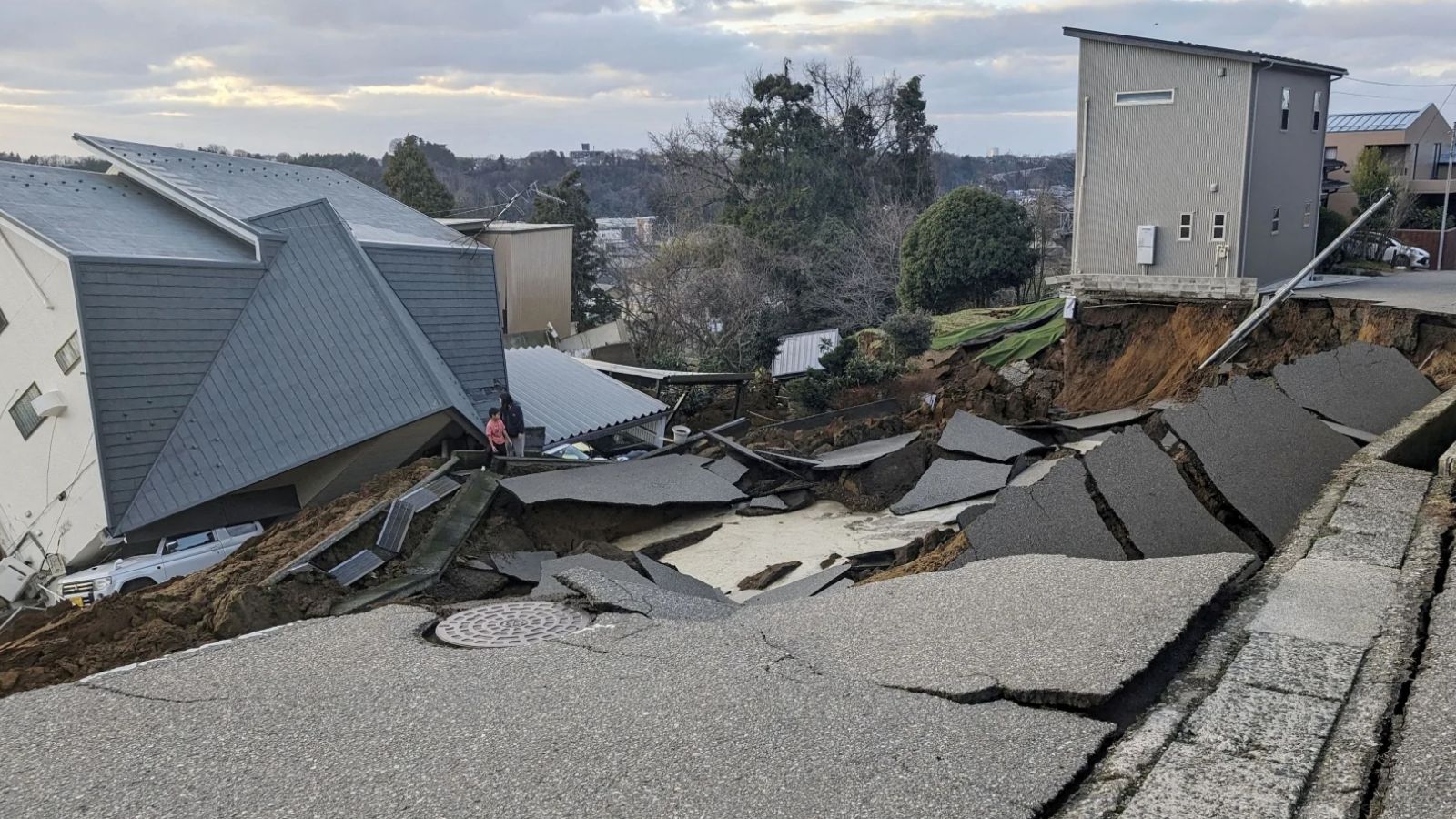
At 1:04 a.m. on Sunday, November 8, 2026, central Japan woke up to violent shaking. A magnitude 5.7 earthquake tore through the region, injuring at least 22 people, shattering storefront glass, and forcing Shinkansen bullet trains to crawl along their tracks.
Most headlines treat a 5.7 tremor in Japan as routine news. They're wrong. While Japan sits on the Pacific Ring of Fire and experiences seismic activity constantly, an early-morning jolt at a relatively shallow depth hits differently. People are asleep. Panic sets in fast. And as the injury reports from Aichi and Shizuoka prefectures prove, human instinct during an earthquake often causes more harm than the shaking itself.
The Exact Timeline and Epicenter Breakdown
When an earthquake strikes in the middle of the night, confusion spreads faster than seismic waves. Here's how the November 8 event actually unfolded based on official data from the Japan Meteorological Agency (JMA) and the U.S. Geological Survey (USGS).
The tremor originated roughly 40 kilometers (about 25 miles) beneath Shizuoka Prefecture. The JMA registered the preliminary magnitude at 5.7, while the USGS recorded it slightly lower at 5.5. Those numbers might sound moderate compared to massive megathrust quakes, yet depth and local geology dictate what people actually feel on the ground.
Even though the epicenter sat beneath Shizuoka, neighboring Aichi Prefecture took the brunt of the violent shaking. Seismic assessments pinpointed the strongest intensity in areas like Chita and Toyohashi. The shockwaves didn't stop there. Residents felt the tremor across a wide swath of central Japan:
- Hamamatsu, a major industrial hub in Shizuoka
- The historic cities of Kyoto and Nara
- Gifu Prefecture
- Yamanashi Prefecture, right in the shadow of Mount Fuji
Tokyo, sitting farther east, escaped the shaking completely. If you were in the capital at 1:04 a.m., you slept right through it.
Why 22 People Got Hurt in a Moderate Quake
Japan builds some of the most earthquake-resilient structures on the planet. Modern buildings sway rather than snap. So why did 22 people end up injured during a magnitude 5.7 event?
Look at the injury reports. Local media and Associated Press dispatches confirmed that many of the victims weren't struck by collapsing roofs. They fell down stairs while trying to bolt out of buildings in the dark.
I've studied disaster response patterns for years, and this is the single biggest mistake people make when the ground starts moving. Your brain screams at you to run outside. At 1:04 a.m., you're groggy, disoriented, and likely barefoot. Running down a staircase while the floor is shifting beneath your feet is a recipe for broken bones and head injuries.
Outside, the hazards looked just as sharp. Television footage from Toyohashi and surrounding towns showed shattered glass covering the sidewalks. Storefront windows—including large panes at a local car dealership—gave way under the sudden lateral stress. Inside a local bookstore, shelves dumped hundreds of books into chaotic mounds across the aisles.
If you run out of a building during a quake, you step directly into the danger zone of falling glass and facade debris. Staying put under sturdy cover until the shaking stops isn't passive—it's survival.
Did This Trigger the Nankai Trough Megaquake
Whenever a strong earthquake rattles Shizuoka or Aichi, one terrifying question immediately dominates Japanese social media and newsrooms. Is this the foreshock to the Nankai Trough megaquake?
Let's look at the science instead of the panic. The Nankai Trough is an underwater subduction zone running off Japan's central and southwestern coast, where the Philippine Sea Plate slides beneath the Eurasian Plate. Seismologists have warned for decades that a massive rupture here could trigger catastrophic shaking and tsunamis.
Following the November 8 tremor, JMA officials directly addressed this fear. Seismologist Ebita noted during official briefings that instruments detected no unusual changes or abnormal strain accumulation along the Nankai Trough plate boundary.
That's reassuring, yet it doesn't mean the region is completely off the hook. The JMA explicitly warned residents across central Japan to stay on high alert for strong aftershocks over the following week, specifically highlighting the first two to three days as the highest-risk window. Smaller aftershocks began rippling through the area almost immediately after the main 1:04 a.m. jolt.
Separately, a magnitude 4.3 earthquake struck Kumamoto Prefecture in southwestern Japan later that same Sunday morning. No serious injuries or major damage came out of Kumamoto, and seismologists treat these regional events separately. Still, having two distinct regions shake within hours serves as a blunt reminder of how active the crust beneath Japan really is.
How Japan's Infrastructure Handled the Shock
You can judge a country's disaster readiness by how fast its critical transit systems react. When the 5.7 quake hit at 1:04 a.m., Japan's rail operators didn't wait for visible damage reports.
Shinkansen bullet trains operating across the affected corridors immediately dropped their speeds as a strict precautionary measure. High-speed rail networks rely on dense grids of seismometers that detect primary P-waves—the fast, less destructive waves that arrive seconds before the damaging S-waves. Even slight track misalignments can derail a train moving at 300 kilometers per hour, so slowing down the fleet and inspecting the rails before resuming full speed is standard protocol.
Beyond the rails, the difference between how the JMA and USGS measure earthquakes also confuses international readers. You probably noticed the JMA called it a 5.7 while the USGS listed a 5.5. Neither agency got it wrong. They simply use different mathematical formulas and local sensor networks calibrated to regional geology. The JMA's local network sits directly on top of the fault zones, allowing it to measure short-period seismic waves with extreme precision, while the USGS relies on global teleseismic data to calculate moment magnitude.
What You Need to Do If You Live in or Visit a Quake Zone
Reading about an earthquake in central Japan only helps if you actually apply the lessons before the ground shakes under your own feet. Whether you're a resident in Aichi or a traveler booking a trip to Kyoto and Mount Fuji, preparation takes ten minutes and prevents the exact injuries seen on November 8.
Stop relying on luck and set up your immediate environment today:
- Keep sturdy shoes next to your bed. If a quake hits at 1:04 a.m., broken glass from windows or picture frames will cover your floor. Put a pair of thick-soled sneakers or slip-on walking shoes right beside your mattress—or tuck them inside a drawstring bag tied to your bedframe—so you don't shred your feet trying to reach safety.
- Never run down stairs during shaking. Drop to your hands and knees, take cover under a solid wooden table or desk, and hold onto the legs until the movement completely stops. If you're in bed when it starts, stay there and cover your head and neck with a heavy pillow.
- Anchor tall furniture and clear exit paths. That bookstore in central Japan lost its entire inventory because shelves dump their contents forward. Secure bookcases to wall studs with L-brackets, keep heavy items on bottom shelves, and never stack boxes in hallways.
- Stage a grab-and-go kit. Keep at least three days' worth of bottled water, non-perishable food, a flashlight, and a charged power bank in an accessible spot. Download the official JMA-linked safety apps like Yurekuru Call or Safety tips before traveling to Japan so you get English push alerts seconds before S-waves arrive.
Earthquakes don't send calendar invites, and a magnitude 5.7 tremor is more than strong enough to turn an ordinary bedroom or retail street into a hazard zone. Put your shoes by the bed tonight, bolt down your heavy shelves this weekend, and train yourself to drop and cover instead of running for the stairs.