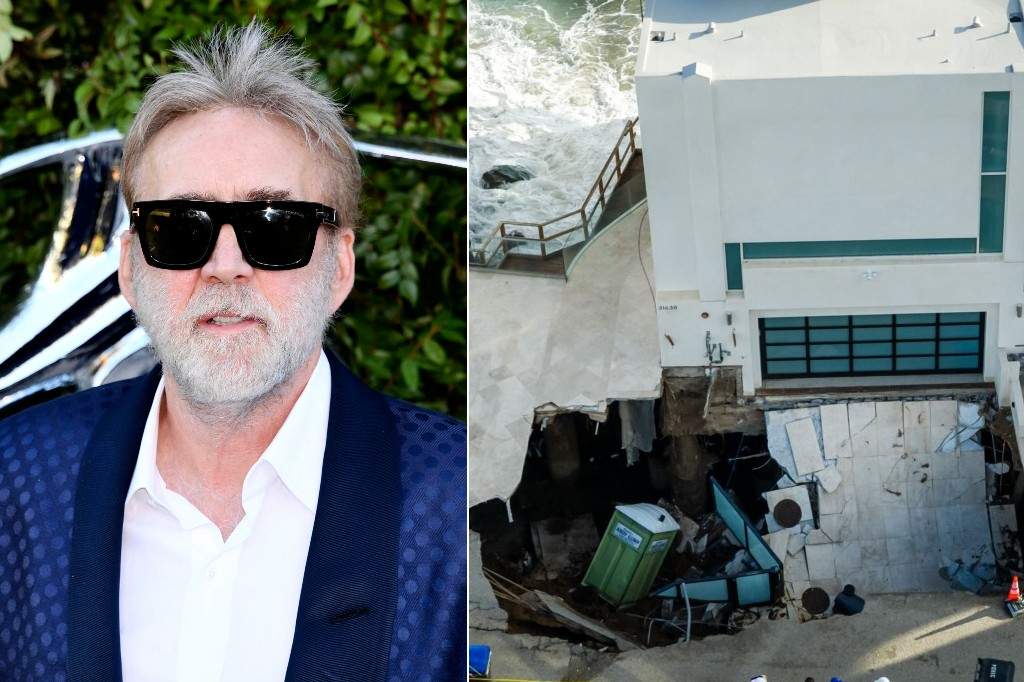
Hollywood wealth doesn't protect your foundation when the earth literally opens up beneath your living room.
Nicolas Cage recently admitted he feels "a little bit homeless" after a massive sinkhole severely damaged his property, forcing the Oscar winner out of his primary residence. It sounds like a bizarre plot from one of his mid-2000s adventure movies, right? Yet for Cage, this geological nightmare is completely real, messy, and surprisingly relatable if you've ever dealt with catastrophic home repairs.
Most celebrity real estate stories focus on infinity pools, panic rooms, or multi-million-dollar flips in Beverly Hills. This one is different. It pulls back the curtain on what actually happens when nature wrecks a luxury estate and reminds everyone—famous or not—that standard homeowner insurance policies almost never cover sudden ground collapse.
Why Nicolas Cage Called Himself A Little Bit Homeless
During recent press appearances, Cage opened up about his current living situation with his trademark dry humor. He explained that a sinkhole opened up on his property, compromising the structure and making the house unlivable while crews figure out how to stabilize the ground.
He isn't sleeping on a park bench. Let's be clear about that.
When a multi-millionaire actor says he's "a little bit homeless," he means he's bouncing between temporary rentals, hotel suites, and other properties while engineers pump concrete into the dirt beneath his actual home. Still, anyone who's been displaced by a burst pipe, a house fire, or foundation failure knows that specific brand of exhaustion. Living out of suitcases sucks, regardless of your net worth.
Cage has always had a notoriously complicated relationship with real estate. Back in the late 2000s, he famously owned more than a dozen extravagant properties around the globe—including castles in Europe, a haunted mansion in New Orleans, and a private island in the Bahamas—before financial troubles forced him to liquidate almost everything. Over the past decade, he rebuilt his career, paid off his debts, and settled into a much quieter, grounded lifestyle in Nevada.
Having his primary sanctuary swallowed by a sinkhole feels like a cruel joke from the universe.
The Reality of Sinkhole Damage on High-End Properties
You can throw all the money in the world at custom marble countertops and imported timber, but dirt doesn't care about your bank balance.
Sinkholes happen when groundwater dissolves soluble bedrock—like limestone, gypsum, or salt beds—creating hidden underground caverns. Eventually, the roof of that cavern can no longer support the weight of the soil and whatever building sits on top of it. Collapse can happen gradually over months, or the ground can drop ten feet in ten seconds.
In desert and semi-arid regions like Nevada and parts of California, heavy flash flooding after long droughts triggers soil erosion fast. Water rushes underground, washes away supporting sediment, and leaves an empty void right under a concrete slab.
Fixing a sinkhole isn't like patching drywall. You don't just fill the hole with dirt and call it a day.
What Remediation Actually Takes
When a sinkhole hits a residential structure, geotechnical engineers have to step in before a single contractor swings a hammer. Here is what the recovery process actually looks like on the ground:
- Subsurface mapping: Engineers use ground-penetrating radar and bore testing to find out how deep the void goes and whether neighboring sections of the lot are about to drop next.
- Compaction grouting: Crews drill steel pipes deep into the earth and pump thick, low-mobility concrete grout into the voids to compact the loose soil and create solid pillars under the foundation.
- Underpinning: Hydraulic steel piers are driven down to stable bedrock to physically lift and re-level the sunken sections of the house.
- Utility rerouting: Broken sewer lines, gas pipes, and electrical conduits buried in the yard have to be ripped out and replaced entirely.
This process takes months. Sometimes years. During compaction grouting, heavy machinery shakes the entire property, making it unsafe and unbearably loud to stay inside. That's the exact limbo Cage is stuck in right now.
The Insurance Trap That Catches Homeowners Off Guard
Here is the part most people miss when they read headlines about celebrity property disasters. Even if you pay tens of thousands of dollars a year for top-tier homeowner insurance, standard policies almost universally exclude earth movement.
That includes earthquakes, landslides, mudflows, and sinkholes.
According to the Insurance Information Institute, only a handful of states—most notably Florida and Tennessee—require insurers to offer catastrophic ground cover collapse or optional sinkhole endorsements. Everywhere else, if a sinkhole swallows your driveway or cracks your foundation in half, your insurance adjuster will politely point to the "earth movement" exclusion clause and deny the claim.
Think about that for a second. You can insure a Picasso painting or a vintage Ferrari against almost anything, yet the actual dirt holding up your house is often a massive financial blind spot.
Why Luxury Estates Face Higher Risks
Large custom homes actually suffer worse damage during ground shifts than modest tract houses. Heavy stone facades, sprawling single-story footprints, swimming pools, and massive retaining walls put tremendous downward pressure on the soil.
When soil shifts even two inches under a 10,000-square-foot home, the structural stress fractures load-bearing beams, shatters floor-to-ceiling glass, and warps custom door frames so badly they won't close. Repair bills easily cross into the seven-figure range before you even touch interior finishes.
Nicolas Cage and His Long History With Unpredictable Real Estate
To understand why fans reacted so strongly to Cage's comment, you have to look at his personal history. Few actors in Hollywood have been as open about their financial highs and lows.
In the 1990s and early 2000s, Cage earned upwards of $20 million per film and spent it with wild enthusiasm. He bought the historic LaLaurie Mansion in New Orleans, Midford Castle in England, Schloss Neidstein in Germany, and waterfront estates in Newport Beach and Malibu. When the 2008 housing market crashed, property values plummeted right as the IRS hit him with massive tax liens.
Cage refused to file for bankruptcy. Instead, he took every acting role offered to him—sometimes four or five movies a year—until he cleared every dollar of debt.
In recent years, critical hits like Pig, The Unbearable Weight of Massive Talent, and Longlegs reminded audiences why he's one of the most compelling actors of his generation. He had finally reached a peaceful chapter in his life, living away from the Los Angeles paparazzi grind with his wife, Riko Shibata, and their young daughter.
Being forced out of his home by a literal hole in the ground is just the latest bizarre chapter in a life that never seems to follow a normal script.
Early Warning Signs Every Homeowner Should Watch For
You don't need to live in a sprawling mansion to deal with ground settlement or hidden sinkholes. Burst municipal water mains, poor yard drainage, and aging septic tanks cause localized sinkholes in ordinary suburban neighborhoods every single week.
If you own a house, pay attention to subtle shifts before they turn into an emergency:
- Doors and windows suddenly sticking: If doors that swung smoothly last month suddenly jam against the frame, your foundation is moving.
- Stair-step cracks in exterior brick or stucco: Hairline vertical cracks happen as houses age, but diagonal cracks following mortar joints signal uneven sinking.
- Circular depressions in the lawn: A sudden dip in your grass—especially near downspouts, pool equipment, or buried utility lines—often means water is washing soil away underground.
- Dying patches of vegetation: When soil collapses beneath the root zone, grass and shrubs above the void lose access to moisture and turn brown in distinct circular patterns.
- Cloudy tap water: If you use well water and it suddenly turns muddy or gritty, underground rock layers may have shifted near your water table.
What to Do If the Ground Shifts on Your Property
If you spot sudden cracks or a depression opening up in your yard, don't grab a shovel and start dumping bagged topsoil into the hole. Adding weight to an active void only accelerates the collapse and puts you in physical danger.
Keep kids and pets completely away from the area and mark off the perimeter immediately. Call your local municipal water authority first so they can check for broken underground water or sewer pipes, since utility leaks are the number one cause of sudden residential sinkholes.
Next, pull out your homeowner insurance declaration page and read the exact wording under earth movement exclusions before filing a formal claim—a denied claim still goes on your property history report and can raise your rates later. Finally, hire an independent licensed geotechnical engineer rather than a general foundation salesperson so you get an honest assessment of what is happening beneath your concrete slab.