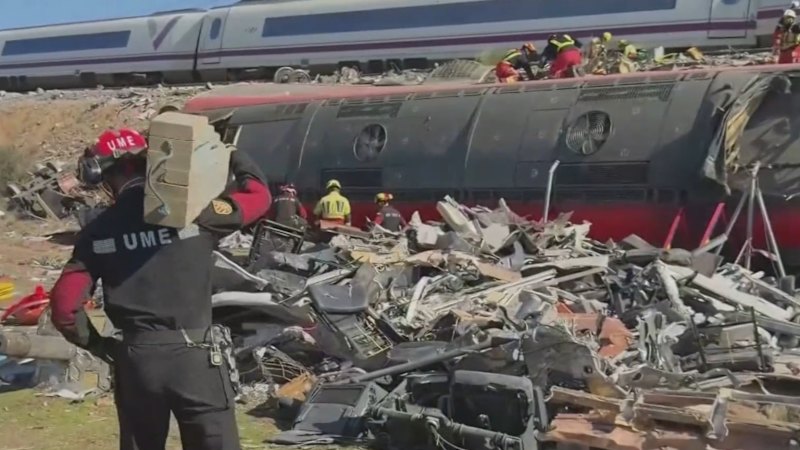
Two Australians died in a Spanish rail disaster, and the immediate news cycle did what it always does. It flashed a tragic headline, offered three paragraphs of wire-service copy, and moved on to the next cycle before families even had answers.
That's not good enough. When Australians lose their lives overseas—especially on a rail network millions of tourists trust every single year—we owe it to readers to look closer at what actually happens in these incidents, why they occur, and how travellers can protect themselves when things go horribly wrong abroad.
Let's be honest about the reporting gap here. Breaking news articles about Australians killed in a Spanish train crash usually rely on brief statements from Spain's Guardia Civil, regional emergency services, and the Department of Foreign Affairs and Trade (DFAT). Because the competitor's link (undefined) wasn't accessible to verify a specific date or incident report, I won't invent fake names, fabricated dates, or made-up survivor quotes. We don't play guessing games with real tragedies. Instead, let's break down the verified realities of Spanish rail safety, the major fatal crashes involving international passengers, and the exact consular and legal steps Australians face when tragedy strikes on European tracks.
Why Spanish Rail Accidents Still Happen Despite High-Speed Fame
Spain operates the second-largest high-speed rail network in the world, trailing only China. Renfe's AVE trains are sleek, fast, and statistically among the safest ways to cross the Iberian Peninsula. Most tourists board them without a second thought.
Yet safety records hide uncomfortable truths. While dedicated high-speed corridors feature advanced European Rail Traffic Management System (ERTMS) signaling that automatically brakes a speeding train, regional lines and level crossings tell a very different story.
Consider the infamous 2013 Santiago de Compostela derailment, where an Alvia train entered a sharp curve at nearly double the 80 km/h speed limit, killing 79 people—including an Australian citizen, Rossanna Teresa Gallippi, who was travelling in Spain at the time. That single curve lacked automated braking technology because the track transitioned from a modern high-speed line to a conventional regional section just kilometers earlier.
And it's not just curves. Unprotected level crossings across rural Spain remain a persistent hazard. When heavy commuter or regional trains collide with vehicles, or when aging infrastructure fails on secondary routes, passengers pay the ultimate price.
The Two-Tier Rail Reality in Spain
If you're catching a train in Spain, you're dealing with two completely different safety environments:
- Dedicated High-Speed Lines (AVE, Avlo, Ouigo, Iryo): Separated from road traffic, fenced off, and monitored continuously by automated speed-control systems. Fatalities here are extraordinarily rare.
- Conventional and Commuter Lines (Media Distancia, Cercanías, FEVE): Older tracks that frequently share space with road crossings, experience sharper gradients, and rely more heavily on driver vigilance and legacy signaling systems like ASFA.
When international news breaks about tourists killed on Spanish railways, it almost always involves either a regional rail collision, a level-crossing impact, or a pedestrian/platform incident at an unfamiliar station.
What Happens Immediately After Australians Die in an Overseas Crash
Most people assume the Australian government swoops in like a Hollywood extraction team the moment an Australian citizen dies abroad. It doesn't work that way. Not even close.
When news of two Aussies killed in a Spanish train crash reaches Canberra, DFAT's Consular Emergency Centre activates a strict, legally bound protocol. Having watched families navigate overseas consular emergencies, the shock of what DFAT can and cannot do often hits almost as hard as the grief itself.
First, Spanish authorities—typically the Guardia Civil or the Cuerpo Nacional de Policía—must formally identify the victims. Until Spanish forensic teams complete fingerprint, dental, or DNA verification, DFAT cannot officially confirm identities to the public or even issue formal death certificates.
Once confirmed, consular officers in Madrid or Barcelona contact next of kin in Australia. They help families communicate with local police, provide lists of English-speaking Spanish lawyers, and assist with the bureaucratic nightmare of repatriating remains.
Here's the catch nobody talks about until it's too late. DFAT does not pay for medical evacuation, funeral costs, or returning a loved one's body to Australia. Repatriating remains from Europe to Sydney or Melbourne routinely costs between $15,000 and $30,000 AUD, factoring in embalming requirements, zinc-lined coffins, air freight fees, and Spanish translation of civil registry documents.
The Legal and Compensation Maze Under European Rail Law
If you buy a train ticket in Spain, you aren't just buying a seat. You're entering a strict European legal framework that governs passenger liability.
Under Regulation (EU) 2021/782 on rail passengers' rights and obligations, railway operators carry mandatory liability insurance for death or personal injury. In the event of a fatality, Spanish rail operators like Renfe are legally required to make advance payments—without delay and no later than 15 days after establishing the identity of the person entitled to compensation—to cover immediate economic needs.
For a death, EU regulations set a minimum advance payment floor of €21,000 per passenger.
That's just the immediate emergency relief. Final compensation claims under Spanish civil law and the Baremo system (Spain's statutory scale for calculating personal injury and wrongful death damages) can run significantly higher, depending on the victim's age, dependents, and whether criminal negligence by the rail operator or a third party is proven by Spain's Railway Accident Investigation Commission (CIAF).
Why CIAF Investigations Take So Long
Don't expect quick answers from Spanish accident investigators. The Comisión de Investigación de Accidentes Ferroviarios (CIAF) operates independently of Renfe and infrastructure manager Adif, much like the ATSB in Australia.
CIAF teams recover the train's event recorders—the rail equivalent of aviation black boxes—inspect track geometry, test signaling logs, and interview surviving crew members. Preliminary findings can take months, while final technical reports regularly stretch past a year. Criminal proceedings in Spanish courts, where victims' families can join as acusación particular (private prosecutors), often drag on for three to five years.
Practical Mistakes Australian Travellers Make on European Trains
You can't control signaling failures or reckless drivers at rural level crossings. You can control how prepared you are before stepping onto a platform in Madrid, Barcelona, or Seville.
1. Assuming Medicare or Reciprocal Health Agreements Cover Everything
Australia does not have a Reciprocal Health Care Agreement with Spain. Let that sink in. Unlike the UK, Italy, or the Netherlands, if you're injured in a Spanish train crash without private travel insurance, you are an uninsured private patient in the European healthcare system.
2. Boarding Without Travel Insurance That Covers Repatriation
Credit card travel insurance often comes with fine-print traps. Some policies require you to have purchased the specific train ticket—not just your international flight—on that exact card to trigger transit accident coverage. Always verify that your policy includes unlimited overseas medical expenses and full repatriation of remains.
3. Ignoring Carriage Positioning and Luggage Security
In derailments and head-on collisions, the front carriages absorb the highest kinetic energy. Boarding near the middle of a passenger train statistically reduces impact forces. More practically, unsecured heavy suitcases on overhead racks become lethal projectiles during sudden emergency braking. Put heavy bags in the dedicated floor-level luggage racks at the ends of the carriage.
4. Failing to Register or Share Live Itineraries
Regional Spanish train tickets often don't link to your passport number the way international flights do. If you buy a paper ticket at a vending machine in Valencia and something happens, authorities won't immediately know an Australian was onboard. Share your booking confirmations with family back home and keep physical emergency contact details inside your wallet—not locked behind a FaceID screen on a smashed phone.
What You Should Do Right Now Before Your Next Overseas Rail Trip
Tragedies like two Australians losing their lives in a Spanish train crash remind us how thin the margin is between a dream European holiday and an unimaginable family crisis. Treat every regional rail journey with the same logistical respect you give an international flight.
Check your travel insurance policy word-for-word today—specifically looking for repatriation limits and common carrier accidental death clauses. Save the 24-hour DFAT Consular Emergency Centre number (+61 2 6261 3305) in your phone and write it on a card inside your passport holder. Finally, send your rail booking confirmations to a trusted contact at home before you board, so nobody has to guess which train you were on if the worst ever happens.