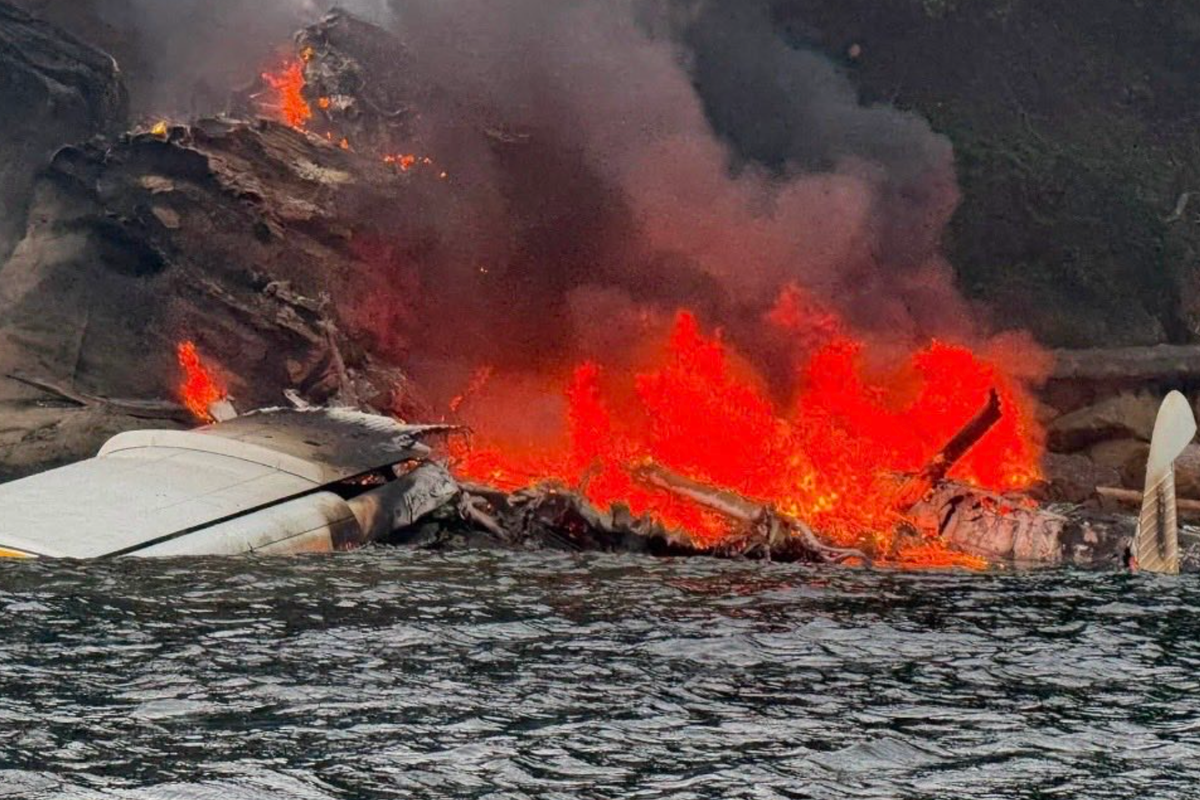
When a de Havilland DHC-3 Otter carrying ten people abruptly plunged nose-first into the cold waters of Mutiny Bay off Whidbey Island, it rocked the Pacific Northwest maritime community. Commercial floatplanes are an absolute staple in western Washington. They link Seattle and the mainland to tourist hubs in the San Juan Islands, flying routinely over Puget Sound. Planes like the DHC-3 have flown these waterways for decades with stellar safety records.
Then came September 4, 2022.
On a bright, clear afternoon, Friday Harbor Seaplanes Flight 810 was returning to Renton from Friday Harbor with nine passengers and pilot Jason Winters. Eighteen minutes after takeoff, the aircraft suddenly pitched sharply up, then dove straight down at near-terminal velocity into the Sound. All 10 occupants died on impact.
The disaster sparked intense speculation. Initial reports were chaotic, with early rumors claiming mid-air fires or explosions. The official National Transportation Safety Board (NTSB) investigation later proved those theories dead wrong, uncovering a surprisingly tiny mechanical culprit instead.
The Flaw That Doomed the Flight
When salvage crews raised the shattered wreckage from 190 feet below the surface of Mutiny Bay using specialized underwater machinery, federal investigators didn't find signs of engine failure, structural fatigue, or pilot error. Instead, they found a severed flight control link.
The pitch of a DHC-3 Otter—how its nose tilts up or down—is governed by an actuator screw in the tail section. That actuator moves the horizontal stabilizer. In this specific plane, the barrel of the actuator had physically unthreaded itself from the clamp.
Why did it come unscrewed? A tiny metal lock ring, measuring less than five centimeters wide, was missing.
Without that ring in place to secure the threads, normal flight vibrations caused the components to slowly turn over time. Mid-flight over Mutiny Bay, the actuator completely disconnected. The tail slammed into full nose-down trim. The mechanical disconnection instantly jammed the elevator controls, leaving the pilot helpless. No amount of stick pressure could pull the nose back up.
Why Single Points of Failure Demand Urgent Redesign
This crash exposed a major vulnerability in older legacy aircraft designs. The de Havilland DHC-3 Otter was originally designed in the late 1940s and early 1950s. Back then, aviation engineering relied heavily on single mechanical linkages without redundant backup systems.
NTSB Chair Jennifer Homendy didn't mince words when the board released its findings:
"The Mutiny Bay accident is an incredibly painful reminder that a single point of failure can lead to catastrophe in our skies."
Following the crash, federal regulators jumped into action:
- The FAA issued emergency Airworthiness Directives forcing all operators of DHC-3 Otters to immediately inspect their horizontal stabilizer actuators.
- Canadian air transport authorities mandated similar safety checks across their commercial floatplane fleets.
- Regulators called for structural redesigns to add secondary locking features so a single missing ring can never again trigger an unrecoverable dive.
What You Should Look for Before Boarding Small Aircraft
For those traveling through regions reliant on regional air charters—whether in Alaska, the Pacific Northwest, or island destinations—aviation safety comes down to rigorous oversight and proactive maintenance.
If you regularly fly on small charter flights or vintage utility planes, here are practical ways to evaluate your operator:
- Check FAA Air Carrier Certificates: Ensure charter operators hold an active Part 135 air carrier certificate, which subjects them to much stricter maintenance and pilot training standards than private flight operators.
- Review Safety Directives: Check if the carrier openly adheres to active FAA Airworthiness Directives (ADs) and service bulletins issued for their specific aircraft models.
- Inspect the Fleet History: Reliable charter companies readily share their fleet history, engine upgrade records, and safety protocols with passengers upon request.
- Report Control Anomalies: If you ever experience unusual vibrations, severe mechanical noise, or sluggish flight control responses on a charter flight, report it to the pilot and the operator immediately.


