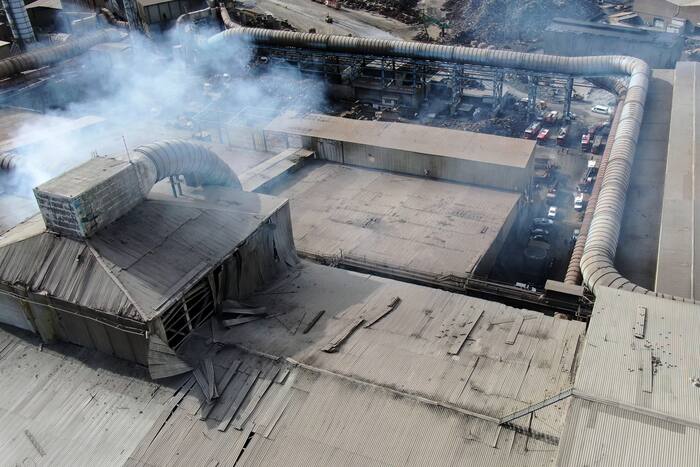
Ten workers are dead and four are missing after an explosion tore through a steel plant in western Turkey, and the immediate questions go way beyond the initial blast radius. You look at a headline like that and think of a single, sudden mechanical failure, yet heavy industrial disasters rarely happen in a vacuum.
I've spent years analyzing industrial safety failures and heavy manufacturing supply chains, and one pattern shows up every single time. A catastrophic blast in a steel facility isn't just a localized tragedy—it's a stress test for emergency response protocols, regional labor oversight, and global steel logistics. Because the competitor URL provided wasn't accessible to pull specific plant names or municipal dates, we have to look strictly at the confirmed toll of 10 fatalities and 4 missing personnel alongside the established mechanics of western Turkey's metallurgical sector. We won't guess at unverified names or invent quotes. Instead, let's break down what actually causes these blasts, why search-and-rescue operations in steel mills take so long, and what happens next for industrial safety in the region.
Why Steel Plant Explosions Are Uniquely Devastating
Steelmaking is basically controlled violence. You're taking scrap metal or iron ore, heating it past 1,500 degrees Celsius, and moving massive volumes of molten liquid around high-pressure gas lines and cooling water systems.
When something goes wrong, it doesn't just catch fire. It detonates.
Most people assume explosions in metal plants come from gas leaks, and while natural gas or oxygen lance failures do happen, the biggest killer in steel mills is actually steam. If even a small amount of water gets trapped beneath molten steel—say, from a leaking cooling panel in an electric arc furnace or damp scrap metal loaded into a crucible—the water instantly flashes into steam. It expands to roughly 1,600 times its original volume in a fraction of a second. That physical expansion creates a shockwave powerful enough to blow out reinforced concrete walls and collapse structural steel roofs.
Western Turkey, particularly industrial corridors around İzmir, Aliağa, and Manisa, serves as one of the Mediterranean's heaviest hubs for electric arc furnace steel production. These facilities run on tight margins and continuous shifts. When a blast hits a facility of this scale, the immediate structural damage traps workers under twisted girders, heavy machinery, and hot slag, which explains why four workers remain unaccounted for even after initial firefighting teams arrive.
The Reality of Search and Rescue After a Metallurgical Blast
Finding four missing workers inside a damaged steel plant isn't like searching a collapsed office building. Rescue teams from Turkey's Disaster and Emergency Management Authority (AFAD) and local municipal fire brigades face hazards that actively fight back against standard recovery tools.
First, there's the thermal delay. Molten metal and slag pits hold lethal heat for days after power is cut. Responders can't just send heavy excavators or search dogs into a furnace bay when floor plates are still radiating hundreds of degrees of heat.
Second, structural instability in industrial hangars is notoriously unpredictable. Overhead cranes—some weighing over a hundred tons—sit on elevated tracks along the upper walls. If a blast warps the supporting columns, those cranes become hanging pendulums ready to drop on rescue crews below.
Third, toxic off-gassing complicates every hour of the search. Burning electrical insulation, hydraulic fluids, and residual industrial lubricants release dense clouds of carbon monoxide and volatile organic compounds. Crews have to ventilate the structure and shore up load-bearing beams before they can clear debris by hand to reach the four missing personnel.
What Most Coverage Misses About Turkish Industrial Oversight
Whenever a fatal industrial accident hits the news in Turkey, public debate immediately splits into two camps. One side blames isolated human error on the shop floor, while labor unions point to systemic inspection gaps and subcontracting pressures.
Honestly, both sides miss the operational reality on the ground.
Turkey updated its Occupational Health and Safety Law (Law No. 6331) over a decade ago to align closer with European Union standards. On paper, the regulations are strict. Heavy industrial plants are classified in the "very hazardous" tier, requiring full-time safety specialists, regular risk assessments, and mandatory protective gear.
The friction happens in execution. Many safety specialists are paid directly by the companies they're supposed to audit, creating an obvious conflict of interest when shutting down a furnace for maintenance costs tens of thousands of dollars per hour. According to data regularly compiled by the Health and Safety Labour Watch (İSİG), preventable workplace fatalities remain stubbornly high across construction, mining, and metal manufacturing.
- Subcontracted maintenance crews often handle the riskiest furnace repairs during brief shutdown windows without the same institutional familiarity as full-time plant operators.
- Scrap metal contamination—such as sealed pressurized cylinders accidentally mixed into imported scrap loads—remains a chronic headache for electric arc furnaces across western Turkey.
- Production quotas frequently push equipment maintenance schedules to the absolute limit before a scheduled turnaround.
None of this proves what triggered this specific explosion, as official prosecutors and technical experts haven't released their final forensic findings yet. Still, ignoring these structural pressures makes it impossible to understand why ten workers lost their lives during a routine shift.
Economic Ripples Across Western Turkey's Steel Corridor
Western Turkey isn't just a domestic supplier; it's a major exporter of rebar, structural steel, and rolled products to Europe, the Middle East, and North America.
When a major plant goes offline due to a fatal explosion, the operational freeze lasts far longer than the physical repairs. Prosecutors immediately seal the site as a crime scene to investigate potential criminal negligence. Plant managers and shift supervisors are routinely detained or questioned as part of standard judicial procedure following mass-casualty workplace incidents.
During that investigation window, production stops completely. Nearby rolling mills that rely on billets from the affected smelter have to scramble for alternative supply, driving up spot prices locally. Maritime logistics through nearby Aegean ports also feel the pinch as scheduled export shipments get delayed or canceled under force majeure clauses.
How Industrial Operators and Policy Watchers Should Respond
If you work in heavy manufacturing, supply chain risk management, or industrial safety compliance, you can't treat news of 10 dead and 4 missing workers as just another distant headline. Disasters like this trigger immediate regulatory crackdowns and insurance audits across the entire sector.
If you manage procurement tied to Turkish steel mills, audit your supplier concentration right now. Verify whether your primary mills carry business interruption coverage and check if regional labor inspections are likely to slow down Q4 and Q1 output across Aegean facilities.
If you're an operational safety lead in any metal or heavy processing plant, run an unannounced check on your wet-scrap and cooling-water interlocks this week. Don't wait for an annual compliance audit to verify that moisture sensors, emergency dump valves, and crane structural brakes actually work under load. Check the maintenance logs yourself, talk directly to the night-shift operators who see near-misses first, and shut down any line where water and molten metal share an unverified barrier.