Headlights cut through the wet prairie night, catching the white ribbon of the highway just before it bends. To anyone driving through Alberta at midnight, the asphalt looks flat, endless, and entirely ordinary. It is just crushed rock and heavy oil poured over ancient glacial till, a gray seam stitching together oil towns, wheat fields, and mountain passes.
Until it isn't.
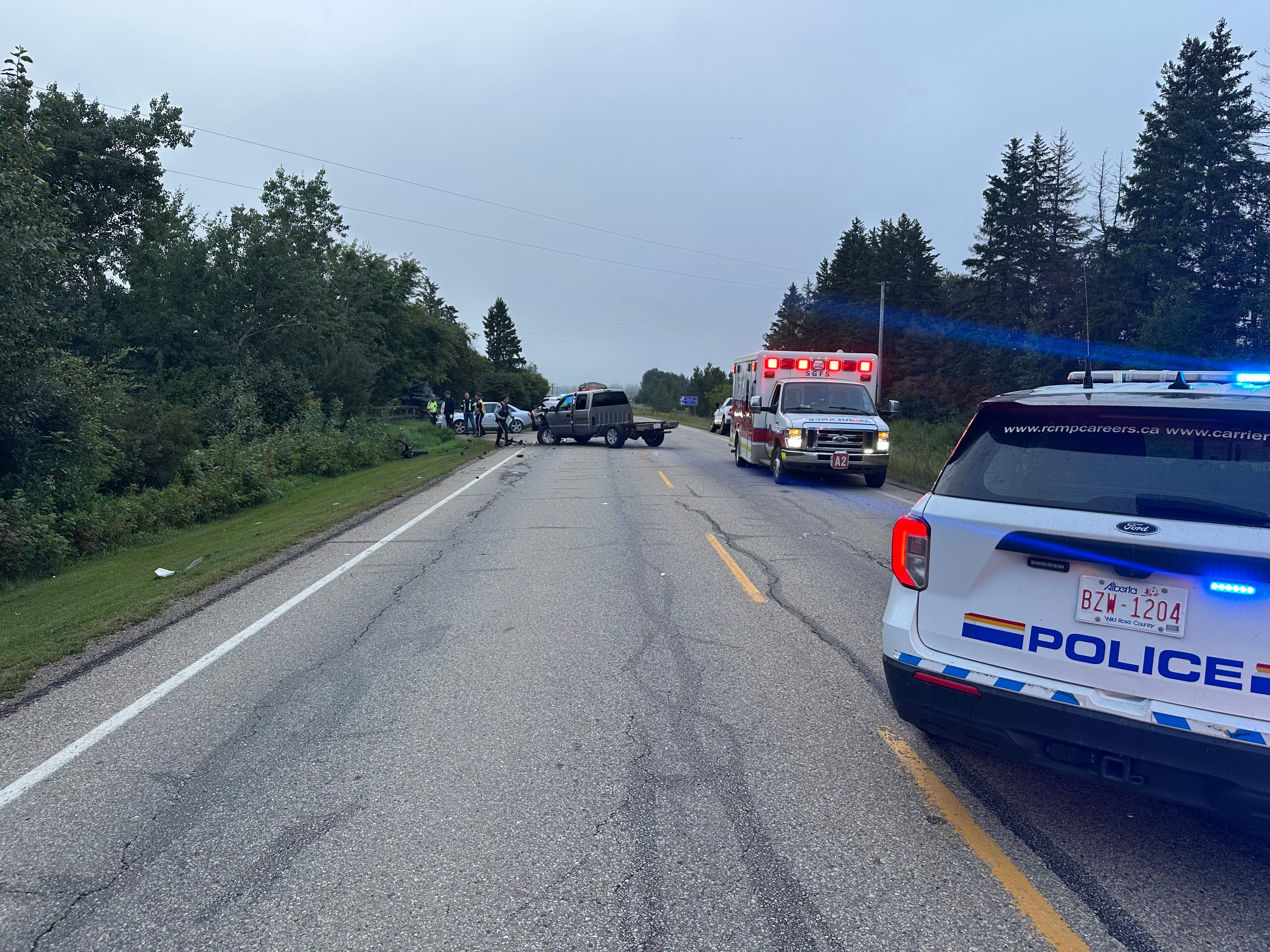
Look closer at the shoulders of that road. Look at the plastic debris left behind by shattering grilles, the faint ghosts of emergency flares melted into the grit, or the roadside crosses wrapped in faded plastic flowers. We treat these stretches of concrete as mere conveniences—conduits for our morning commutes, our weekend getaways, our cargo. But asphalt has a memory. And right now, it is keeping a tally that should make every single person behind a steering wheel pull over and catch their breath.
Alberta is on track to record its deadliest traffic year in a decade.
Statisticians call it a trend. Safety analysts call it a crisis. But behind the cold spreadsheets and the sterile police blotters lies a much quieter, more devastating reality: an invisible epidemic of preventable loss tearing through families from the Peace River country down to the Lethbridge flats.
Consider a hypothetical driver we will call Mark. He is forty-two, works in mid-level logistics out of Edmonton, and drives Highway 2 twice a week. Mark is not a reckless driver. He doesn't race muscle cars at stoplights or text while navigating icy overpasses. He is tired. He has two kids in braces, a mortgage that adjusts with the weather, and a cup of lukewarm gas-station coffee sitting in the console. When Mark glances down at his dashboard for three seconds to change a podcast, his car travels the length of a football field at one hundred kilometers per hour.
Multiply Mark by four million.
That is the kinetic mass of a modern province moving at sixty miles an hour, fueled by chronic exhaustion, distracted urgency, and a cultural stubbornness that tells us we can handle just one more text, one more mile before we rest.
The numbers behind this decade-high surge in Alberta road deaths are not abstract. They are built out of shattered glass and closed-casket funerals. While exact monthly fatality counts fluctuate as collisions undergo official collision reconstruction and coroner verification, the trajectory tracked by traffic safety advocates and provincial data points toward a grim milestone not seen since the early 2010s. More than three hundred people lose their lives on Alberta roadways in a typical year, but the current velocity of fatal crashes is pushing past historical baselines.
Why now? Why, with vehicles wrapped in high-strength steel cages, equipped with lane-keep assist, automated emergency braking, and airbags sprouting from every seam, are we dying on our roads at a higher rate than we were ten years ago?
The answer is uncomfortable. Technology didn't save us from ourselves; it made us bolder.
The Illusion of Invincibility
Human beings are terrible judges of compounding risk. Sit inside a modern SUV with heated leather seats, double-paned acoustic glass, and a sound system that turns the cabin into a private concert hall, and your brain stops registering danger. The world outside becomes a movie projected onto your windshield. You feel safe. Sealed off. Impregnable.
That insulation breeds complacency. When cars could barely crack ninety kilometers per hour without shaking like washing machines, drivers felt the speed. They felt the road through the steering wheel. Today’s suspension systems and electronic stability controls iron out the feedback, leaving drivers divorced from the physical consequences of momentum.
Speed is not merely a number on a circular metal sign. It is physics. Kinetic energy increases with the square of velocity. Double your speed, and you quadruple the destructive force your body experiences when metal meets stationary earth.
Yet on Alberta’s long, straight grid highways—where the horizon stretches out like a drawn bow—speed limits are treated as opening bids. On the QE2 corridor connecting Calgary and Edmonton, driving at 120 or 130 kilometers per hour is not an exception; it is the social contract. Anyone driving the actual speed limit of 110 becomes a rolling chicane, an obstacle to be aggressively tailgated, flashed, and whipped around by drivers running on espresso and deadline panic.
We have engineered our cars to protect us from our worst habits, so our worst habits have simply grown larger to compensate.
The Geography of Grief
Every highway has a personality, and Alberta's corridors are notoriously unforgiving.
Take the rural two-lane blacktops. These roads were designed decades ago for farm trucks moving grain at fifty miles per hour, not for overloaded commercial semi-trailers hauling fracking sand and twenty-ton excavators at dawn. They have narrow shoulders, no lighting, and deep, unpaved drop-offs. When black ice skims across a rural bridge deck in November, there is no margin for error. One microsecond of delayed steering input, and a Ford F-150 is rolling three times into a canola ditch.
Then there is the winter.
People who have lived in Alberta for fifty years still manage to act surprised when snow falls in November. The first major snowfall of the season always produces the same macabre choreography: dozens of vehicles in ditches, rear-end collisions stacking up on deerfoot trail, and tow trucks working twenty-hour shifts. We possess the winter tires, we know the weather patterns, yet every single year we test the friction limits of frozen water as if it were personal grievance rather than elementary science.
Fatigue plays its quiet, lethal part in the rural corridors too. The oilfield shift worker driving three hours back to his family in Calgary after a grueling four-day rotation on site; the long-haul trucker pushing past legal hours of service to meet a supply chain window; the parent driving kids back from a hockey tournament in Red Deer through a blinding ground blizzard.
Exhaustion mimics intoxication. A driver losing focus from sleep deprivation experiences delayed reaction times identical to someone driving over the legal blood alcohol limit. But you can't blow into an interlock device to prove you’ve slept eight hours.
Rewriting the Culture of the Commute
If this rising death toll were a disease outbreak or a structural failure in a public bridge, emergency committees would convene overnight. Sirens would wail. Public health orders would drop. Billboards would flash warnings across every major intersection.
Instead, we absorb the news of another highway pileup with a momentary wince, turn up the radio, and merge back into the fast lane.
We accept vehicular slaughter as the unavoidable cost of modern mobility. We blame bad weather, bad luck, or the other guy. Rarely do we look in the rearview mirror and recognize our own daily complicity in the culture of rush.
Changing this trajectory requires more than photo radar trucks parked discreetly behind highway overpasses or steeper traffic fines that sting the working class while remaining mere pocket change for the wealthy. It requires a fundamental shift in how we inhabit the driver's seat.
It means accepting that arriving fifteen minutes late to a dinner party is infinitely preferable to not arriving at all. It means breaking the habit of treating the vehicle as an extension of our office, our phone booth, or our personal venting machine. It means recognizing that the metal box around us is not a fortress against death, but a fragile shell hurtling through space powered entirely by our own sustained attention.
The next time you pull out of your driveway, notice the silence before you turn the ignition. Feel the weight of the steering wheel in your palms. Look at the headlights stretching out into the dark ahead.
Somewhere out there on the blacktop, the next mile is waiting. How we drive it is the only thing standing between a statistic and a life.