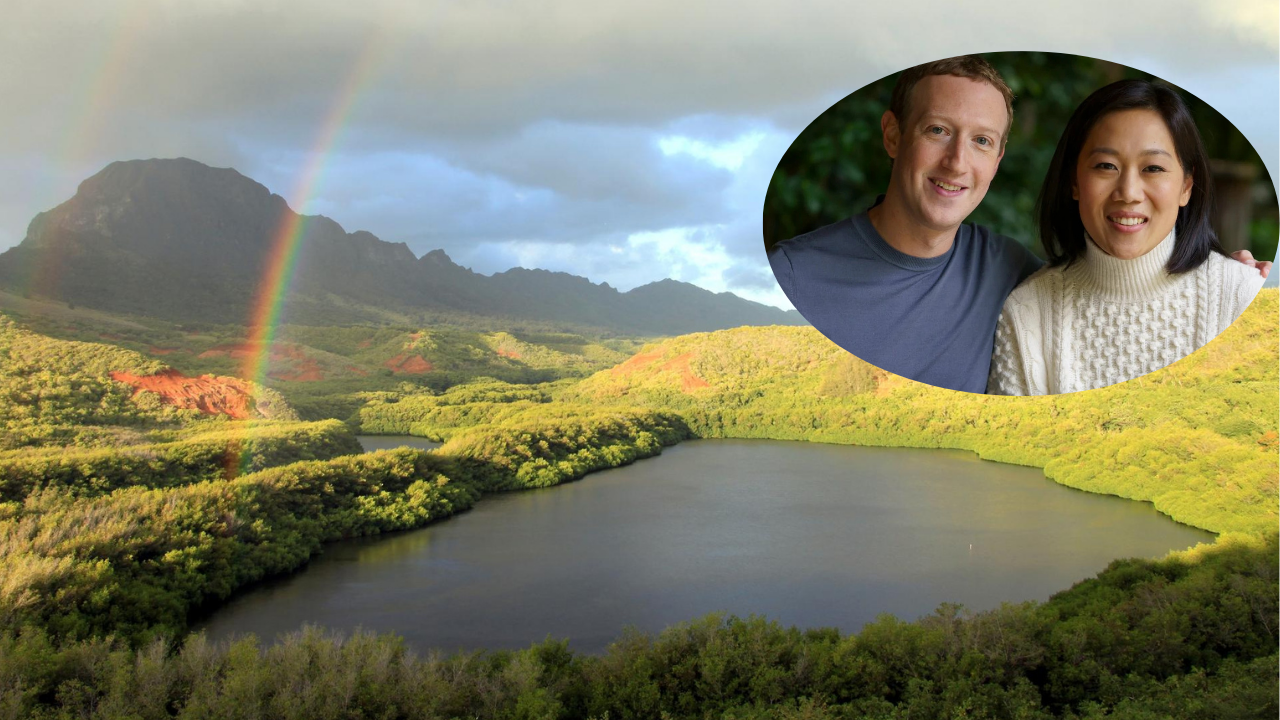
Mark Zuckerberg and Priscilla Chan cutting a four-million-dollar check to preserve a six-century-old fishpond in Hawaii reads like a masterclass in modern corporate altruism. The headlines write themselves. Tech titan saves indigenous heritage. Community gets its natural resource back. Everyone sleeps better knowing the ancient aquaculture of the islands remains intact.
It is a comforting narrative. It is also a profound waste of economic potential disguised as historical preservation.
I have spent decades watching billionaires and well-meaning foundations throw capital at romantic artifacts while ignoring the grueling, unglamorous mechanics of actual progress. We treat history like a museum exhibit that must be preserved under glass rather than an evolving ecosystem that requires adaptation to survive. Pumping millions into a 600-year-old fishpond does not revitalize a local economy; it freezes it in amber.
Let us look past the feel-good press release and examine the cold economic reality of what happens when sentimental capital replaces market-driven utility.
The Myth of the Static Heritage Site
The lazy consensus in modern philanthropy dictates that old things are inherently good and keeping them exactly as they were is the highest form of stewardship. This perspective ignores basic resource allocation theory. Every dollar sunk into maintaining a centuries-old monument or traditional aquaculture setup is a dollar diverted from scalable, forward-looking infrastructure.
When you fund a static historical project, you are paying for nostalgia. You are subsidizing a lifestyle and a method of production that was abandoned for good reason: it does not scale. Ancient Hawaiian fishponds, or loko iwa, were marvels of ancient engineering designed to feed isolated populations under specific technological constraints. They were brilliant solutions for the fourteenth century. Applying twenty-first-century tech fortunes to resurrect them as community projects turns a functional historical relic into an expensive pet project.
Communities do not thrive on heritage alone. They thrive on economic mobility, high-value employment, and modern industry. By framing the preservation of an ancient pond as a victory, we distract from the harder question of how to build sustainable local industries that can compete globally without needing perpetual bailouts from Silicon Valley trust funds.
The Real Cost of Sentimental Capital
Philanthropy has a massive vanity problem. Donors want their names attached to things they can take photos in front of. A gleaming biotech lab solving local health crises or a fund backing unsexy municipal water treatment upgrades does not offer the same cinematic photo-op as standing knee-deep in an ancient coastal pond with local leaders.
This bias toward visible, heritage-based giving creates a distorted local economy.
- It prioritizes historical tourism over industrial innovation.
- It ties up valuable coastal land in low-yield preservation zones.
- It fosters a dependency model where community survival relies on the whims of tech wealth rather than organic economic self-sufficiency.
Imagine a scenario where that same four million dollars was deployed not to rebuild stone walls and stock mullet, but to seed a venture fund for local entrepreneurs building modern agricultural tech or renewable energy grids. The return on investment would not be measured in the nostalgic satisfaction of elders, but in high-paying jobs, retained local talent, and economic resilience.
We must draw a sharp line between a museum and a municipality. A city can maintain its cultural identity without turning its geography into a living diorama.
The Mechanics of Structural Decline
Skeptics will argue that preserving traditional knowledge protects cultural heritage from erasure. That argument collapses under the weight of opportunity cost. Culture is not a fragile vase that shatters if it is not constantly reinforced by philanthropic subsidies; it is a living practice that adapts, absorbs, and moves forward.
When you artificially prop up an obsolete economic model through massive infusions of outside wealth, you distort the signals that tell a community how to adapt. If a traditional practice cannot sustain itself through either commercial viability or voluntary local support, injecting billions of external dollars does not save it. It merely creates an artificial life-support system.
Look at how land use plays into this dynamic. Coastal real estate in Hawaii is among the most contested and expensive on earth. Dedicating prime acreage to low-output historical aquaculture while local families struggle with housing costs and cost-of-living crises is an allocation failure of the highest order. We are trading modern human welfare for historical aesthetics.
The defenders of these projects point to community engagement as the ultimate justification. If the community wants the fishpond, who are we to argue? But this assumes the community was presented with a genuine choice. When a multi-billionaire foundation offers four million dollars for a specific heritage project, local stakeholders rarely say no. They take the money because money is scarce, and a funded project is better than no project at all. That is not community agency. That is acquiescence to donor preferences.
What Real Progress Looks Like
If we want to support communities genuinely, we have to stop funding their past and start investing in their future. True impact investing requires the courage to let go of romantic ideals. It means funding things that are messy, difficult, and forward-facing.
Stop praising check-writers for funding tourist attractions disguised as community uplift. Real generosity builds systems that outlast the donor, not monuments that require perpetual charity to keep the water from draining out.
Build the modern economy. Let the old ponds become history.