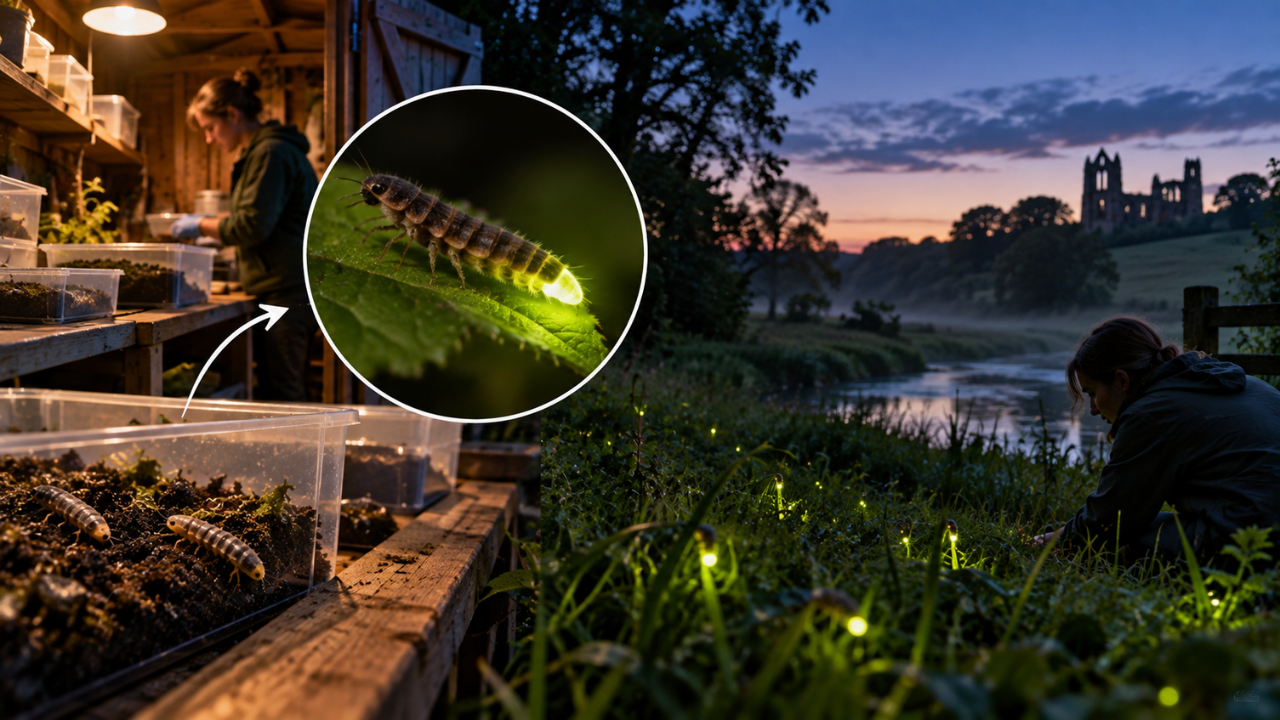
Everyone loves a good comeback story. Headlines across the nation recently celebrated the triumphant return of glowworms to Yorkshire after a century-long absence, breathlessly reporting that the first glowing females were painstakingly bred in a Bristol shed before making their northern pilgrimage. It makes for a comforting bedtime story. It feeds our collective craving for environmental redemption.
It is also largely a romanticized fairy tale that masks the grim reality of how we manage our ecosystems.
I have spent two decades crawling through limestone grasslands, peat bogs, and fragmented scrublands tracking insect population metrics. I have watched well-meaning conservation grants evaporate into vanity projects while genuine habitat foundations collapse entirely. When you strip away the heartwarming PR narrative about Bristol garden sheds and Yorkshire milestones, the glowworm return is not an ecological victory. It is a symptom of a broken conservation model that mistakes localized theatrical stocking for systemic restoration.
The Myth Of The Self-Sustaining Miracle
Let us look at the lazy consensus. The accepted narrative tells us that breeding Lampyris noctiluca in captivity and releasing them onto carefully selected patches of Yorkshire turf means nature is healing. The habitat must be fixed, the logic goes, because the beetles are back.
This turns biological science on its head.
In population ecology, survival requires more than dropping a few lab-reared organisms into a superficially green patch of land. A glowing female beetle sitting in the grass does not mean a thriving colony. It means a managed specimen has been placed in an environment where it might temporarily survive until environmental pressures finish the job.
True habitat recovery is boring. It involves decades of continuous grazing management, soil chemistry balancing, and the painstaking connectivity of fragmented corridors. It does not look good on a morning news broadcast. A shed in Bristol producing neon-tailed beetles looks fantastic on camera.
Imagine a scenario where you pump millions of dollars into reintroducing high-profile charismatic micro-fauna to a county while ignoring the subterranean trophic cascades beneath them. You get a nice photo-op, a spike in local tourism clicks, and an extinct population five years later when the micro-climate shifts by half a degree or a local pesticide drift wipes out the snail populations required for larval feeding.
The Snail Paradox Nobody Mentions
To understand why this Yorkshire homecoming is built on shaky ground, you have to look at what adult glowworms actually eat. Spoiler alert: they do not eat anything. Adult females lack functional mouthparts. They live for a few weeks purely to glow, attract a mate, lay eggs, and die.
The heavy lifting is done by the larvae, which are voracious predators specializing in land snails and slugs. They track their prey via chemical slime trails, inject a digestive enzyme into the shell, and slurp up the liquefied remains.
Here is the inconvenient truth the press releases leave out: if your soil microbiology is wrecked, if your agricultural runoff is sterilizing the lower food web, and if your snail diversity is plummeting due to intensive land management, releasing adult glowworms into the wild is functionally identical to releasing captive pandas into a concrete parking lot and hoping for bamboo trees to sprout.
You cannot fix an apex consumer problem by ignoring the basal trophic layer. Conservationists love the glowing tail because humans are visual creatures drawn to bioluminescence. Nobody writes a glowing feature article about the agonizing decline of garden snail diversity, yet without those slimy mollusks, the entire glowworm supply chain collapses overnight.
The Dangers Of Zoo-Chic Conservation
There is a darker side to this shed-breeding craze. It shifts the burden of proof away from corporations and local authorities destroying real habitats, moving it toward hobbyists and minor charities performing biological stunts.
When people believe that a dedicated enthusiast in a garden shed can simply manufacture missing biodiversity and ship it via courier to fix a century of industrial damage, they become complacent. It creates a moral hazard. Why fight the local council over zoning laws that fragment green spaces? Why restrict chemical pesticide use in adjacent agricultural zones? Just breed more bugs in Bristol.
I have seen companies blow millions on high-visibility rewilding PR campaigns while paving over critical wildlife corridors a mile down the road. The metrics are weaponized. Success is measured in column inches and social media impressions rather than long-term genetic viability.
A captive-bred insect population suffers from severe genetic bottlenecking long before it ever sees a Yorkshire field. Inbred lines bred in controlled thermal environments lose the evolutionary resilience needed to handle a freezing northern winter, an unseasonal drought, or a novel pathogen. You are not strengthening the wild gene pool; you are diluting it with domesticated weaklings that happen to glow in the dark.
What Real Restoration Looks Like
If we want to stop treating ecology like a PR exercise, we have to flip the script entirely.
Stop funding vanity reintroductions that focus exclusively on the charismatic end of the food chain. If you want glowworms, stop buying beetles and start restoring soil health. Stop fragmenting chalk grasslands with suburban creep and intensive mono-cropping. Re-establish dark corridors free of artificial light pollution.
Yes, artificial nighttime lighting is the silent assassin of the glowworm. Female beetles rely on total darkness to project their mating signals. A single halogen floodlight from a nearby farm or suburban housing estate can disrupt a breeding radius for hundreds of yards, rendering even a naturally occurring population sterile within a single generation.
None of the heartwarming profiles of the Bristol shed breeders mentioned the sprawling light pollution footprint creeping across the Yorkshire dales. They preferred the simple narrative: bug meets grass, nature is saved.
My contrarian approach has a massive downside: it is profoundly unsexy. You cannot package soil microbiome metrics into a heartwarming morning television segment. You cannot easily monetize a five-year study on earthworm density and snail mucus tracks.
True ecological health is messy, slow, and untelevised. It requires admitting that human intervention often does more harm than good when driven by vanity rather than rigorous science.
The Yorkshire glowworms did not return because a hero in Bristol figured out the secret formula in a garden shed. They returned because we wanted a fairy tale badly enough to ignore the concrete reality surrounding them.
Stop applauding the theater. Start protecting the dirt.