When Rick Sanchez weighs in on American electoral politics, people pay attention for very different reasons depending on where they sit on the political spectrum. The veteran broadcast journalist, known for his decades-long career across CNN, MSNBC, Fox News affiliates, and later international networks like RT America, recently sparked fresh debate with his commentary on the US midterms. Yet if you only read the viral headlines or clipped segments circulating on social media, you're missing the actual argument he's making—and why mainstream media commentators are pushing back so hard.
Here's the direct takeaway. Sanchez isn't acting as a traditional horse-race pundit predicting district-by-district seat counts. Instead, his critique targets how major American cable networks cover midterm cycles, arguing that partisan framing, donor-driven narratives, and outrage economics obscure the real economic pressures driving voter turnout. Whether you agree with his editorial platform or view his perspective with skepticism given his post-CNN career trajectory, his breakdown of midterm media coverage exposes blind spots that political analysts on both sides frequently ignore.
Who Rick Sanchez Is and Why His Political Commentary Draws Fire
To understand why "Rick Sanchez calls US midterms" became a trending search phrase, you have to look at his unusual path through broadcast journalism. Most cable news anchors follow a predictable career arc. Sanchez didn't.
Born in Cuba and raised in Hialeah, Florida, Sanchez built his reputation in local television news—most notably at WSVN in Miami—before joining MSNBC and later anchoring Rick's List on CNN. During his CNN tenure, he became known for an unscripted, populist delivery that broke away from the stiff teleprompter style common in 24-hour news. His abrupt departure from CNN in 2010 following controversial remarks during a radio interview fundamentally altered his career path.
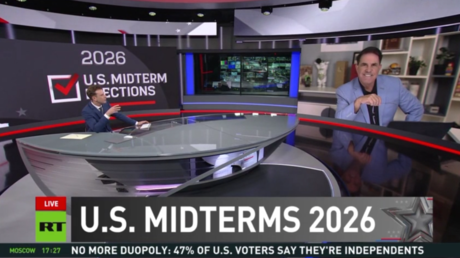
Rather than fading out of media, Sanchez pivoted toward independent syndication, radio, and eventually RT America, where he hosted The News with Rick Sanchez until the network ceased US operations in 2022. Since then, he has continued broadcasting through independent digital platforms, podcasts, and guest appearances.
That background matters. Because he has worked inside corporate American newsrooms and outside them, Sanchez approaches US midterm elections from an outsider-insider hybrid perspective. Critics point to his years at state-funded international media as a reason to scrutinize his framing of American democratic institutions. Supporters argue that his distance from corporate cable networks gives him freedom to call out bipartisan media orthodoxy without worrying about network executives or pharmaceutical advertisers.
Both things can be true at the same time. Ignoring his institutional history makes you naive, while dismissing every point he raises without examining the underlying data makes you lazy.
What Sanchez Actually Argues About US Midterm Elections
Strip away the sensationalized social media captions, and Sanchez's commentary on the US midterms centers on three specific arguments about American voters and political journalism.
The Illusion of the Two-Party Media Narrative
Cable news treats every midterm election like a sporting event between two cohesive teams. Red versus blue. Control of the House versus control of the Senate. Sanchez argues that this framing fundamentally misreads the American electorate.
Look at voter registration data from organizations like the Pew Research Center and Gallup. Independents consistently represent the largest single bloc of American voters—often hovering between 40% and 45% of the electorate. Yet midterm coverage on major networks overwhelmingly caters to the partisan bases of the Democratic and Republican parties.
Sanchez's core point is simple. Voters aren't sitting at home obsessing over procedural Senate rules or cable news talking points. They're looking at grocery bills, housing affordability, healthcare costs, and local job stability. When a sitting president's party loses ground in a midterm cycle—a historical pattern that has held in almost every midterm since the Civil War, with rare exceptions like 1998 and 2002—pundits scramble to invent complex ideological explanations. Sanchez contends the answer is usually much blunter: voters use midterms as a referendum on their immediate financial reality.
Economic Anxiety Over Culture War Distractions
One of the sharpest critiques Sanchez levels at midterm campaign coverage involves how television producers prioritize culture war controversies over structural economic issues.
Outrage drives ratings. A heated five-minute segment about a viral school board clip or a politician's gaffe generates far more social media engagement than a detailed breakdown of wage stagnation, commercial real estate debt, or healthcare consolidation. Sanchez frequently points out that both major parties benefit from keeping voters locked into cultural battles during midterm years because it prevents unified voter pressure on economic policies where corporate donors from both sides share similar interests.
You don't have to buy into every populist theory to see the truth in that observation. Media tracking studies from institutions like the Wesleyan Media Project have repeatedly shown that midterm political advertising relies heavily on emotional fear appeals and character attacks rather than granular policy proposals.
The Polling Industry's Credibility Problem
Whenever a high-profile commentator "calls" an election or critiques midterm projections, polling accuracy inevitably enters the conversation. Sanchez has been openly skeptical of mainstream national polling averages during midterm cycles, pointing to repeated misses in key battleground states across recent election cycles.
Polling methodologies have struggled with declining response rates for over a decade. According to the Pew Research Center, telephone survey response rates dropped from around 36% in 1997 to well below 10% in recent years. Pollsters rely heavily on weighting models to compensate for non-response bias, and small errors in turnout modeling can swing projections by several percentage points.
In a midterm election—where overall turnout is significantly lower than in a presidential year—predicting who actually shows up to vote is far harder than predicting who voters prefer in theory. Sanchez highlights this gap whenever pundits treat early generic ballot polls as settled destiny.
Why "Calling" a Midterm Election Is Harder Than Pundits Admit
Search trends around "Rick Sanchez calls US midterms" also reflect a broader public fascination with bold electoral predictions. People want certainty. They want someone to cut through the noise and state flatly what's going to happen in November.
The reality of US midterms makes sweeping national calls notoriously unreliable. Unlike a presidential election, where a single national popular vote narrative dominates, a midterm consists of 435 separate House races, roughly a third of the US Senate, dozens of gubernatorial contests, and thousands of state legislative seats.
Several structural factors make midterm outcomes volatile right up to election night:
- Turnout asymmetry: Historically, midterm electorate demographics skew older, wealthier, and more politically engaged than presidential electorates. However, shifting educational coalitions over the past decade have scrambled traditional turnout assumptions. High-propensity suburban voters now behave very differently than they did twenty years ago.
- Redistricting and safe seats: Thanks to aggressive partisan gerrymandering and geographic sorting, the vast majority of the 435 US House seats aren't genuinely competitive. Control of the House usually comes down to roughly 30 to 45 swing districts. A localized issue in suburban Pennsylvania, upstate New York, or Southern California can decide the national majority.
- Late-breaking economic shocks: Gas prices, interest rate announcements from the Federal Reserve, or sudden regional job losses in September and October carry disproportionate weight because voters haven't locked in their decisions early.
When Sanchez or any other commentator offers a broad verdict on midterm momentum, smart readers should separate macro-level sentiment from district-level math. Recognizing a wave of voter frustration is one thing; translating that frustration into exact seat flips requires looking at local fundraising, candidate quality, and early mail-in ballot returns.
How to Evaluate Political Commentary Without Getting Played
Viral clips of broadcasters making bold claims about US midterms are designed to trigger an immediate emotional reaction—either validation if you agree with the speaker, or anger if you don't. Neither reaction helps you understand what's actually happening in American politics.
If you want to read political commentary like an analyst rather than a passive consumer, apply three quick filters every time a pundit makes headlines:
- Check the primary source clip. Headlines frequently flatten a nuanced ten-minute monologue into a four-word clickbait summary. Watch or read the full segment to see whether the commentator actually made an empirical prediction or was simply critiquing how other journalists cover the race.
- Separate structural data from editorial opinion. When Sanchez critiques media fixation on culture wars or points to historical midterm losses for the party in power, those points align with decades of political science research. When he ventures into broader geopolitical commentary, recognize that you're hearing his personal editorial worldview—not a consensus fact.
- Cross-reference against non-partisan election trackers. If you want to know where the US midterms actually stand, pair sharp media criticism with hard data from organizations like the Cook Political Report, Sabato's Crystal Ball, and OpenSecrets. Tracking campaign cash flows and district-level ratings tells you far more about electoral reality than cable news panels ever will.
Media figures like Rick Sanchez thrive because traditional political journalism leaves massive blind spots unaddressed. You don't have to agree with every conclusion he draws to recognize why his critique resonates with millions of frustrated voters. Watch the full context, verify the numbers against primary election data, and never let a viral headline substitute for looking at the actual district math yourself.