In a small ramen shop tucked away in the Suginami ward of Tokyo, an elderly man named Kenji stares at a television screen mounted above the counter. The news anchor is discussing the "National Defense Strategy" and a record-breaking budget for long-range missiles. Kenji doesn’t hear the numbers. He hears the ghost of his father’s voice, a man who returned from the 1940s with a hollow chest and a vow that Japan would never again be a nation of the sword.
For decades, Japan was the world's great pacifist experiment. It was a country that traded its bayonets for semiconductors and its warships for high-speed rail. But the silence of the pacifist era is being replaced by the rhythmic clanging of a shipyard in Kure. The "Article 9" constitution—the legal heart that forbids Japan from maintaining "war potential"—is still there on paper, but it is breathing differently now.
It is no longer a shield. It is becoming a relic.
The ghost in the constitution
To understand why Japan is spending $315 billion on its military over five years, you have to look past the spreadsheets. You have to look at the geography of fear. Imagine living in a house where the neighbor to the west is constantly sharpening a kitchen knife while staring at your front door, and the neighbor to the north is prone to firing celebratory flares that land in your backyard.
For a long time, the United States was the landlord who promised to keep the peace. But the landlord is distracted. He has other properties to worry about. He is tired.
Japan sees this exhaustion. The leadership in Tokyo has realized that the American security umbrella, while still open, has holes. If a conflict breaks out over Taiwan, or if the Korean Peninsula ignites, Japan will not just be a spectator or a "logistical base." It will be the front line. This realization has triggered a psychological shift that is more significant than any purchase of a Tomahawk missile. It is a shift from "Please protect us" to "We will strike back."
The end of the "Checkbook Diplomacy"
In the 1990s, Japan practiced what critics called checkbook diplomacy. When the world went to war, Japan sent money. It was a way to keep their hands clean and their conscience clear. But money doesn't stop a hypersonic missile. Money doesn't patrol the contested waters of the East China Sea where Chinese coast guard vessels now circle like sharks around the Senkaku Islands.
The new strategy isn't about being a "helper" anymore. Japan is building what it calls "counterstrike capabilities." This is a polite, bureaucratic way of saying they are buying weapons that can reach deep into an enemy’s territory. For a nation that spent seventy years promising it would only ever act in "self-defense," this is a total transformation of its national identity.
Consider the Ishiba government's commitment to doubling defense spending to 2% of GDP. On the surface, that sounds like a dry fiscal target. In reality, it is the sound of a country breaking its own heart. To fund this, the government has to figure out where the money comes from in a nation with the world’s oldest population and a shrinking workforce. Every yen spent on a stealth fighter is a yen not spent on a nursing home or a childcare center. This is the invisible stake of remilitarization: the social contract is being rewritten in real-time.
The anxiety of the neighbors
It isn't just China that is watching this with narrowed eyes. If you travel to Seoul or Manila, the memories of the mid-20th century are not "history." They are scars. When Japan announces it will develop a new generation of fighter jets with the UK and Italy, or when it begins converting its "helicopter destroyers" into full-blown aircraft carriers, the ghosts of the Greater East Asia Co-Prosperity Sphere begin to stir.
There is a delicate, agonizing dance happening here. The Philippines and Australia are actually welcoming a stronger Japan because they are even more terrified of a dominant China. They are choosing the devil they know over the giant they fear. But South Korea remains caught in a cycle of trauma and pragmatism. They need Japan’s intelligence-sharing and naval power to keep North Korea in check, but every time a Japanese official visits the Yasukuni Shrine, the alliance fractures.
The tragedy of the region is that everyone is acting rationally based on fear, which creates a spiral of irrational outcomes. Japan feels it must rearm because China is rearming. China claims it must expand because the US and Japan are "encircling" it. It is a room full of people holding matches, each person claiming they only struck theirs because they saw someone else reach for a box.
The hardware of a new era
The facts are undeniable and heavy. Japan is no longer just buying American tech; it is becoming a powerhouse of its own military-industrial production.
- Long-Range Missiles: The development of Type 12 surface-to-ship missiles with extended ranges of over 1,000km.
- Space and Cyber: Massive investment in electronic warfare and satellite constellations to jam enemy communications.
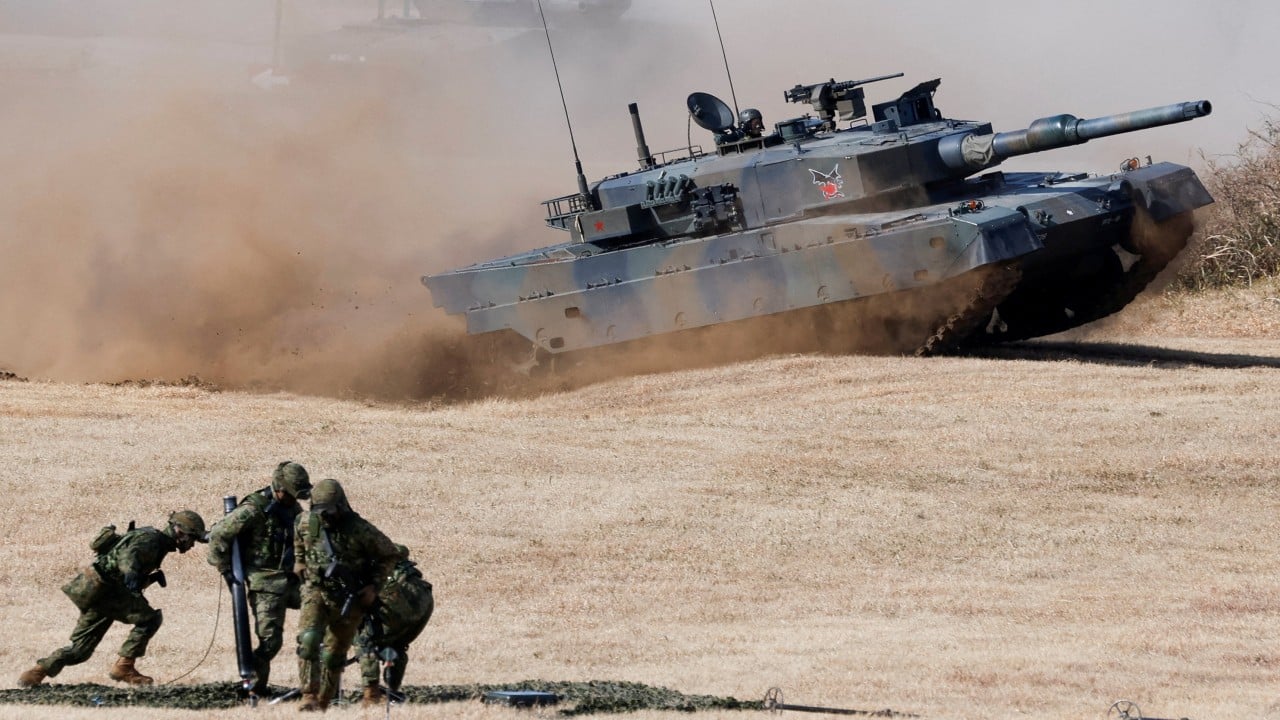
- The Global Combat Air Programme (GCAP): A sixth-generation fighter project that signals Japan’s intent to lead in aerospace technology, not just follow.
But hardware is easy. Software—the human element—is the hard part. The Japan Self-Defense Forces (JSDF) are facing a recruitment crisis that no amount of money can fix. Young Japanese people are not interested in the "way of the warrior." They grew up in the neon glow of Shibuya and the quiet comforts of a post-heroic society. The government can buy a thousand missiles, but if there is no one willing to sit in the command center and pull the trigger, the missiles are just expensive lawn ornaments.
The point of no return
There is a specific feeling in Tokyo these days. It’s a quiet, underlying vibration. You see it in the way the newspapers have moved defense news from the back pages to the front. You see it in the way politicians who once spoke of "peace" now speak of "deterrence."
We often talk about geopolitics as if it’s a game of Risk played on a board. It isn’t. It’s a collection of millions of individual anxieties. It’s the fear of the salaryman who wonders if his son will be drafted. It’s the anger of the Okinawan grandmother who sees more and more military planes screaming over her village. It’s the cold calculation of the Chinese admiral who now has to factor a Japanese carrier strike group into his plans for Taiwan.
Japan is not "threatening" China in the sense of planning an invasion. That is a fantasy. But Japan is ending the era of the "Peace Constitution" in all but name. By doing so, they are removing the last great buffer in the Pacific. For seventy years, Japan was the one variable in the global equation that stayed at zero. Now, that variable is climbing.
When a nation that has been famously quiet for a lifetime suddenly begins to speak with the roar of jet engines and the clank of tank treads, the world feels smaller. The margins for error are disappearing.
Back in the ramen shop, Kenji finishes his soup. He watches the news report fade into a commercial for a new brand of whiskey. He remembers his father telling him that once a nation starts building for war, the weapons eventually find a way to get used. They have a weight of their own, his father said. They pull the country toward a destination it didn't intend to visit.
The sun is setting over the Tokyo skyline, reflecting off the glass towers of Shinjuku. It looks beautiful, a deep, burning crimson. But if you look closely at the horizon, the light isn't just reflecting off glass. It’s reflecting off the gray steel of a fleet that is no longer content to stay in the harbor. The quiet rise is over. The noise has begun.