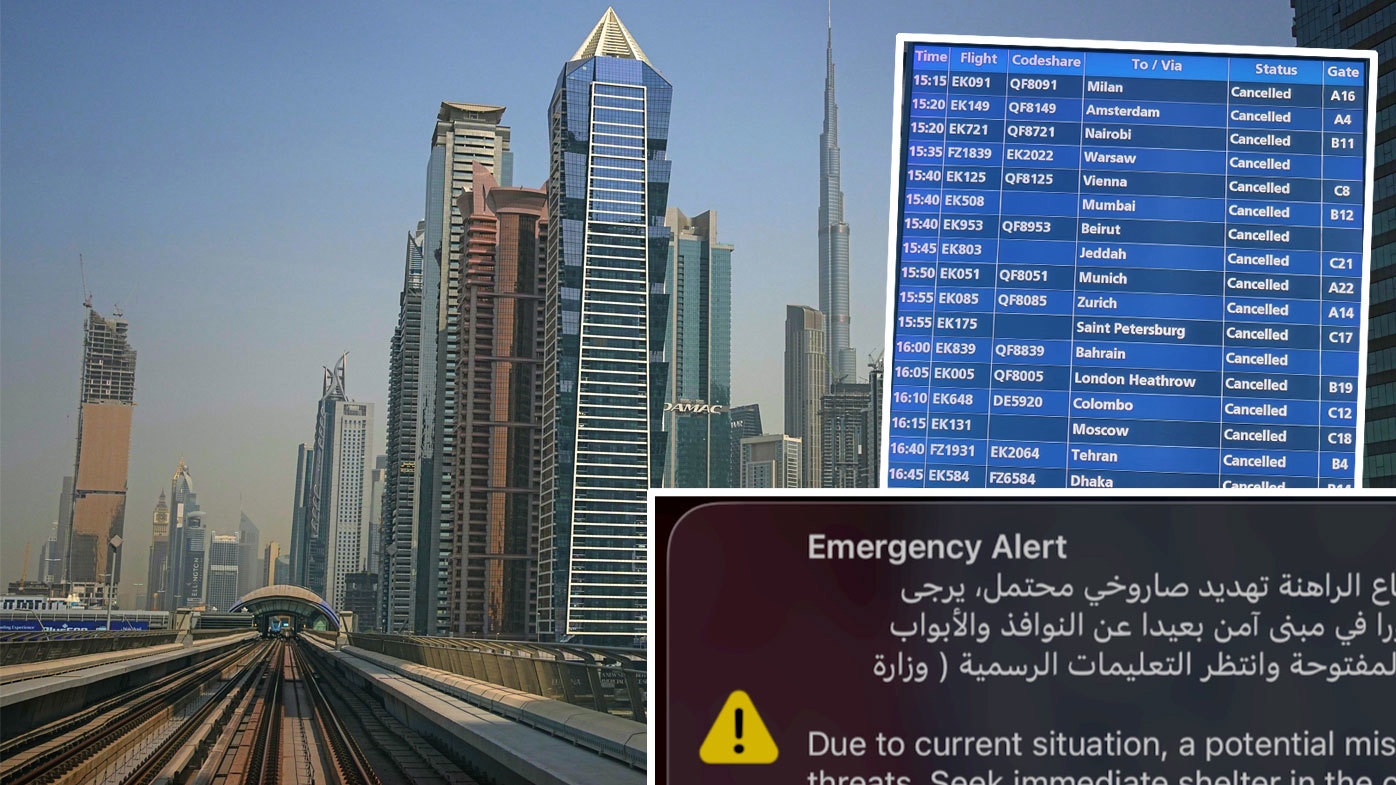
The issuance of a Level 4 "Do Not Travel" advisory for 14 countries within a single geographic region represents a massive recalibration of the state-sponsored risk profile. When the U.S. Department of State moves a destination from Level 3 (Reconsider Travel) to Level 4, it is not merely offering a suggestion; it is signaling a systemic failure in the host nation’s ability to provide the "minimum standard of protection" for foreign nationals. This shift triggers a cascade of legal, insurance, and operational consequences that go far beyond personal safety. Understanding the anatomy of these advisories requires deconstructing the specific threat vectors—terrorism, civil unrest, health crises, and kidnapping—and how they interact with international maritime and aviation law.
The Taxonomy of State Department Risk Indicators
The Department of State utilizes a standardized set of risk indicators to quantify why a country is deemed inaccessible. These are not qualitative opinions but are based on intelligence-led metrics. For a closer look into similar topics, we recommend: this related article.
- C (Crime): Widespread violent or organized crime exists. In Level 4 scenarios, this typically indicates that local law enforcement has lost "functional control" over significant portions of the territory.
- T (Terrorism): The presence of active terrorist groups intent on targeting Western interests. This is measured by the frequency of attacks and the technical capability of the insurgent groups.
- U (Civil Unrest): Political instability that leads to frequent demonstrations, strikes, or localized violence.
- H (Health): Infrastructure collapse or outbreaks (e.g., Ebola, Cholera, or COVID-19 variants) that exceed the local clinical capacity.
- K (Kidnapping): A specific metric used when criminal or political entities use hostage-taking as a primary revenue or leverage model.
The current advisory spanning 14 countries indicates a "Contagion Effect" where instability in one sovereign state bleeds across porous borders, creating a regional security vacuum.
The Cost Function of Non-Compliance
For the individual traveler, a Level 4 advisory is a warning. For an organization or a high-net-worth individual, it is a liability trigger. The primary mechanism of this trigger is the Duty of Care doctrine. Under international labor standards, an employer is legally liable if they compel or allow an employee to enter a Level 4 zone without "extraordinary mitigation measures." To get more information on this topic, in-depth analysis is available at National Geographic Travel.
The financial friction of entering these 14 countries is defined by:
- Insurance Invalidation: Most standard Accidental Death and Dismemberment (AD&D) and General Liability policies contain "Exclusion Clauses" for countries under an active Level 4 advisory. Coverage often ceases the moment the advisory is published.
- Kidnap and Ransom (K&R) Premiums: In countries marked with the 'K' indicator, K&R insurance premiums can scale by 400% to 1,000% of the baseline, or become unavailable entirely.
- Extraction Logistics: The cost of a private security detail (PSD) and an emergency extraction plan in a Level 4 environment can exceed $20,000 USD per day.
The Geometric Progression of Regional Instability
Why 14 countries at once? This reflects a Geopolitical Force Multiplier. When a regional power center destabilizes, the neighboring states experience a "Pressure-Volume" shift. This occurs through three distinct channels:
1. Refugee and Militant Permeability
As one state loses the ability to police its borders, "Ungoverned Spaces" emerge. These spaces serve as logistical hubs for non-state actors. The 14-country advisory suggests that the "buffer zones" between these nations have effectively dissolved, creating a contiguous corridor of high-risk territory.
2. Supply Chain Sclerosis
Regional advisories often track with the shutdown of major transit hubs. If three primary international airports in a region close due to unrest, the remaining 11 countries suffer an immediate economic contraction. This leads to the "C" (Crime) indicator rising as the formal economy collapses and the informal (criminal) economy takes over.
3. Diplomatic Drawdown
A Level 4 advisory is frequently the precursor to "Ordered Departure" or "Authorized Departure" of non-emergency embassy personnel. Once the diplomatic footprint shrinks, the U.S. government’s ability to provide "Consular Services"—including emergency passports and legal intervention—drops to near zero.
Quantifying the Threshold for Re-Entry
The decision to downgrade an advisory from Level 4 back to Level 3 is rarely based on the total cessation of violence. Instead, it is based on the Predictability Index.
Analytical teams look for:
- Institutional Resilience: Can the local police force manage a protest without it escalating into a riot?
- Infrastructure Reliability: Is the primary international airport secure, and does it meet ICAO (International Civil Aviation Organization) standards?
- Medical Surge Capacity: Does the capital city have at least one Level 1 trauma center capable of stabilizing a gunshot wound or managing a severe viral infection?
If these three pillars are not met, the Level 4 status remains, regardless of how "quiet" the country may seem on the surface. The "absence of an event" does not equate to the "presence of security."
Strategic Protocol for Necessary Engagement
If entry into one of these 14 jurisdictions is mission-critical, the standard travel checklist is replaced by a Hardened Asset Protocol.
- Communications Redundancy: Relying on local GSM networks is a failure point. Protocol dictates the use of satellite-based tracking (e.g., Garmin InReach) and encrypted burst-transmission devices.
- Point-to-Point Secure Transit: The "last mile" of travel (from airport to secure compound) is the highest risk window. This requires armored vehicles (B6/B7 level protection) and pre-vetted local drivers.
- Proof of Life (PoL) Documentation: Individuals must establish PoL questions—information known only to them—to be used in the event of a kidnapping.
- Medical Self-Sufficiency: Travelers must carry "Individual First Aid Kits" (IFAKs) including tourniquets and hemostatic agents, as local ambulance response times in Level 4 zones are statistically irrelevant.
The Erosion of Sovereign Legitimacy
The long-term implication of a 14-country regional advisory is the "Blacklisting" of the regional economy. Foreign Direct Investment (FDI) correlates inversely with State Department risk levels. When a region is blanketed in Level 4 advisories, it enters a "Capital Starvation Loop."
- Advisory issued -> 2. Insurance exits -> 3. Multinational corporations exit -> 4. Unemployment spikes -> 5. Civil unrest increases -> 6. Advisory is maintained.
Breaking this loop requires more than a policy change; it requires a "Security Floor" to be established by an external or international peacekeeping force to restore the basic functions of the state.
Operational Forecast
The current data suggests that at least 8 of these 14 countries will remain at Level 4 for the next 18 to 24 months. The underlying drivers—structural debt, climate-induced resource scarcity, and the proliferation of low-cost drone technology among insurgent groups—are not cyclical; they are secular shifts.
The immediate strategic move for any entity with assets or personnel in these regions is the "Triggers and Tripwires" approach. Identify the specific event (e.g., the closure of the primary port, the suspension of the national internet backbone) that will initiate an immediate, pre-funded extraction. Do not wait for the advisory to move to Level 4; if the indicators are trending toward institutional failure, the window for a safe exit is already closing. Eliminate reliance on commercial aviation for extraction and secure a contract with a private charter or security firm that operates outside of standard civilian air traffic control constraints.