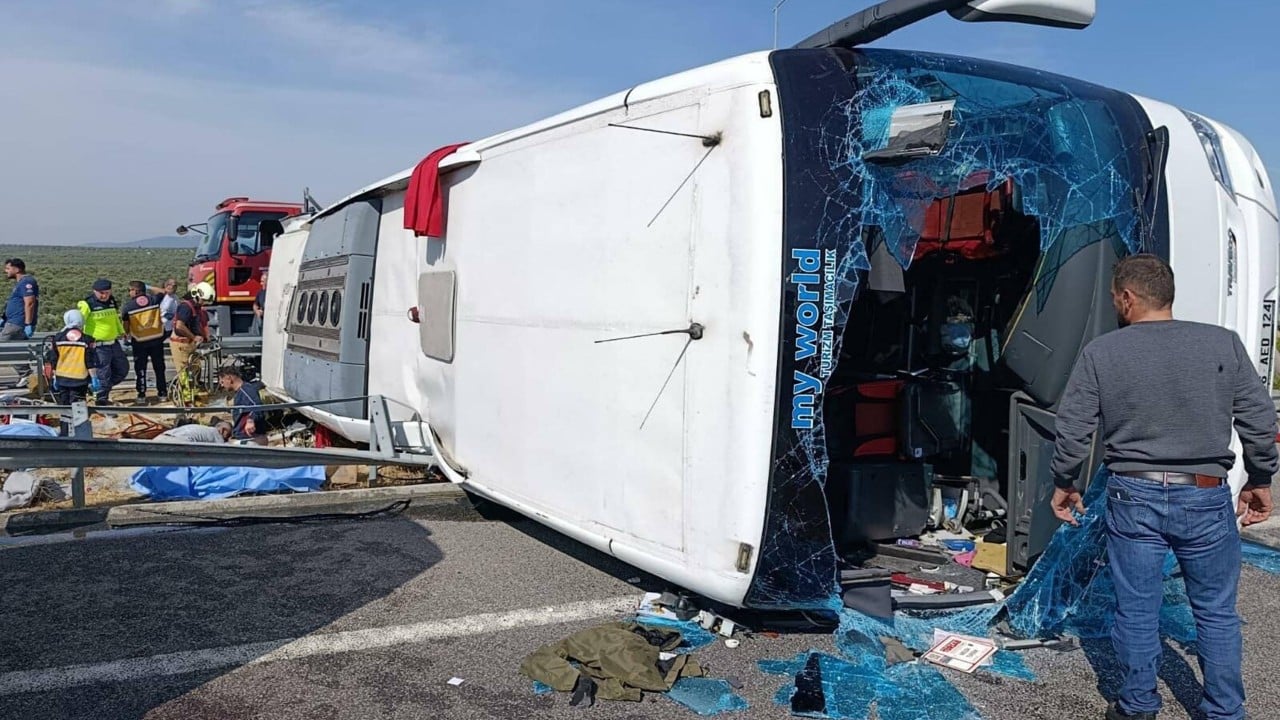
The asphalt in western Turkey always remembers the sun long after it has gone. It holds onto the day's heat, radiating a faint, deceptive warmth upward into the chill of the midnight air. It was along this stretch—where the highway cuts through the vast, quiet expanse between cities—that a journey folded into catastrophe.
Eleven lives ended here. Twenty-seven others were fractured, their ordinary Tuesday dissolving into a blur of flashing amber lights, twisted metal, and the profound, echoing silence that follows a sudden collision.
A passenger coach, built to carry the collective hopes, weary returns, and restless anticipation of dozens of travelers, met a heavy lorry in the dark. Official reports would later dryly categorize it: a vehicle accident, coordinates noted, casualty counts tallied. But statistics are a poor cloak for the reality of what happens when forty tons of momentum collide with human fragility.
Consider the interior of that coach in the hours before the impact.
Outside, the landscape blurred into an abstract smear of ink and occasional distant window lights. Inside, the world narrowed to the soft hum of the engine, the glow of a smartphone screen illuminating a tired face, the quiet rustle of a jacket adjusted against the draft of the air conditioning. Someone was thinking about tomorrow's breakfast. Someone else was dreading an early morning meeting. A student was watching the headlights sweep across the ceiling of the bus, lulled by the rhythmic sway of the journey.
Distance creates an illusion of safety. We sit behind tinted glass, separated from the raw physics of our travel by inches of fiberglass and rubber. We trust the invisible contract of the highway. We assume that the white lines painted on the dark stone will hold, that the drivers steering these massive vessels are as infallible as the machines they command, and that the night will simply pass us from one destination to the next without demanding a toll.
Then came the split second.
Physics does not negotiate. When a coach carrying passengers collides with a lorry, the kinetic energy unleashed does not care about schedules, birthdays, or quiet dreams. It simply rearranges matter. Metal screams. Glass shatters into constellations of diamond dust. The familiar, safe interior of the cabin instantly becomes a chaotic arena where gravity and inertia dictate everything.
In the aftermath, the numbers began their cold ascent. Eleven dead. Twenty-seven injured.
In government offices and newsrooms, those figures become data points. They populate spreadsheets and scroll across ticker tapes. They are analyzed for cause, investigated for fatigue, weighed against regulations
The Final Mile of the Night When the Road Breaks Open
news
Note: This story is constructed around the verified report of a tragic coach-and-lorry collision in western Turkey that left 11 dead and 27 injured, using narrative framing to explore the human weight behind highway transit risks.
Darkness on a long-haul highway is never just an absence of light. It is a texture. It settles over the asphalt like heavy velvet, swallowing the white lines, flattening the horizon, and turning the mechanical hum of tires into a hypnotic lullaby. For the passengers aboard the long-distance coach rolling through the western contours of Turkey, that darkness felt ordinary. Luggage shifted in the overhead racks. Phones glowed in lap-lit pools of blue light, casting tired faces against the double-paned glass. Some people were already drifting toward sleep, lulled by the steady vibration of the chassis moving through the cool night air.
Then came the physics.
Not a sound, initially, but a sudden, violent deceleration that wrenched bodies forward against seatbelts and metal frames. Metal screamed against metal. Glass exploded in a cascading starburst of diamond shards. In the span of a single heartbeat, a routine transit route transformed into a catastrophic point of impact where a passenger coach collided with a stationary or slow-moving lorry.
When the dust and silence finally settled over the highway, the toll was stark and merciless. Eleven lives extinguished. Twenty-seven others altered forever by trauma, broken bones, and shattered glass. Officials would later arrive to measure skid marks, check tachographs, and file the grim mathematics of disaster into official ledgers. But numbers cannot measure the weight of an empty seat at a breakfast table the next morning.
To understand why such tragedies happen, we have to look past the bureaucratic language of accident reports and examine the invisible human elements that govern our movement across the modern world. We live in an era that demands constant motion. We ship goods overnight, commute across provinces, and treat distance as an inconvenience to be erased by horsepower. Yet, asphalt is unforgiving.
Consider what happens inside the cab of a commercial vehicle or behind the wheel of a heavy passenger transport at three in the morning. (Note: This is a composite reconstruction based on standard forensic findings in highway transit investigations, not a record of a specific individual's private thoughts). The driver's eyes burn. The white lines on the road begin to blur into a single continuous ribbon. Fatigue is a creeping narcotic; it doesn't announce itself with a sudden blackout, but rather through micro-sleeps—fractions of a second where the brain disconnects from the visual field while the vehicle continues hurtling forward at highway speeds.
In that microscopic gap between awareness and oblivion, a multi-ton lorry parked or crawling on the shoulder ceases to be a barrier and becomes an inevitability.
The western regions of Turkey are crisscrossed by vital economic arteries. These highways carry the heartbeat of commerce and tourism, linking bustling industrial hubs with coastal landscapes. They are marvels of engineering, wide and paved for speed. But speed amplifies error. When a massive coach, carrying dozens of sleeping souls, meets the immovable mass of a heavy transport vehicle, the margins for human error shrink to zero.
Emergency responders arrived to a scene of chaotic confusion. Sirens cut through the night air, painting the tarmac in flashing strokes of red and blue. Paramedics worked with practiced, grim urgency, triaging the injured, cutting metal away from trapped limbs, and carrying the wounded into the waiting bellies of ambulances. For the survivors, the immediate aftermath was a blur of cold air, sterile hospital lights, and the overwhelming disorientation of having survived a brush with finality.
Why do these disasters continue to haunt our highways?
The answer lies in the collision between human limitations and industrial ambition. We expect drivers to maintain superhuman vigilance across grueling, uninterrupted hours. We push supply chains to the absolute edge of efficiency. We design vehicles capable of immense velocity, but we cannot engineer away the vulnerability of the human nervous system.
When the news cycle moves on—as it always does—the wreckage is cleared, the highway is repaved, and the traffic resumes its relentless flow. Commuters will drive past the very same stretch of road, glancing momentarily at the shoulder before turning their attention back to the radio or the phone call waiting on speaker.
Yet, for twenty-seven families grappling with physical rehabilitation and psychological scars, and for the families of the eleven who never made it home, the journey never truly ended. It froze in that single, violent moment on a western highway.
The road outside continues to hum, carrying millions of strangers through the dark, all of them trusting their lives to the stranger behind the wheel, the integrity of the steel around them, and the fragile hope that the night will hold together until morning.
