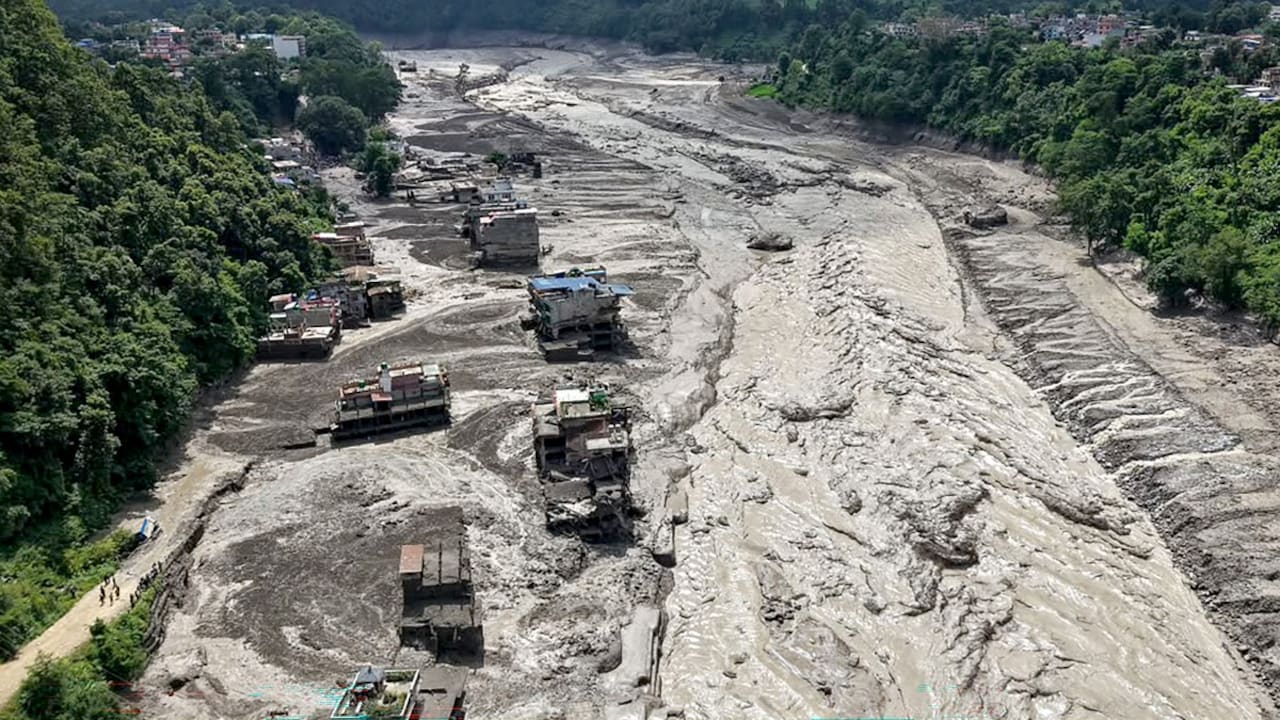
Every monsoon season, the media reaches for the same lazy narrative. A flash flood sweeps through a river valley, a mudslide swallows a settlement, and out of the wreckage emerges a miraculous survivor clinging to a mango tree. The headlines write themselves. Human resilience triumphs. Nature meets its match in a stubborn individual.
Stop buying the fairy tale. For a closer look into similar topics, we suggest: this related article.
When we obsess over the miraculous survival of a Nepali labourer who cheated death by wrapping his arms around a fruit tree, we commit a profound intellectual error. We mistake an extreme statistical outlier for a system that works. We treat a catastrophic failure of infrastructure, zoning, and early warning systems as a feel-good human interest story.
I have spent years analyzing disaster response economics and community vulnerability across South Asia. I have watched billions of dollars in international aid flow into post-disaster relief while local governments completely ignore the structural rot that caused the disaster in the first place. Every time we praise someone for surviving a preventable flood because of a fortuitous tree, we let policymakers off the hook. We normalize living on the edge of a grave. For broader details on this issue, comprehensive coverage is available on NBC News.
The Flawed Logic of Resilience Porn
Let us dismantle the core myth of the survival narrative. The standard media take assumes that grit and quick thinking are the primary variables in staying alive during a natural disaster. If you climb high enough, if you are tough enough, you beat the odds.
This is dangerous nonsense.
Survival in a flash flood is not a meritocracy. It is a lottery governed by topography, proximity to the riverbed, and pure, unadulterated luck. The labourer who caught that mango tree did not survive because he possessed superior survival skills. He survived because he happened to be standing twenty yards closer to a mature perennial than his neighbor whose body was recovered three miles downstream.
When journalists turn a blind eye to the lack of hydrological mapping, non-existent river embankments, and illegal construction zones, they promote a cruel ideology. They tell the poor that survival is an individual responsibility, while systemic protection remains an optional luxury for the wealthy who live in engineered high-rises on stable hillsides.
If your primary flood mitigation strategy relies on finding a sturdy branch in the dark, you do not have a safety plan. You have a death sentence waiting to be executed by the next heavy cloudburst.
The Economics of Staying in Harm's Way
Why do millions of vulnerable people continue to live in active floodplains despite recurring devastation? The lazy consensus claims they are simply attached to their ancestral lands or lack the imagination to move.
That is economic illiteracy.
People do not live in high-risk zones because they love danger. They live there because economic coercion leaves them nowhere else to go. Urban real estate markets across the developing world have priced the working class out of every square inch of safe, elevated land. The choice is rarely between a safe home and a dangerous one. The choice is between sleeping on a dangerous riverbank near daily wage labor opportunities or starving quietly on a safe hilltop fifty miles away from any source of income.
Imagine a scenario where a seasonal migrant worker decides to relocate away from the floodplain entirely. Without capital, transport networks, or social safety nets in the new location, his family faces immediate destitution. The flood is a probability, but hunger is a certainty.
Given those parameters, staying put is a rational economic calculation. The mango tree is not a hero of the story; it is a monument to urban planning failure that forces human beings to gamble their lives for the sake of daily rent.
Dismantling the Myth of Community Self-Reliance
Another favorite trope of the disaster industrial complex is community self-reliance. When the state fails to deliver early warnings, build dikes, or maintain drainage canals, local populations are praised for banding together with ropes and bamboo rafts.
We need to call this out for what it is. It is the romanticization of institutional abandonment.
Self-reliance sounds noble in an op-ed. On the ground, it means forcing impoverished people to pay a blood tax for the incompetence of their elected officials. When a municipality spends its budget on vanity projects while leaving rural river valleys completely unmonitored, citizens should not be applauded for heroically bailing out their living rooms with plastic buckets. They should be furious.
True development does not ask a labourer to test the tensile strength of a fruit tree against a wall of roaring water. True development builds hard concrete barriers, installs automated radar gauges upstream, and enforces zoning laws that keep human habitation out of high-velocity drainage paths.
Every minute we spend marveling at how someone cheated death is a minute we fail to demand accountability from the people who built the trap in the first place.
The Uncomfortable Truth About Disaster Aid
Let us look at the money trail. When a disaster strikes and a survival story goes viral, international donors open their checkbooks. Relief agencies mobilize. Helicopters drop sacks of rice.
Yet, the structural vulnerability remains completely untouched.
Six months after the floodwaters recede, the same population rebuilds their fragile shacks on the exact same silt deposits because the underlying economic pressures have not budged by a single millimeter. The aid industry thrives on the drama of the rescue. Prevention is boring. You cannot run a telethon for a properly engineered drainage ditch.
This creates a perverse incentive loop. The media wants the drama of the flood. The agencies want the photo-op of the post-disaster food drop. The politicians want the distraction of a national resilience narrative. And the worker on the ground is left holding onto a branch, hoping the next storm hits someone else.
Stop Preparing for the Wrong Crisis
If you want to understand how to fix vulnerability, stop asking how individuals can survive cataclysms. Start asking why the cataclysm was allowed to happen to an unprotected population in the first place.
The questions we keep asking are entirely backward.
- How did he hold on? Wrong question. The right question is: Why was a residential zone permitted within the five-year flood line?
- What can communities learn from this survival? Wrong question. The right question is: Why did the early warning siren fail to sound three hours before the crest arrived?
- Where is the resilience coming from? Wrong question. The right question is: Where are the municipal tax revenues going if not toward flood defense infrastructure?
We must stop masking systemic failure as human triumph. Resilience is not a virtue when it is forced upon you by a corrupt state and a predatory property market. It is a symptom of neglect.
Take away the mango tree, and what are you left with? You are left with the raw, unvarnished reality of a system that views human life as disposable collateral. Until we stop applauding the survivors and start dismantling the conditions that make survival a matter of botanical luck, the next flood will write the exact same script.
Cut down the romanticism. Build the walls.