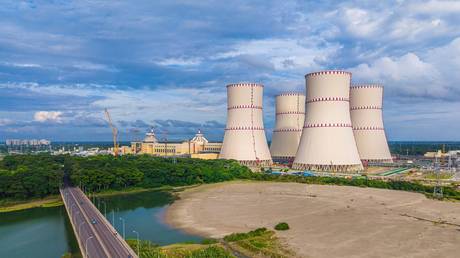
Bangladesh is transitioning from an energy-constrained, fossil-fuel-dependent electrical grid to a baseload-anchored industrial power system through the commissioning of the Rooppur Nuclear Power Plant. Built by Russia's state atomic energy corporation Rosatom, this facility introduces 2,400 megawatts (MW) of zero-carbon generation capacity via two VVER-1200 pressurized water reactors. Evaluating this asset requires stripping away geopolitical hype and examining three operational variables: the thermodynamics of baseload substitution, the structural bottlenecks of high-voltage transmission, and the foreign-currency debt mechanics governing the project's levelized cost of electricity.
The Structural Deficit of the Bangladeshi Power Grid
To understand the operational impact of the Rooppur facility, one must first diagnose the historical failure modes of the Bangladesh Power Development Board (BPDB) grid. For two decades, rapid industrial expansion—primarily driven by the ready-made garment sector and heavy manufacturing—outpaced domestic generation capacity. The state bridged this gap through emergency procurement: short-term rental power plants burning imported heavy fuel oil (HFO) and high-speed diesel, alongside domestic natural gas turbines. For a different view, read: this related article.
This stopgap architecture created three compounding vulnerabilities:
- Fuel Import Exposure: Domestic natural gas reserves in the Bengal Basin began depleting faster than new fields could be brought online. Replacing domestic gas with imported liquefied natural gas (LNG) and liquid fuels exposed the national budget to global commodity price shocks. When international LNG spot prices spiked, the BPDB faced an immediate liquidity crisis, forcing load-shedding across industrial zones.
- Capacity Charge Bleed: Under agreements with independent power producers (IPPs), the state guaranteed fixed capacity payments regardless of whether the grid dispatched the electricity. During periods of fuel shortages or low off-peak demand, Bangladesh paid billions of taka for idle thermal capacity.
- Merit-Order Distortion: High-cost liquid-fuel plants frequently operated out of economic merit order simply to maintain grid frequency and voltage stability in the western zone of the country, where industrial load was growing fastest without corresponding local generation.
Introducing 2,400 MW of continuous baseload power alters this dispatch curve. In electrical engineering, baseload generation represents the minimum level of demand on an electrical grid over a span of days or weeks. Thermal coal and nuclear plants are engineered to run at maximum rated output continuously, operating at the bottom of the merit-order stack due to low marginal fuel costs. By locking in 2,400 MW of continuous output at Rooppur, the BPDB can theoretically displace its most expensive HFO and diesel peaking units from continuous duty, relegating them strictly to short-duration peak shaving. Related analysis regarding this has been shared by Gizmodo.
Reactor Architecture and Operational Mechanics
The Rooppur station utilizes the VVER-1200 (AES-2006) reactor design, a Generation III+ pressurized water reactor (PWR). Unlike legacy Generation II designs, the VVER-1200 integrates active and passive safety systems engineered to manage heat removal without operator intervention or external AC power during a station blackout.
The operational profile of these units rests on four mechanical subsystems:
- Primary Coolant Loop: Light water circulates under high pressure (approximately 16.2 megapascals) through the reactor core, absorbing thermal energy from nuclear fission without boiling. This superheated water transfers heat to a secondary loop via four horizontal steam generators.
- Passive Heat Removal System (PHRS): If the plant loses off-site power and emergency diesel generators fail, air-cooled heat exchangers mounted outside the containment dome draw heat directly from the steam generators via natural convection. Because hot air rises and cool air sinks, this thermodynamic loop operates indefinitely without pumps or electricity.
- Core Catcher (Molten Core Retention Device): Positioned directly beneath the reactor pressure vessel, this steel-and-ceramic basin is designed to capture, cool, and contain corium—the molten mixture of nuclear fuel and structural metal—in the hypothetical event of a severe core meltdown, preventing breach of the containment foundation.
- Double Containment Structure: The reactor sits inside an inner prestressed concrete shell lined with steel to retain internal pressure, surrounded by an outer reinforced concrete wall engineered to withstand external impacts, earthquakes, and extreme cyclonic wind loads common to the Bay of Bengal region.
From a grid-management perspective, the VVER-1200 offers a 60-year design life and an 18-month refueling cycle. While nuclear units are traditionally inflexible, modern VVER-1200 control rod architectures permit limited load-following maneuvers, allowing operators to adjust thermal output within defined bands if grid demand drops precipitously during major national holidays. However, operating a nuclear plant below full capacity destroys its economic efficiency, because fixed capital costs remain identical whether the reactor runs at 100 percent or 60 percent output.
The Transmission Bottleneck and Grid Synchronization
Generating 2,400 MW at a single node on the banks of the Padma River introduces severe electrical engineering challenges. A grid cannot absorb a concentrated block of power unless its high-voltage transmission network can evacuate the load and survive the sudden loss of the largest single generating unit—a standard known as the N-1 contingency criterion.
If a 1,200 MW unit at Rooppur trips offline instantaneously due to a fault, the Bangladeshi grid experiences an immediate frequency drop. Without sufficient spinning reserve—synchronized generators running with spare capacity—or automated under-frequency load-shedding relays, this sudden deficit triggers cascading outages across the entire country.
Historically, Bangladesh operated a fragmented 230 kilovolt (kV) and 132 kV transmission network incapable of moving multi-gigawatt loads from the western Ishwardi region to the primary load centers in Dhaka and Chattogram. Integrating Rooppur required constructing dedicated 400 kV double-circuit transmission corridors, including major river crossings over the Padma and Jamuna rivers.
Three physical constraints govern the true value of Rooppur's output:
- Evacuation Capacity: Until every 400 kV line and associated grid substation is fully commissioned and energized, the plant cannot dispatch both units at full nameplate capacity simultaneously. Any delay in right-of-way acquisition or substation transformer installation directly strands generating capacity.
- Reactive Power and Voltage Control: Long-distance 400 kV lines generate significant capacitive reactive power under light load conditions, risking over-voltage spikes. Grid operators must deploy shunt reactors and static synchronous compensators (STATCOMs) to absorb excess reactive power and maintain voltage within statutory limits.
- Frequency Regulation: The BPDB grid has historically suffered from wide frequency excursions outside the nominal 50 Hertz band. Nuclear reactors require stable grid frequency to keep their primary coolant pumps operating at rated speed. Severe grid instability forces the reactor protection system to trip the plant offline to protect the turbine-generator set, turning a grid disturbance into a prolonged generation loss.
Financial Architecture and the Debt-Service Equation
Evaluating Rooppur solely on megawatts ignores the balance-sheet reality of mega-project finance. The facility carries an estimated capital cost of $12.65 billion, making it the single largest infrastructure expenditure in Bangladesh's history. Russia financed 90 percent of this cost—approximately $11.38 billion—through a state export credit facility, with the remaining 10 percent funded directly by the Government of Bangladesh.
This financing structure dictates the project's true economic viability through three mechanisms:
- Front-Loaded Capital Intensity: Unlike gas or coal plants, where fuel accounts for the majority of lifetime expenses, nuclear power is overwhelmingly a capital-cost business. Roughly 70 to 80 percent of the levelized cost of electricity (LCOE) from Rooppur stems from construction debt service rather than uranium fuel assemblies.
- Foreign Exchange Mismatch: The BPDB collects revenue from domestic consumers and industrial buyers in Bangladeshi taka, often at subsidized retail tariffs below the true cost of generation. However, the Russian sovereign loan must be repaid in foreign currency (historically structured in US dollars, though payment mechanisms required restructuring following international financial sanctions on Russian banking institutions). Any depreciation of the taka against hard currencies increases the real domestic cost of servicing the nuclear debt.
- The Capacity Factor Mandate: Because capital repayments are fixed on a strict amortization schedule, the per-kilowatt-hour cost of Rooppur electricity depends entirely on its capacity factor—the ratio of actual electrical energy produced over a given period to the maximum possible electrical energy it could have produced. If Rooppur operates at an 85 to 90 percent capacity factor, its LCOE remains competitive against imported coal and LNG. If transmission bottlenecks or grid trips force the plant to operate at a 50 percent capacity factor, the fixed debt service is spread across half as many kilowatt-hours, doubling the unit cost of power.
The Nuclear Fuel Cycle and Waste Liability
A rigorous assessment must also account for the back-end operational dependencies built into the intergovernmental agreements between Dhaka and Moscow. Bangladesh possesses neither domestic uranium enrichment facilities nor spent-fuel reprocessing infrastructure. Consequently, the country operates within a closed vendor-lock ecosystem.
Rosatom supplies the fabricated low-enriched uranium fuel assemblies through its fuel division, TVEL. While initial fuel loads are bundled into the construction financing package, Bangladesh must procure reload batches every 18 months for the next six decades. Because nuclear fuel has high energy density—a single pellet of enriched uranium holds the energy equivalent of roughly one ton of coal—a multi-year strategic reserve can be stored on-site in dry vaults. This insulates Bangladesh from the shipping bottlenecks and daily price volatility that plague LNG and coal imports.
However, spent nuclear fuel presents a permanent physical and financial liability. Upon removal from the reactor core, spent fuel assemblies remain intensely radioactive and thermally hot, requiring years of cooling in deep, boron-treated water pools inside the reactor building. Under the bilateral framework, Russia agreed to repatriate the spent nuclear fuel for reprocessing in Russian facilities. While this relieves Bangladesh of constructing a deep geological repository—a multi-billion-dollar undertaking requiring stable bedrock that the Ganges-Brahmaputra delta lacks—it binds Dhaka to Russian logistical, diplomatic, and regulatory cooperation for the entire operational lifespan of the station.
Strategic Limits and Operational Risks
Nuclear baseload generation is not a universal fix for an emerging economy's power sector. Treating Rooppur as a silver bullet obscures four structural risks that energy planners must actively manage:
- Lack of Peaking Flexibility: Daily electricity demand in Bangladesh fluctuates sharply between daytime industrial hours, evening residential lighting/cooling peaks, and late-night troughs. Rooppur supplies flat baseload power. It cannot ramp up rapidly at 7:00 PM to meet residential air-conditioning demand. Bangladesh must still maintain and pay for fast-ramping natural gas turbines, battery energy storage systems (BESS), or cross-border hydro imports from Nepal and Bhutan to balance the daily load curve.
- Single-Site Concentration Risk: Placing 2,400 MW—roughly 15 to 20 percent of the country's active generation—at a single geographical location violates basic principles of infrastructure decentralization. An extreme seismic event, severe riverbank erosion along the Padma, or a localized transmission corridor failure could sever a massive block of national supply simultaneously.
- Human Capital and Regulatory Independence: Operating a Generation III+ reactor safely requires a deeply ingrained nuclear safety culture and an autonomous regulator. The Bangladesh Atomic Energy Regulatory Authority (BAERA) must maintain absolute technical and political independence from the Ministry of Power, Energy and Mineral Resources. If production targets override maintenance schedules, equipment degradation accelerates.
- Tariff Reform Resistance: If the government continues selling electricity to retail and agricultural consumers below the wholesale bulk supply tariff, the financial deficit simply shifts from fuel subsidies to sovereign debt-service subsidies. Without automated tariff adjustments linked to generation costs, the BPDB's balance sheet remains structurally insolvent regardless of how efficiently Rooppur runs.
The Operational Playbook for Grid Integration
To capture the economic return on a $12.65 billion capital commitment, Bangladeshi energy authorities must shift focus from plant construction to system-level optimization. The following operational sequence dictates whether Rooppur becomes an industrial growth engine or a fiscal anchor:
- Enforce Strict Merit-Order Dispatch: Immediately retire or terminate contracts for the oldest, lowest-efficiency HFO and diesel rental plants as Rooppur's units clear commissioning tests. Paying capacity charges on obsolete liquid-fuel plants while running nuclear baseload destroys the macroeconomic savings of fuel substitution.
- Prioritize Spinning Reserve and Grid Automation: Dedicate a portion of existing combined-cycle gas turbines strictly to automated generation control (AGC) and frequency regulation. Install high-speed under-frequency load-shedding schemes across industrial feeders so a sudden trip at Rooppur sheds non-critical loads within milliseconds rather than collapsing grid frequency nationwide.
- Accelerate Cross-Border Hydro Integration: Utilize regional transmission interconnections with India, Nepal, and Bhutan to pair Rooppur's inflexible baseload with flexible hydroelectric power. Importing hydro during peak evening hours and exporting surplus baseload during off-peak night hours smooths the national load curve and maximizes Rooppur's capacity factor.
- Ring-Fence Foreign Currency Reserves for Debt Service: Establish an escrow mechanism that converts taka revenue from major industrial export zones directly into foreign-currency debt-service reserves, insulating loan repayments from central bank liquidity crunches and exchange-rate shocks.


