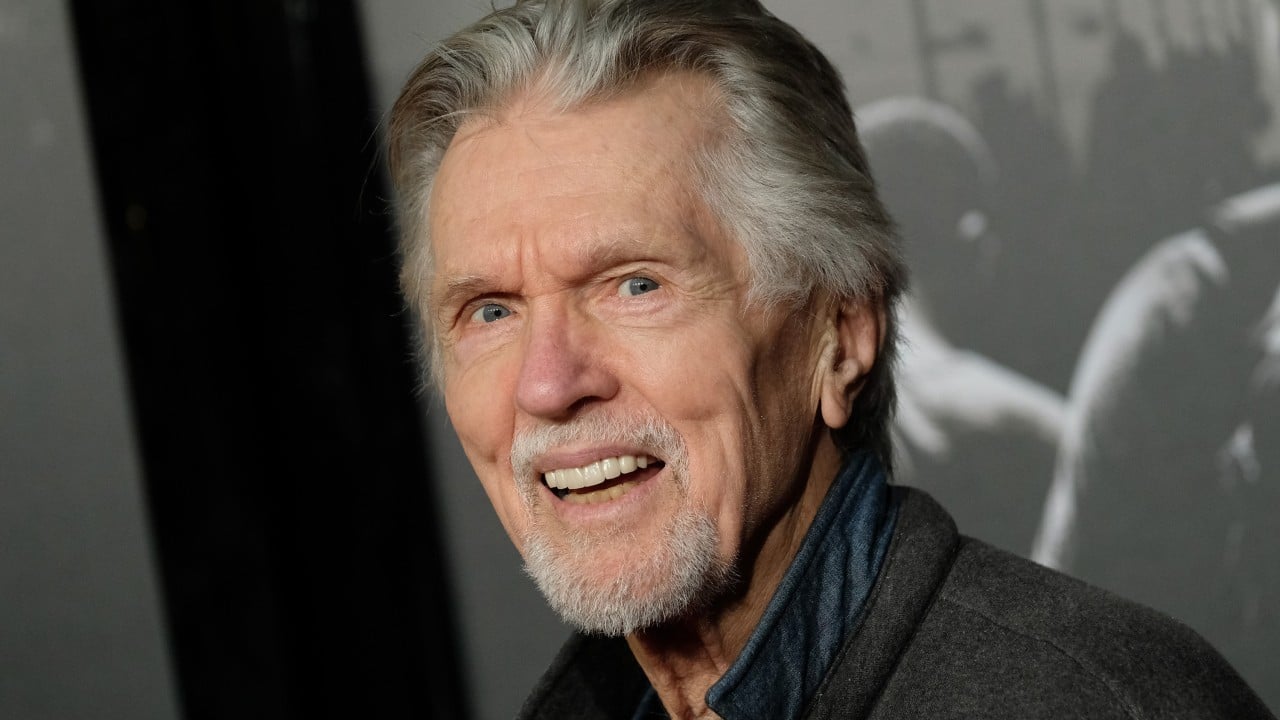
Heir apparents do not normally sit on late-night comedy sofas beside Hollywood stars to talk about reality television and childhood ambitions, yet Prince William walked onto The Graham Norton Show in October 2026 and immediately altered the communication playbook of the British monarchy. Standard tabloid coverage treats that moment as a sudden surprise—a set of audience gasps, a few quips about The Celebrity Traitors, and a passing nod to the Earthshot Prize. That surface reading misses the operational mechanics. A royal appearance on an entertainment flagship is not a spontaneous slip of protocol; it is a deliberate distribution play designed to lower institutional friction, widen reach beyond legacy royal beats, and attach high-trust cultural validators to a philanthropic initiative.
To understand why this appearance matters—and where typical coverage falls short—we need to separate observable facts from educated hypotheses, examine the incentives driving both sides of the sofa, and map how cultural proximity operates in modern public diplomacy.
Deconstructing Competitor Logic
Conventional entertainment reporting follows a predictable script when a senior royal steps outside ceremonial settings. It leads with shock ("gasps" in the studio), highlights humanizing trivia (liking Christopher Nolan films, wanting to be a DJ or police officer, or teasing The Celebrity Traitors cast member Ross Kemp), and tacks on a brief mention of the underlying cause, such as the Earthshot Prize.
That structure works well for quick click capture, but it leaves three analytical gaps:
- It treats surprise as accidental rather than engineered. Studio surprise is a classic broadcast staging device. When a high-status figure enters a room where guests are already seated, the contrast between formal hierarchy and casual banter creates an immediate attention spike that clips cleanly for social distribution.
- It flattens distinct value exchanges into a single "relatability" story. Being funny about reality TV serves a different communication function than explaining why environmental innovators need scaling capital. Conflating the two obscures how entertainment equity gets converted into institutional awareness.
- It ignores structural constraints. Even when a royal sounds relaxed on a talk show, the institutional role still bounds what can be said, how far self-deprecation can go, and which topics remain off-limits.
A sharper analysis asks a different question: how does a hereditary institution with strict reputational guardrails borrow velocity from mainstream entertainment without diluting its authority?
Known Facts vs. Educated Hypotheses
Rigorous strategy analysis requires keeping verified facts distinct from plausible interpretations.
Verified Facts from Public Reporting
- In October 2026, Prince William made a surprise appearance on The Graham Norton Show on BBC One as the first member of the royal family to join the show's sofa, appearing alongside Cate Blanchett, Hannah Waddingham, Robert Irwin, and musical guest Jorja Smith.
- The appearance coincided with promotion around the Earthshot Prize ahead of its 2026 ceremony scheduled in Mumbai, India.
- During the segment, Prince William spoke about the Earthshot Prize's goal of pairing urgency with optimism and scaling environmental solutions, while also sharing lighter personal details—including his family's enthusiasm for The Celebrity Traitors, a playful moment with Ross Kemp, an appreciation for Christopher Nolan's films such as The Dark Knight series, and childhood aspirations to be a police officer or a DJ.
Educated Hypotheses on Strategic Intent
- Audience arbitrage: Traditional royal coverage reaches audiences already tuned into monarchy news. A flagship entertainment program exposes the Earthshot Prize to viewers whose primary media habit is comedy, film, or mainstream television rather than news bulletins.
- Third-party credibility transfer: Sitting beside figures such as Cate Blanchett, Hannah Waddingham, and Robert Irwin—each connected to the Earthshot orbit as a council member, former host, or global ambassador—allows the initiative to be framed through established cultural voices rather than institutional press releases alone.
- Controlled informality: Sharing low-stakes preferences (movies, reality TV, past career fantasies) signals approachability while keeping core constitutional and family boundaries intact.
Notice the difference between those two lists. We do not need fabricated backstage quotes or invented ratings claims to see the mechanism at work. The public record gives us the inputs and the setting; strategic analysis explains the incentive structure behind them.
The Three Pillars of High-Stakes Celebrity Crossover
When an institution with high symbolic weight enters a casual entertainment format, its effectiveness depends on three interlocking pillars: Format Fit, Surrogate Validators, and Message-to-Moment Ratio.
Format Fit
Not every entertainment venue serves an institutional goal. A combative political panel or a purely slapstick sketch can create friction that distracts from the substance. A hosted couch format led by an established comic interviewer creates a middle ground: low enough on the formality scale to permit humor and conversational pacing, yet structured enough to let a guest articulate a serious mission without sounding like they are reading a manifesto.
The bottleneck occurs when the humor becomes so dominant that the substantive goal disappears entirely, or when the guest pivots too abruptly from a joke into heavy policy talk and breaks the room's rhythm.
Surrogate Validators
Public figures rarely persuade skeptics or indifferent viewers solely through self-endorsement. When co-guests already have organic ties to the project—whether through council work, hosting duties, or global ambassadorship—they act as social proof. They validate that the initiative involves real people and real work outside the palace orbit.
The limitation here is diffusion of focus. Sharing a sofa with multiple personalities means airtime is contested, and a guest's core message can get compressed into brief soundbites between other stories.
Message-to-Moment Ratio
Audiences tune into entertainment shows primarily for tension release, humor, and human texture, not instruction. If a guest delivers ninety percent mission statement and ten percent personality, viewers often tune out. Conversely, if the appearance is ninety-five percent trivia and five percent substance, the strategic payoff shrinks to mere novelty.
The operational sweet spot is pairing a memorable, disarming moment with a clear, repeatable framing of the mission—such as linking environmental urgency with practical optimism and global scaling.
Cause-and-Effect Chains Tabloid Coverage Misses
Typical celebrity coverage treats each quote as an isolated item. In practice, each element triggers a downstream chain reaction that shapes public perception.
Reality TV Banter Lowers Perceived Distance
When a public figure talks casually about family viewing habits—such as watching The Celebrity Traitors or teasing a participant like Ross Kemp—it reduces perceived social distance. Lower distance makes audiences more receptive to listening when the conversation shifts to a serious topic. Yet this same informality carries a trade-off: too much everyday familiarity can chip away at the mystique that traditionally separates a constitutional figurehead from an ordinary television personality.
Cultural Taste Signals Cognitive Texture
Mentioning an interest in "deep-thinking" cinema or filmmakers like Christopher Nolan does more than fill conversational space. It signals that the speaker engages with complex, atmospheric narratives rather than viewing media purely as background noise. That subtle cue helps counter one-dimensional portrayals, though it can also invite scrutiny if commentators over-read personal entertainment choices as political or philosophical statements.
Humor Around Past Ambitions Reframes Authority
Admitting to childhood ideas of becoming a police officer or a DJ—and joking about lacking skill at the latter—turns a potential status gap into shared amusement. Self-deprecation works best when delivered from a position of secure standing; someone with obvious authority can joke about past shortcomings without looking weak. The second limitation is repetition: if self-deprecating jokes become the sole lens through which a figure is covered, serious policy or philanthropic arguments can struggle for weight.
How Communications Teams Can Operationalize This Playbook
Any organization, brand, or public figure trying to replicate a high-contrast media crossover can apply a disciplined sequence rather than relying on luck.
- Define the single non-negotiable takeaway before booking. Decide on one clear idea the audience should remember after the clip ends, even if they forget every joke in the segment.
- Audit the host and sofa dynamic for tone alignment. Verify that the host's interviewing style rewards candidness without cornering the guest into territory that violates core boundaries.
- Align co-guests around shared proof points. Where possible, place co-guests who have genuine familiarity with the initiative so endorsement feels earned rather than staged.
- Anchor serious claims in concrete momentum. Tie abstract goals—like optimism, innovation, or global impact—to visible milestones or upcoming events that give viewers a reason to pay attention beyond the broadcast.
- Measure downstream discovery, not just clip applause. Track whether search interest, project awareness, and sustained engagement rise after the initial entertainment spike fades, rather than judging success solely by studio laughter.
Boundary Conditions and Strategic Limits
Even a well-executed media crossover has hard ceilings. Entertainment formats compress nuance; complex systemic problems cannot be solved or fully explained in a five-minute sofa exchange. Furthermore, novelty decays with frequency. The first time a major figure breaks an unwritten norm—such as appearing on a flagship entertainment chat show—carries built-in curiosity value. Repeating the exact same move too often turns a high-impact event into routine content.
Nor does a warm television appearance erase underlying disagreements, structural critiques, or long-term institutional pressures. Charm and relatability widen the top of the attention funnel; they do not substitute for sustained execution over years.
For communications leaders and strategists planning high-stakes visibility pushes around flagship events, treat surprise entertainment appearances as high-leverage top-of-funnel accelerators rather than standalone campaigns—and pair every moment of disarming levity with a clear, concrete bridge back to measurable real-world outcomes.