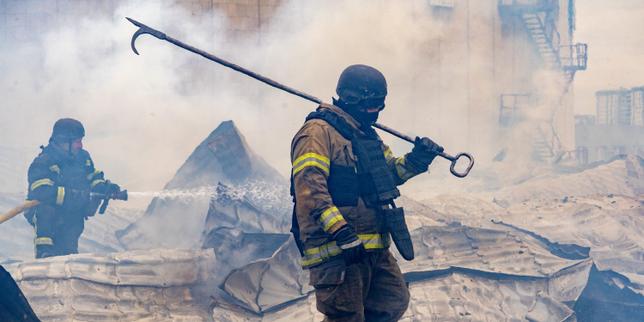
At least four civilians are dead after fresh Russian strikes slammed into Ukraine's Dnipropetrovsk and Kharkiv regions.
It's a grim, familiar headline. Yet most news coverage treats these overnight bombardments like isolated tragedies rather than what they actually are: a deliberate, grinding strategy to break Ukraine's industrial backbone and make eastern cities unlivable.
If you've been following the war closely, you already know that Kharkiv and Dnipropetrovsk aren't random dots on a map. They're the two load-bearing walls of eastern Ukraine's survival. When missiles and glide bombs hit residential blocks, rail junctions, and power substations in these oblasts, Moscow isn't just chasing tactical gains on the front line. It's trying to force a mass exodus and choke off the logistics keeping Ukrainian troops supplied.
Let's break down what's actually happening on the ground, why these two regions take the heaviest beating, and what the real human and strategic toll looks like right now.
What Happened in Dnipropetrovsk and Kharkiv
Overnight and early morning barrages targeted both civilian infrastructure and residential neighborhoods across the two neighboring regions. Regional military administrations reported at least four fatalities alongside multiple injuries, damaged apartment buildings, and disrupted local utilities.
Emergency crews from Ukraine's State Emergency Service (DSNS) spent hours sifting through concrete rubble and shattered glass. That's standard operating procedure now in eastern Ukraine, though nothing about it should ever feel normal.
In Kharkiv, proximity is the biggest curse. Sitting roughly 30 kilometers from the Russian border, Ukraine's second-largest city has virtually zero warning time when ballistic missiles or modified glide bombs (KABs) launch from Russia's Belgorod region. Air raid sirens often wail after the first explosions rattle windows across the city.
Dnipropetrovsk faces a slightly different threat profile. Positioned just west of the active Donetsk front and south of Kharkiv, cities like Dnipro, Kryvyi Rih, and Nikopol get hit from multiple directions. Nikopol sits directly across the dried-up Kakhovka reservoir from Russian-occupied Enerhodar, enduring daily artillery and FPV drone fire, while Dnipro and Kryvyi Rih absorb long-range ballistic missiles and Shahed attack drones.
Why Moscow Targets These Two Regions Relentlessly
You can't understand the war in eastern Ukraine without looking at a logistics map. Honestly, once you see the rail lines and industrial hubs, the pattern of Russian strikes makes cold, brutal sense.
Dnipropetrovsk Is Ukraine's Logistics Artery
Dnipro isn't just a major city. It's the primary medical, logistical, and transit hub connecting western Ukraine to the entire eastern and southern fronts.
Wounded soldiers from Donetsk and Zaporizhzhia are stabilized in Dnipro's hospitals before being evacuated further west. Ammunition, fuel, and replacement vehicles flow through its rail yards. When Russia strikes Dnipropetrovsk, it's trying to sever the supply chain feeding Ukrainian defensive lines.
Kryvyi Rih, located in the southwest of the oblast, carries massive economic weight. It's one of Ukraine's largest steel and mining centers. Hitting industrial capacity here directly drains Kyiv's domestic revenue and manufacturing muscle.
Kharkiv Is a Psychological and Geographic Pressure Point
Kharkiv has defied Russian capture since February 2022, and Moscow hasn't forgiven the city for it.
Beyond pure punitive bombardment, Russia uses constant strikes on Kharkiv to pin down Ukrainian air defense systems and troop reserves. Every Patriot or IRIS-T battery stationed to protect Kharkiv's roughly 1.3 million remaining residents is a battery that can't cover frontline brigades or Kyiv's energy grid.
Russia also wants to create a "gray zone" along the border. By systematically destroying housing, schools, and power transformers, the Kremlin hopes to trigger another wave of internal displacement that would overwhelm social services in central and western Ukraine.
The Air Defense Gap Nobody Likes Talking About
Here's the uncomfortable truth about stopping these attacks: Ukraine doesn't have enough interceptors to cover everything, and the math isn't in Kyiv's favor.
Western air defense systems like the American Patriot and Franco-Italian SAMP/T are remarkably effective against Russian Iskander-M ballistic missiles. The problem is cost and scarcity. An interceptor missile can cost upwards of $3 million to $4 million, and global production lines simply don't churn them out fast enough to match Russia's bombardment tempo.
Meanwhile, Russian forces have leaned heavily into cheap, mass-produced tools:
- Shahed-type one-way attack drones launched in swarms of dozens every night to exhaust mobile air defense teams and map radar positions.
- Unified gliding and correction modules (UMPK) strapped onto old Soviet FAB-500 and FAB-1500 dumb bombs, allowing Russian Su-34 jets to drop devastating payloads from 50 to 70 kilometers behind the front line—safely out of reach of most Ukrainian short- and medium-range surface-to-air missiles.
- Ballistic missiles like the Iskander-M and North Korean KN-23, which fly on depressed trajectories and leave air defense crews with barely a couple of minutes to react.
You can't shoot down a $25,000 glide bomb kit with a $4 million interceptor every single day. Until Ukraine can consistently strike the Russian airfields launching those Su-34s—or deploy enough fighter jets with long-range air-to-air missiles to push Russian bombers back—regions like Kharkiv and Dnipropetrovsk remain dangerously exposed.
What Most Coverage Misses About Civilian Resilience
When international outlets report four deaths in Dnipropetrovsk and Kharkiv, the story usually stops at the casualty count and a quote from a regional governor. That misses how radically daily life has adapted under constant fire.
In Kharkiv, local authorities have literally moved civilization underground. Thousands of children attend classes in retrofitted metro stations and purpose-built subterranean schools equipped with blast doors and independent ventilation. Doctors perform surgeries in reinforced basements during red alerts.
In Dnipropetrovsk's frontline communities like Nikopol and Marhanets, residents live by wind direction and artillery acoustics. People know the difference between outgoing Ukrainian fire and incoming Russian shells by sound alone. Local volunteers patch blown-out windows with OSB plywood sheets within hours of an impact so families don't freeze when temperatures drop.
That resilience shouldn't be romanticized, though. Trauma compounds over years of broken sleep, air raid sirens, and sudden loss. Every strike that kills four people also leaves dozens of neighbors with shattered homes, lost livelihoods, and permanent psychological scars.
How to Follow Verified Reporting Without Falling for Misinformation
Whenever deadly strikes hit Ukraine, social media floods with recycled footage from previous years, unverified casualty claims, and coordinated disinformation campaigns trying to obscure responsibility.
If you want accurate, ground-truth updates on strikes in Kharkiv, Dnipropetrovsk, and across Ukraine, stick to primary verification channels rather than random aggregator accounts:
- Cross-check regional military administrations (OVA). Official Telegram channels for the Kharkiv Oblast Military Administration (led by Oleh Syniehubov) and Dnipropetrovsk Oblast Military Administration (led by Serhii Lysak) publish verified casualty figures, damage assessments, and rescue updates directly from emergency responders.
- Verify air raid and munition types via the Ukrainian Air Force. The official Air Force Command releases daily morning summaries detailing how many drones and missiles were launched, what types were used, and how many were intercepted.
- Rely on established on-the-ground journalists and monitors. Outlets like Kyiv Independent, Suspilne (Ukraine's public broadcaster), Reuters, and AFP maintain correspondents directly in Kharkiv and Dnipro who verify strike locations independently.
- Support verified humanitarian responders directly. If you're looking to turn concern into practical help, organizations like United24, the Ukrainian Red Cross, and World Central Kitchen operate active emergency relief, medical evacuation, and hot-meal programs in both Dnipropetrovsk and Kharkiv right after strikes occur.
Keep your eyes on the geographic pattern, not just the daily headline count. Watching where Russian strikes cluster in Dnipropetrovsk and Kharkiv tells you far more about Moscow's next operational priorities than any official statement from the Kremlin ever will.