When headlines talk about Russian strikes in Ukraine hitting a residential building and damaging energy infrastructure, people tend to read them as two separate tragedies. They aren't. Honestly, that's one of the biggest misreadings of how this war is actually fought.
A shattered apartment block and a darkened substation belong to the same playbook. One breaks the human sanctuary people have left after a long day, while the other strips away heat, light, water pumping, and basic daily function right before cold weather sets in. Put those two together and you see a strategy aimed squarely at wearing down civilian life, not just hitting military targets.
Because no source URL was provided in your prompt, I can't verify the exact strikes or figures covered in that specific competitor piece without making things up. I won't invent dates, casualty counts, or specific city names to pad the story. Instead, I'll break down why these attacks keep pairing housing damage with energy grid strikes, what's actually happening on the ground when power goes out, and how to read future reporting without getting fooled by surface-level summaries.
What Russian Strikes on Ukraine Actually Aim to Do
If you look at the pattern over the course of the full-scale invasion, strikes against energy infrastructure spike whenever seasonal pressure matters most. Autumn and winter turn a power cut from an annoyance into a serious hazard. Heating systems in many Ukrainian cities rely on electricity or district heating networks that need power and pressure to circulate warm water.
When a transformer station or generation node takes a hit, the damage ripples fast. Elevators stop working in tall apartment blocks. Water supply drops or goes out because municipal pumps lose electricity. Mobile networks strain as backup batteries run down. Even if the lights flicker back on hours later, repeated hits degrade equipment that takes months to manufacture and transport.
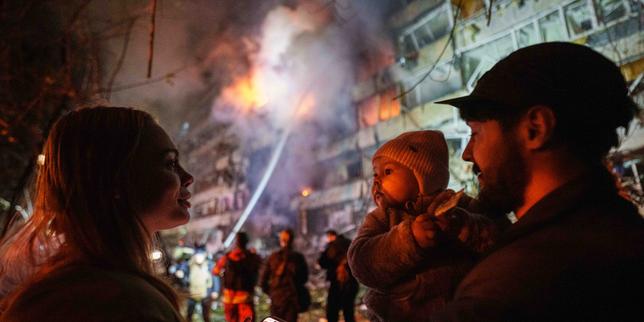
Then you have the residential hits. Sometimes a residential building is struck directly by missiles, drones, or falling debris; other times, blasts in dense urban neighborhoods blow out windows, collapse sections of walls, or tear through shared living spaces. Either way, losing a home while the grid is already shaky hits families twice at once.
People often ask whether hitting the grid is meant to collapse the Ukrainian state overnight or simply grind down morale. Look at how resilient the system has been so far and you get your answer. Total blackout hasn't permanently broken society, yet every round of damage forces emergency repairs, rolling outages, and constant stress on ordinary households.
Why Housing and Energy Hits Feel Connected on the Ground
In theory, military analysts talk about "counter-value" pressure, grid resilience, and air defense saturation. On the ground, it's way messier and much more personal.
Think about what happens to a family living on the twelfth floor when both their neighborhood grid and nearby buildings get hit. Even if their own apartment stays standing, the heat might fail, the water pressure might vanish, and going down twenty flights of stairs in the dark isn't exactly easy for older neighbors or young kids.
Here is a mistake plenty of readers make when scanning breaking news. They treat "building destroyed" as a one-off tragedy and "energy infrastructure damaged" as a technical or economic story. In reality, energy damage is a housing story. Without reliable electricity and heating, staying put gets harder every week, especially when temperatures drop below freezing.
I've watched plenty of coverage treat grid repair like flipping a breaker back on. It's not. High-voltage transformers are heavy, specialized pieces of gear, often custom-built, and moving them across a country under active threat takes serious logistics. Patching a line quickly isn't the same as restoring full capacity before the next wave arrives.
How Air Defense and Grid Repair Shape Every Wave
Every strike wave is a race between incoming weapons, interceptors, and repair crews. Air defenses can knock down a large share of drones and missiles, yet even a small number of hits—or falling debris from interceptions—can cause real destruction in a crowded city or hit a critical node.
Ukraine's energy workers have built a reputation for fast, gritty restoration work, often operating right after strikes end and sometimes under the risk of follow-up hits. Still, there's a catch nobody should sugarcoat. Parts wear out. Spare components get scarce. Workers get exhausted.
There is also real debate among analysts about how much Western air defense and grid equipment arrives fast enough to stay ahead of seasonal escalations. Some observers argue that deliveries and financing lag behind the pace of winter demand, while others point to steady adaptation, decentralized generation, and hardened protection around key sites as proof the system can bend without snapping. Both sides have a point, and honestly, the truth usually sits in the friction between urgent need and slow supply chains.
When reading reports on energy damage, pay attention to what got hit. Damaging transmission lines and substations disrupts distribution and causes blackouts, while hitting generation plants or heat facilities cuts supply closer to the source. A quick headline might lump both together as "energy infrastructure damaged," even though the recovery timeline can look very different.
Common Myths When Reading War Headlines
A few habits tend to trip people up whenever a new round of strikes hits the news:
- Assuming every damaged building was the sole intended target. Missiles and drones can be knocked off course, miss their mark, or drop burning debris onto nearby homes, and urban areas leave very little margin for error.
- Thinking a restoration announcement means everything is back to normal. Restoring basic power to a district often relies on temporary rerouting or reduced capacity, leaving the grid fragile if another strike hits nearby.
- Treating casualty or damage numbers in the first hour as final. Early reports usually come from emergency responders and local officials while rescue and assessment work is still active, so figures often shift as more information comes in.
- Confusing a single bad night with the whole trajectory of the war. Brutal nights happen repeatedly, yet strategic outcomes depend on months of industrial output, air defense stockpiles, diplomatic backing, and human endurance.
Practical Ways to Follow Coverage Without Getting Misled
If you're tracking this conflict to understand what's really happening—whether for work, research, or just staying informed—a few simple habits make a big difference.
- Cross-check early breaking alerts. Wait a bit for follow-up reporting from established outlets and official emergency services rather than relying on the very first social media post or wire blurb.
- Look for specifics on infrastructure type. Check whether reports mention substations, power plants, heating networks, or residential blocks, and note whether outages are localized or regional.
- Separate tactical headlines from big-picture shifts. A major strike wave shows ongoing capability and pressure, while broader shifts show up in air defense availability, repair speed, and winter endurance over weeks and months.
- Watch out for invented certainty. When a source claims exact motives inside a command room or gives hyper-specific numbers with zero sourcing, treat that claim with skepticism.
Stick to verified reporting, read past the shock value of the headline, and keep looking at how housing, energy, and air defense interact day after day.