You know the routine. You board a flight, the flight attendants run through the safety briefing, and you hear the familiar chime telling you to fasten your seatbelt. Most people treat it like a minor annoyance, clicking the buckle shut just to satisfy the crew before loosening it the second the plane climbs.
That lazy habit almost cost a man his life at 15,000 feet.
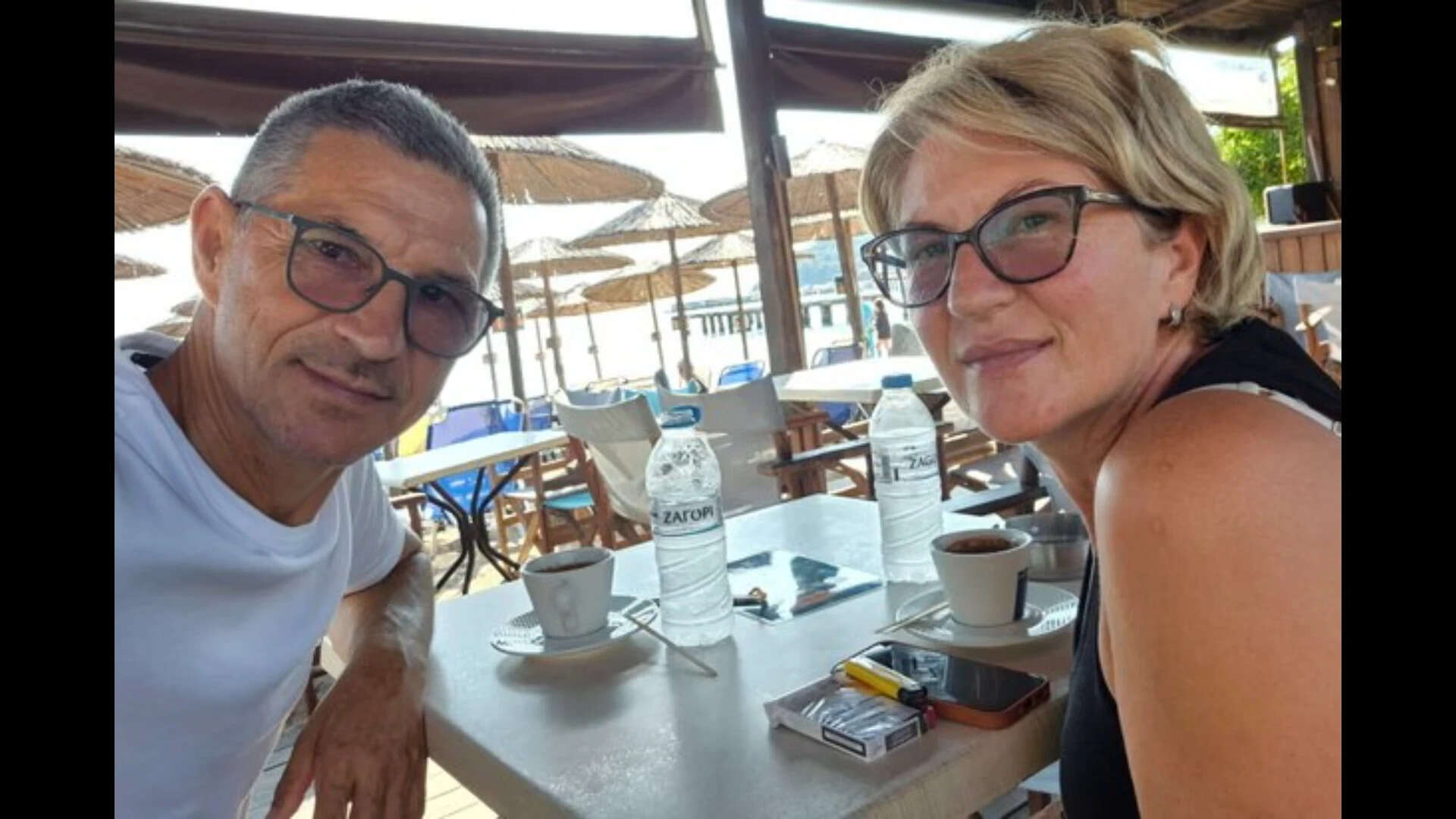
When a passenger window shattered on a Ryanair flight from Greece to Germany, the sudden explosive decompression didn't just drop oxygen masks. It instantly dragged 61-year-old Ljubisa Karovic headfirst toward the void. His head, neck, and shoulders were pulled completely outside the aircraft into the freezing, violent slipstream.
He didn't plummet to the earth for one reason. He had kept his seatbelt buckled.
The Nightmare at Fifteen Thousand Feet
The flight, operated by Ryanair subsidiary Malta Air, left Thessaloniki bound for Memmingen with nothing out of the ordinary. Ten minutes later, the cabin erupted into absolute terror. Passengers reported a massive bang, akin to a tire exploding but vastly louder.
A piece of debris, suspected to be a failed engine component, tore free and smashed right into the acrylic window where Karovic was sitting. The cabin pressure equalized instantly and brutally.
His wife, Svetlana Grkovic, was dozing just behind him when the detonation occurred. She opened her eyes to a horrific sight: her husband was being pulled out of the plane up to his chest.
Instinct took over. She grabbed his legs with everything she had, screaming into the chaotic roar of the depressurized cabin.
"I immediately reacted and grabbed his legs," Grkovic later told media outlets. "I thought: 'If we die, we die together.' It was horrible."
The Chaos Inside the Cabin
Inside the plane, it was pure survival mode. The sudden altitude drop of 9,000 feet left passengers struggling to breathe as oxygen masks dangled from the ceiling. Some passengers fled their seats in a panic, running toward the back of the aircraft because they thought an emergency door had blown open.
But Grkovic wasn't alone for long. A young woman sitting next to Karovic grabbed his hand, refusing to let the sky claim him. Then, a fellow passenger rushed forward to help Grkovic hold onto her husband's legs.
For nearly two agonizing minutes, they played a high-stakes tug-of-war with physics. The force was so immense that when passengers tried to block the gaping hole with a suitcase, the luggage was instantly sucked out into the sky.
Karovic lost consciousness three times during the ordeal, battered by extreme winds, freezing temperatures, and flying debris. Together, the makeshift rescue team managed to haul his bleeding body back through the broken window frame and into the cabin before the pilots executed a desperate emergency landing back in Greece.
The Realities of Physics vs. Corporate PR
Predictably, the corporate damage control machine fired up quickly. Ryanair CEO Michael O'Leary downplayed the severity, hitting back at what he labeled "salacious media reporting". He insisted that because everyone was belted in, "nobody was out of any window."
But the physical reality described by medical staff and witnesses tells a far more violent story. Karovic survived, but he was hospitalized with severe shock, serious hand injuries, neck trauma, and deep friction burns from the sheer force of the air rushing past the fuselage. The psychological trauma is just as severe; his wife noted that he now shakes uncontrollably at the mere mention of airplanes.
Aviation authorities from the US, Europe, and North Macedonia are investigating the mechanical failure. While an 18-year-old aircraft isn't ancient by commercial standards, the fact that a fan blade or engine fragment could break apart and puncture the passenger cabin is a chilling reminder of what can go wrong when complex machinery suffers a catastrophic failure.
What You Need to Do on Your Next Flight
Air travel remains statistically incredibly safe, but accidents like this highlight why complacency is dangerous. You can't control engine maintenance or random debris, but you can control your immediate safety.
- Keep the belt fastened low and tight. Even when the captain turns off the seatbelt sign, keep it buckled. Karovic’s lap belt anchored his lower body to the frame of the plane. Without it, his wife wouldn't have had legs to grab.
- Know your immediate surroundings. Count the rows to the nearest exit every single time you sit down. If smoke or decompression blinds you, muscle memory is all you have.
- Fix your own mask first. It sounds selfish, but you are useless to anyone else if you pass out from hypoxia. Grkovic and the other passengers could only help because they could breathe.