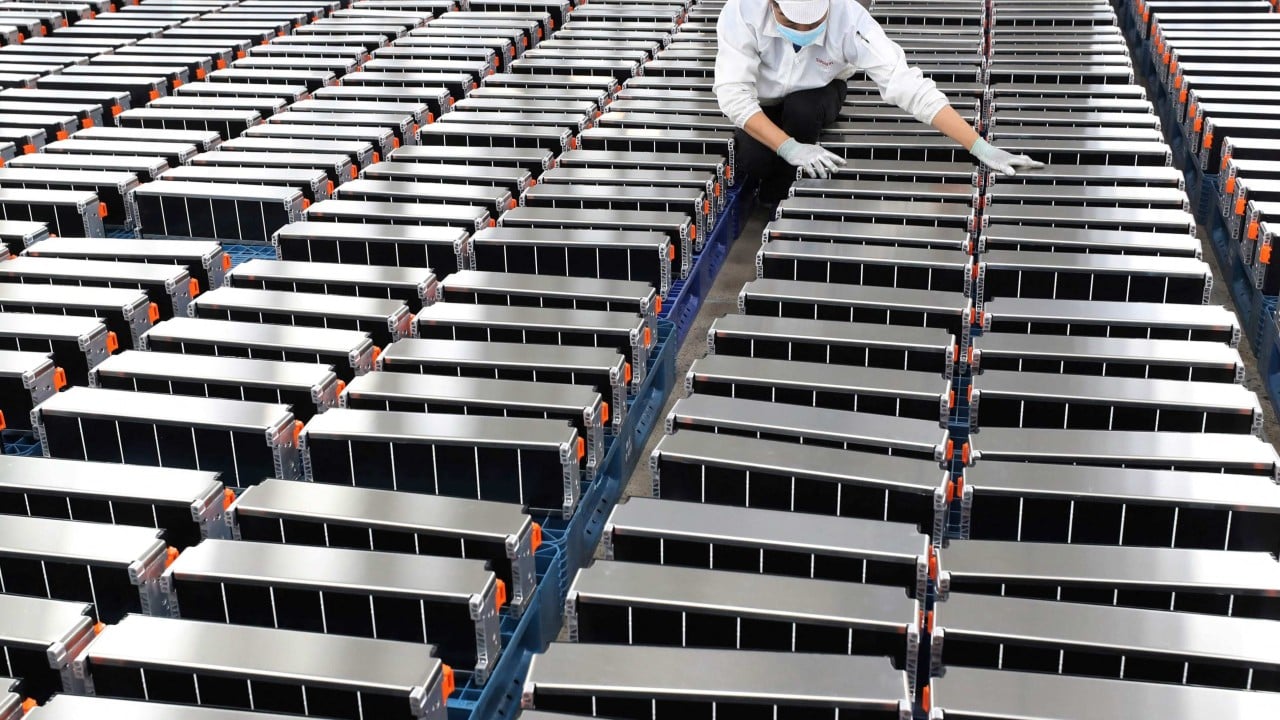
The headlines write themselves. A titan of industry—in this case, Tesla—allegedly fires a worker for pointing out "deadly conditions" and "catastrophic" fire risks. The public laps it up. It fits the narrative of the soulless corporation crushing the brave truth-teller. But if you’ve spent a decade on the floor of a high-scale manufacturing facility or managed a logistics hub during a hyper-growth phase, you know the narrative is usually a convenient fiction.
Most "safety" lawsuits aren't about safety. They are about the friction between the theoretical world of bureaucratic compliance and the kinetic reality of industrial output. In related news, read about: The Hollow Classroom and the Cost of a Digital Savior.
The Myth of the Objective Hazard
When a disgruntled former employee claims a warehouse is a "deathtrap," they are rarely citing a breach of physical laws. They are citing a breach of their personal comfort or a rigid interpretation of a code that was written for a different era. In the specific case of Tesla’s warehouse allegations, we see a recurring theme: the conflation of "risk" with "hazard."
In a high-energy environment—one involving massive lithium-ion arrays, high-voltage testing, and rapid-response logistics—risk is the baseline. It is not an anomaly to be eliminated; it is a variable to be managed. Gizmodo has provided coverage on this important topic in great detail.
Most observers fail to understand the Safety-II perspective, a concept pioneered by Erik Hollnagel. While traditional safety (Safety-I) focuses on making sure as few things as possible go wrong, Safety-II focuses on ensuring as many things as possible go right. When an employee flags a "catastrophic fire hazard" because pallets are stacked three inches too high, they are often ignoring the redundant, automated suppression systems that make the stack height irrelevant. They are looking at a rulebook, not the engineering.
The Weaponization of Compliance
Let’s be honest about the mechanics of the "whistleblower" lawsuit. I have seen mid-level managers and floor leads use safety reports as tactical nukes in internal power struggles.
If you want to freeze a project that's making you look incompetent, you don't argue about the KPIs. You find a "safety concern." You halt the line. You force an audit. It is the ultimate "get out of work free" card because no executive dares to say, "Ignore the risk and keep moving."
- The Performance Shield: An employee sensing an upcoming PIP (Performance Improvement Plan) suddenly discovers a "deadly" floor crack.
- The Settlement Hunt: The goal isn't a safer workplace; it’s a six-figure exit package funded by a company that would rather pay "go away" money than fight a PR battle.
- The Complexity Gap: The whistleblower often lacks the technical expertise to understand the mitigation strategies already in place. They see smoke and scream "fire," failing to realize they’re looking at a controlled venting process designed by engineers with PhDs in thermodynamics.
Scaling Harder Than The Law Allows
The legal framework governing American warehouses (OSHA) was largely codified in an era of static storage. It did not anticipate the speed of Tesla, Amazon, or SpaceX. When you are moving at the speed of light, you will inevitably outpace the slow-moving regulations.
Does this mean the conditions are "deadly"? Usually, no. It means they are unprecedented.
Industrial progress requires a tolerance for the unknown. If we waited for every local fire marshal to understand the nuances of solid-state battery storage before we started shipping, the energy transition would happen in 2090, not 2030. The friction we see in these lawsuits is the sound of the future grinding against the rusted gears of 20th-century bureaucracy.
The High Cost of "Safety First"
"Safety First" is a lie. If safety were truly first, we would never start the engine. We would never lift the pallet. We would never leave our houses.
Value Creation is first. Safety is a critical constraint on that value creation, but it is not the purpose of the enterprise. When a company like Tesla is accused of prioritizing production over safety, the response shouldn't be a gasp of horror. It should be a nod of acknowledgement. That is what every successful company does. The trick is finding the $P=S$ equilibrium—where the Probability of a mishap is neutralized by the Strength of the system.
Identifying a Real Hazard vs. a Lawsuit Foundation
If you’re looking at these headlines and wondering who to believe, look at the data, not the adjectives. "Catastrophic" and "deadly" are emotional triggers used by lawyers to anchor a jury. Instead, ask:
- What is the Total Recordable Incident Rate (TRIR)? If the warehouse is a deathtrap, the insurance premiums and the OSHA logs will show a trail of blood. They rarely do.
- What is the Engineering Redundancy? If an employee claims a fire risk, look at the thermal monitoring. Most modern tech warehouses use FLIR (Forward Looking Infrared) arrays that see heat spikes long before a human eye sees a spark.
- The Timing of the Claim: Was the "flagging" done during a routine meeting, or only after a disciplinary action was initiated?
The Truth About Industrial Evolution
We are currently in a transition period where the "warehouse" is becoming a giant, autonomous robot. In this transition, humans and machines are sharing space in ways that feel chaotic. To a worker used to a 1980s Sears distribution center, a modern high-speed facility looks like a disaster waiting to happen. To a systems engineer, it looks like a finely tuned (if aggressive) optimization.
The "whistleblower" in these cases is often just a person experiencing future shock. They are misinterpreting the intensity of a high-output environment as a lack of care.
Tesla isn't ignoring fire hazards because they want their factories to burn down—that’s bad for the stock price. They are ignoring the complaints of people who don't understand the safety systems they are looking at.
Why You Should Stop Rooting for the Underdog
It’s easy to cheer for the "little guy" taking on Elon Musk. But every time a frivolous or technically illiterate safety lawsuit succeeds, it adds a "tax" on innovation. It forces companies to hire more compliance officers and fewer engineers. It encourages a culture of "covering your ass" rather than "solving the problem."
If we want the "catastrophic" breakthroughs required to save the planet or reach the stars, we have to accept that the floor of the factory won't always feel like a safe space. It will feel like a zone of intense, calculated risk.
If you can’t handle the heat, don't sue the kitchen for being hot. Just leave.
Stop asking if the warehouse is safe. Start asking if the safety standards are keeping up with the speed of progress. Usually, the "deadly conditions" are just the growing pains of a species trying to build something that actually matters.
The next time you see a "whistleblower" headline, ignore the adjectives. Look for the physics. If the physics don't back up the "catastrophe," you're looking at a shakedown, not a scandal.
Build the future or get out of the way. You can't do both.
Would you like me to analyze the specific OSHA injury data for the automotive industry to see how it compares to these warehouse claims?