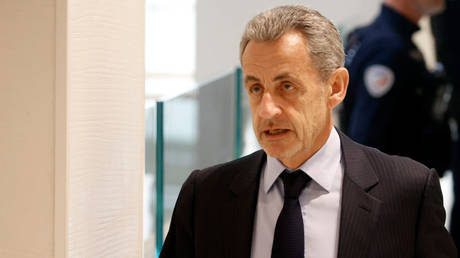
Nicolas Sarkozy says he didn't take a single cent from Muammar Gaddafi. He’s been saying it for over a decade. Yet, the ghost of the Libyan dictator continues to haunt French politics, dragging a former president through courtrooms and corruption probes that feel like something out of a spy novel. This isn't just about a campaign donation. It's about the messy, often dark intersection of international diplomacy and backroom financing.
If you’re trying to make sense of the headlines, you've got to look past the political theater. Sarkozy faces allegations that his 2007 presidential campaign was illegally funded by the Libyan regime. We're talking about millions of euros. Sarkozy calls it a "manhunt." His accusers call it a betrayal of the French Republic.
Why the Gaddafi Allegations Won't Go Away
The story broke wide open in 2012 when the investigative site Mediapart published a document. It allegedly showed the Libyan regime agreeing to fund Sarkozy to the tune of 50 million euros. Sarkozy immediately sued. He claimed the document was a forgery. But then came Ziad Takieddine.
Takieddine is a French-Lebanese businessman with a reputation for being everywhere he shouldn't be. In 2016, he dropped a bombshell. He claimed he personally delivered suitcases stuffed with cash to the French Interior Ministry. He said the money came directly from Tripoli. He described carrying five million euros in three trips. Sarkozy denies this ever happened. He says Takieddine is a liar looking for a plea deal.
The timeline is what makes people suspicious. In 2007, Gaddafi was welcomed to Paris with full honors. He pitched his tent near the Elysée Palace. It was a bizarre sight. Then, in 2011, Sarkozy was one of the loudest voices pushing for the military intervention that eventually led to Gaddafi’s downfall and death. Critics suggest the war was a way to "silence" the source of the funds. It’s a heavy accusation. It’s also one that hasn't been proven in a court of law.
The Evidence Against the Former President
French investigators didn't just take a whistleblower's word for it. They spent years digging. They looked at bank transfers. They interviewed former Libyan officials.
One of the biggest pieces of the puzzle is Bashir Saleh. He was Gaddafi’s chief of staff and the man who managed the Libya Africa Investment Portfolio. Saleh has been elusive, but his name appears in almost every ledger related to these claims. Then there's the sale of a villa on the French Riviera. Prosecutors believe the price was inflated to hide a kickback.
Sarkozy’s defense is simple. He points out that no one has found a "smoking gun" bank account. There is no paper trail showing 50 million euros moving from Tripoli to his campaign coffers. He argues that the entire case is built on the testimony of criminals and members of a collapsed regime who hated him for his role in the 2011 war.
It’s a classic "he said, she said" on a global scale. But in France, the investigative judges have found enough "serious or consistent evidence" to keep the case alive. Sarkozy has already been convicted in other unrelated corruption cases—like the "Bismuth" wiretapping scandal and the Bygmalion campaign finance case. Those convictions don't prove he took Libyan money, but they've certainly damaged his "Mr. Clean" image.
The Human Cost of Political Finance Scandals
You might wonder why this matters now. Sarkozy is out of office. Gaddafi is dead. But this case strikes at the heart of how democracies function. If a foreign dictator can buy a seat at the table of a G7 power, the whole system is compromised.
French law is incredibly strict about campaign spending. Candidates have caps. They have to report every euro. If Sarkozy really did take millions from a foreign power, he didn't just break the law. He bypassed the democratic safeguards meant to keep French policy independent.
The trial for the Libyan financing case is set for 2025. It’ll be a massive event. Sarkozy will have to answer for 13 different charges, including passive corruption, illegal campaign financing, and concealment of public funds from Libya. He’s 69 years old. He’s fighting for his legacy and his freedom.
What to Watch During the Trial
When the trial starts, don't just look at Sarkozy. Watch the witnesses. The French judicial system relies heavily on live testimony. We’ll likely see former ministers and intelligence officers take the stand.
Key points to track:
- The validity of the Mediapart document. Is it a fake or a leaked truth?
- The testimony of Ziad Takieddine. He’s retracted his story and then reinstated it. He’s the definition of an unreliable witness.
- Evidence of cash "circulation" within the 2007 campaign team. Several aides have been under investigation for having unexplained amounts of cash.
Sarkozy isn't going down without a fight. He’s a skilled orator. He knows how to play the victim of a "politicized" judiciary. He’s used his books and media appearances to frame the narrative before he even sets foot in the courtroom.
Understanding the Legal Hurdles
The prosecution has a mountain to climb. Proving "passive corruption" requires showing a direct link between the money and a specific favor. In this case, that favor would be France’s diplomatic support for Libya in the late 2000s.
Sarkozy’s legal team will argue that France's relationship with Libya was based on national interest—specifically, getting Gaddafi to give up his nuclear program and stop supporting terrorism. They’ll say the tent on the lawn was just diplomacy, not a "thank you" note for a suitcase full of cash.
How This Impacts French Politics Today
This case has created a blueprint for how France handles high-level corruption. The creation of the Parquet National Financier (PNF)—the financial prosecutor’s office—was partly a response to scandals like this. They’re more aggressive now. They have more resources.
For the public, it’s led to a deep cynicism. When a former president is constantly in the dock, it's hard to convince voters that the system isn't rigged. But there’s an upside. The fact that a former president can be tried at all shows that no one is above the law in France. That's a powerful message, even if the process takes fifteen years.
Keep an eye on the 2025 trial dates. It won't just be a legal proceeding; it'll be a history lesson on the final years of the Gaddafi era and the inner workings of French power. You don't need to be a legal scholar to see that the stakes couldn't be higher. Sarkozy is betting everything on his ability to prove that not a single cent crossed his palm. If he loses, the history books will look very different.
Check the official PNF updates or major French outlets like Le Monde for the latest court filings. The closer we get to the trial, the more "leaks" we’ll likely see from both sides as they try to win the battle of public opinion.


