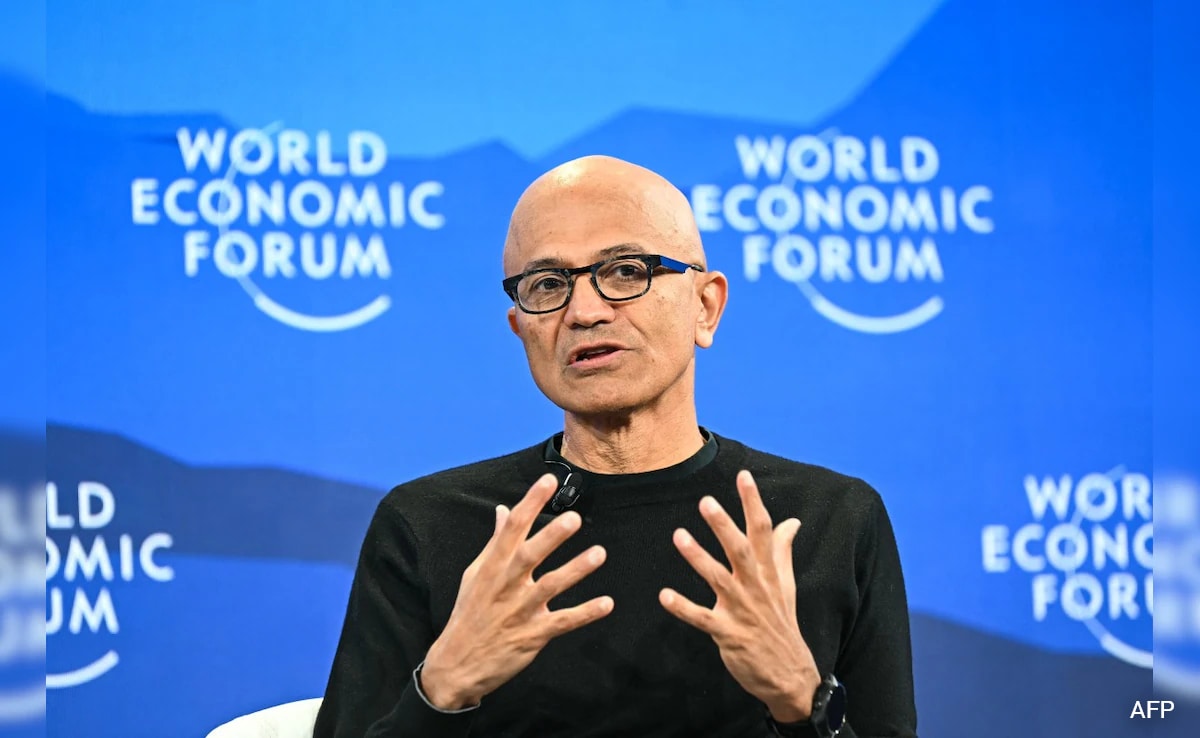
Microsoft didn’t write a check for billions of dollars because it wanted to save the world through a charity. Satya Nadella just made that very clear in a California courtroom. For months, the headlines have been dominated by Elon Musk’s narrative—that OpenAI is a "betrayal" of its founding mission and that Sam Altman is a "swindler." But Nadella’s testimony this week flipped the script.
He isn't hiding behind corporate PR. He's proud. He's unapologetic. And honestly, he’s probably wondering why everyone is so surprised that a for-profit tech giant wanted a return on its investment. Expanding on this topic, you can find more in: Why India is walking a tightrope on Russian LNG sanctions.
The Myth of the Charitable Billion
The core of Musk’s lawsuit rests on the idea that OpenAI was meant to be a permanent non-profit sanctuary for AI safety. Musk claims his early $38 million was "stolen" to build a commercial empire. When Nadella took the stand on Monday, he dismantled the idea that Microsoft ever viewed this as a philanthropic endeavor.
"The arrangement had been commercially motivated from the beginning," Nadella told the jury. He didn't blink. To him, the $13 billion Microsoft poured into OpenAI wasn't a donation; it was a high-stakes bet on the future of computing. Analysts at Bloomberg have also weighed in on this situation.
It’s easy to forget that back in 2019, OpenAI wasn't a sure thing. Google was the undisputed king of AI. Nadella noted that other potential investors had passed on the opportunity. Microsoft stepped up when no one else would, providing the massive compute power necessary to train models like GPT-4. If OpenAI had failed, that money would be gone. Since it succeeded, Nadella believes Microsoft earned its seat at the table.
Numbers That Make the Feud Make Sense
To understand why Musk is so angry—and why Nadella is so "proud"—you just have to look at the math.
- The Valuation: OpenAI is now valued at over $850 billion.
- The Stake: Microsoft’s equity position in the for-profit arm is roughly 27%.
- The Paper Profit: That stake is now worth an estimated $135 billion.
- The Revenue: Microsoft has already pulled in about $9.5 billion in revenue directly through the OpenAI relationship.
Musk’s legal team tried to use internal documents to show Microsoft had its eye on profit rather than "nurturing a philanthropic service." Nadella’s response was basically, so what? He argued that by making the "pie" larger, the non-profit side of OpenAI actually benefits more than it ever would have as a small, cash-strapped research lab.
The "Digital Superintelligence" Tug of War
Musk’s testimony last month was full of warnings about Microsoft "controlling digital superintelligence." He’s painting a picture of a world where one of the world’s largest corporations holds the keys to the most powerful technology in history.
Nadella’s testimony revealed just how far he was willing to go to protect that control. During the 2023 board coup where Sam Altman was briefly fired, Nadella didn't just sit back and watch. He told the court he was ready to hire Altman and his co-founder Greg Brockman immediately to ensure they didn't start a competing company. Microsoft even set up a subsidiary overnight to absorb the entire OpenAI staff if needed.
That isn't the behavior of a passive partner. That’s the behavior of a CEO who knows his company’s entire 10-year strategy is tethered to a specific group of researchers.
What This Means for the AI Market
If you're looking for the "safe" or "ethical" take here, you won't find it in this courtroom. This is a brawl between two different philosophies of power. Musk wants the court to force OpenAI to revert to a non-profit status, which would effectively nuking its ability to raise the billions of dollars required to keep pace with Google or Anthropic.
Nadella, meanwhile, is playing the long game. He’s betting that the legal system won't undo a multi-billion dollar commercial reality just because a founder’s feelings got hurt.
The trial has also pulled back the curtain on some petty billionaire drama. We’ve seen Greg Brockman’s 2017 diary entries where he wrote about "making money for us." We’ve heard about Musk’s "ambien tweeting." It's messy, it's personal, and it's proof that the "mission" often takes a backseat to the ego.
The Practical Reality
Don't wait for a jury to tell you who won. The market has already decided. Microsoft is already integrating these models into every corner of its business, from Azure to Office.
If you're a business leader or an investor, the takeaway is clear:
- Commercial interest beats "charitable trust" every time in Silicon Valley.
- Compute is the new oil. Microsoft’s control over the hardware (Azure) is what gave them the leverage to dominate the OpenAI relationship.
- Founder intent is legally flimsy. Written contracts and investment terms matter more than early blog posts about "benefitting humanity."
The trial continues, but Nadella’s "proud" stance suggests Microsoft isn't losing any sleep over Musk’s allegations. They took the risk, they provided the chips, and they're ready to collect the reward.
Satya Nadella defends Microsoft's OpenAI investment strategy
This video provides deeper context into how Satya Nadella views the $1 billion bet that started the most significant partnership in modern tech history.