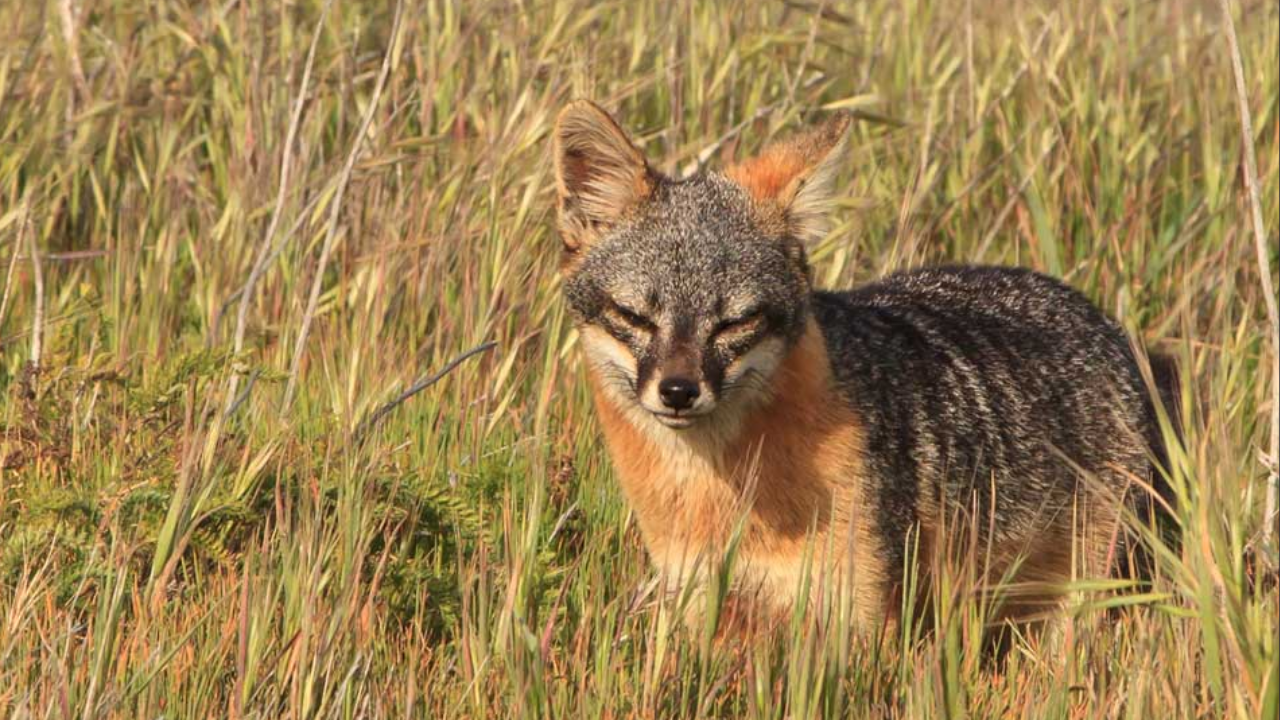
The standard conservation narrative loves a clean, Hollywood-style redemption arc. We are told the comforting fable of the California island fox: hit by introduced golden eagles, decimated by canine distemper, squeezed down to a tragic fifteen individuals on two separate islands back in 1999, and then miraculously saved by human intervention, captive breeding pens, and helicopter tracking.
It makes for a great Earth Day press release. It lets us pat ourselves on the back for playing planetary zookeeper.
It is also an ecological delusion.
By treating every single isolated population as a zoo exhibit that requires 24-hour veterinary babysitting, we did not save a species. We froze an ecosystem in amber, traded natural selection for bureaucratic management, and patted ourselves on the back for turning wild canids into heavily subsidized office pets.
Let us look past the feel-good documentaries and pick apart the lazy consensus.
The Myth of Pristine Isolation
Conservation biology suffers from a romanticized sickness. We suffer from the delusion that ecosystems possess a permanent, static baseline—usually whatever snapshot in time humans first decided to look at them.
When the island fox (Urocyon littoralis) population crashed on San Miguel, Santa Rosa, and Santa Cruz islands, the knee-jerk panic was swift. Golden eagles had discovered an unexpected buffet. Feral pigs had provided the initial caloric boom that drew the golden eagles to the islands in the first place, and when the pigs were eradicated, the eagles simply pivoted their hunting focus to the native foxes.
The standard response? Remove the eagles. Breed the foxes in cages. Vaccinate every moving animal against distemper. Slap radio collars on the survivors.
It worked, numbers-wise. Today, thousands of foxes scurry across those Channel Islands. But let us ask the uncomfortable question that biologists whisper over warm beer at conferences: at what point does intervention stop being conservation and start being taxidermy with a pulse?
Imagine a scenario where a forest fire sweeps through a region, killing ninety percent of a deer herd. Biologists do not rush in with supplemental alfalfa feeders and veterinary IV drips unless they are managing a private hunting ranch. They watch nature recalculate. On the Channel Islands, human actors stepped in because the optics of watching a subspecies blink out on federal land were politically toxic.
We substituted human bureaucratic anxiety for evolutionary pressure.
The Cost of Sterile Success
When you cage wild animals, run multi-million-dollar captive breeding loops, and eliminate every single predator from the equation, you do not preserve wildness. You breed dependence.
I have watched conservation organizations burn through millions of dollars chasing high-visibility single-species metrics while ignoring the broader biological fabric. Captive breeding programs inherently select for docility, for tolerance of human proximity, and for traits that allow survival in sterile breeding crates rather than jagged coastal canyons.
When people ask, "Shouldn't we do whatever it takes to save an endangered endemic species?", they are falling into the trap of emotional triage. Of course, saving a unique island carnivore sounds noble. But when your management strategy requires constant human intervention—trapping, vaccinating, tracking, and moving animals like chess pieces—you are no longer conserving wildlife. You are managing a heavily curated outdoor theme park.
True conservation requires accepting mortality, stochastic events, and brutal evolutionary filters. By insulating the island fox from the very pressures that shaped it for millennia, we have created a fragile, hyper-managed artifact.
Rewilding Without Training Wheels
If we are serious about keeping these ecosystems functional, we have to stop treating nature like a fragile antique that breaks if someone breathes on it.
The real work is not building more breeding pens or writing another multi-agency recovery plan. The real work is stepping back and letting the system break, adapt, and rebuild itself without a guy in a windbreaker checking microchips every Tuesday morning.
We need to embrace adaptive management that tolerates failure. If an isolated island population is vulnerable to stochastic disease outbreaks or apex predator shifts, that vulnerability is an inherent feature of island biogeography, not a software bug to be patched by the Department of the Interior.
Stop looking for a human-engineered patch for every ecological friction point. Leave the cages empty.