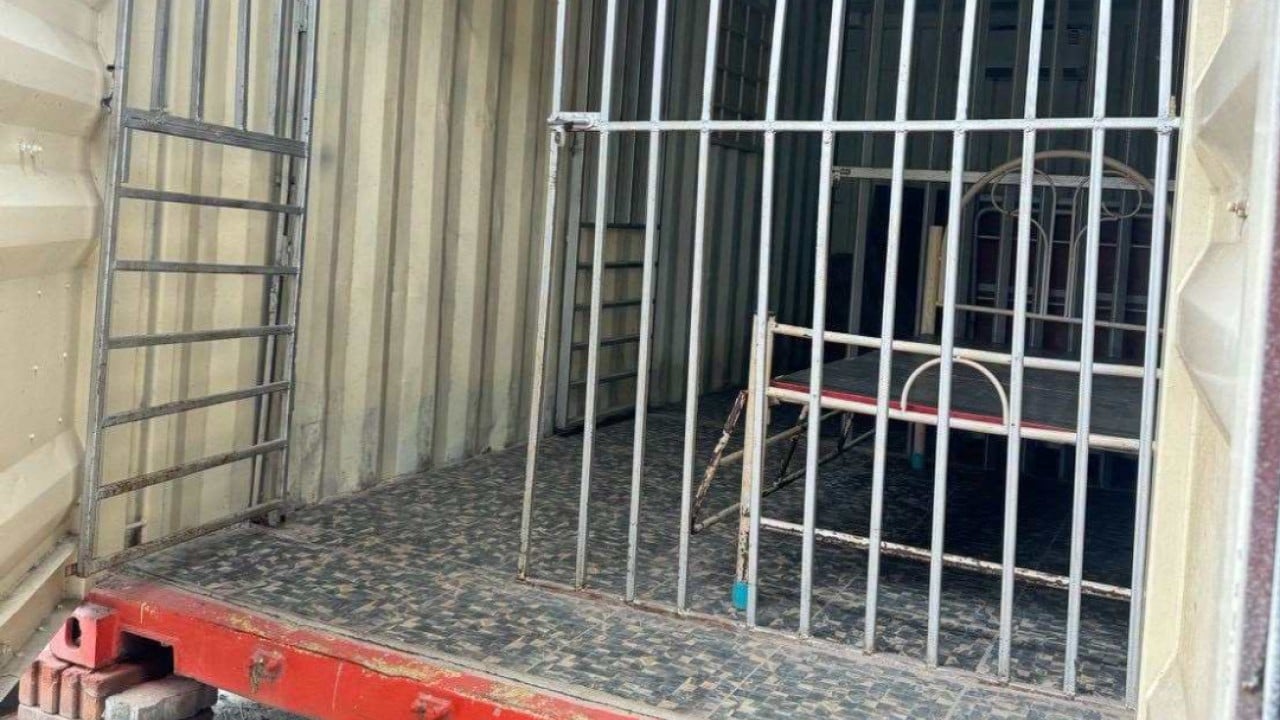
You expect a nursing home to feel safe. You expect sterile corridors, soft lighting, and staff who check in on vulnerable residents. But when health officials raided the Sothornchai Nursing Home in Kanchanaburi, western Thailand, they found something straight out of a horror movie. Dozens of elderly and psychiatric patients were housed in hospital beds completely surrounded by welded iron cages and heavy padlocks.
When public outrage exploded across social media, the facility owner—locally known as Maeow—did not apologize. Instead, she defended the metal enclosures as an "innovation" in safety. She claimed the cages stopped patients from wandering off, hurting themselves, or attacking others, arguing it was a humane alternative to physical restraints like tying people down.
Authorities didn't buy the defense. They revoked the facility's license immediately and launched criminal investigations. Yet, looking past the shock value of iron bars reveals a much deeper, uncomfortable truth about aging populations across Asia and the rest of the world.
The Pressure Cooker of Rapid Aging
Thailand is aging faster than almost any other developing nation. Fertility rates have plummeted, and family structures are shifting. Traditionally, adult children cared for their aging parents at home. Today, economic pressures mean both partners work long hours, leaving fewer family members available to provide round-the-clock supervision for aging parents with dementia or severe mobility issues.
Private nursing homes have sprung up to fill the gap, but the regulatory net hasn't kept pace with the demand. Affordable, high-end care facilities remain out of reach for average families. That leaves budget options, where corners are cut, staff are overworked, and oversight is practically nonexistent.
When you crowd 92 patients—81 of whom required psychiatric care—into a facility managed by just 19 caregivers, systems break down. Staff burnout becomes universal. Management looks for cheap, physical hacks to control vulnerable people instead of hiring enough trained medical professionals. Iron cages aren't an innovation. They're a symptom of systemic failure.
When Care Becomes Captivity
The raid on the Kanchanaburi facility started because of a horrifying whistleblower account. A 63-year-old woman appeared on a popular Thai television program to expose what happened behind closed doors. She alleged that her son and daughter-in-law tricked her into entering the center to seize control of her cosmetics business.
Once inside, she wasn't just treated as a patient. She claimed she was held against her will for over two years, threatened, forced to take sleeping pills, and denied basic freedom until she managed to secretly contact her sister.
This detail turns the story from a bad nursing home case into a terrifying exploitation of legal loopholes. When family members can easily commit aging relatives to under-regulated facilities—sometimes driven by financial motives like inheritance or business control—the safety net ceases to protect anyone.
What We Must Change Right Now
Governments across Southeast Asia are scrambling to tighten oversight. Thailand's Ministry of Social Development and Human Security has rushed to draft new strategic frameworks to set rigid professional standards for caregivers. But paper regulations won't fix the underlying crisis.
Protecting vulnerable seniors requires concrete structural shifts:
- Mandatory unannounced inspections: Annual license renewals mean nothing if facilities can clean up their act once a year. Regulators need to show up unannounced.
- Subsidized public care options: Families shouldn't have to choose between bankruptcy and substandard private facilities. Expanding state-run day-care and residential centers gives families reliable alternatives.
- Stricter legal safeguards for involuntary commitment: No one should be locked away in a care facility without rigorous medical justification and independent legal oversight to prevent family-driven asset grabs.
We can't just express shock when a scandal hits the headlines and then look away. The gray tsunami is coming for every major economy, and the way society treats its most vulnerable members defines its baseline humanity. If the best defense we can offer old age is an iron cage, we have already failed.
An elderly care crisis in Thailand: caged beds exposed
This short video covers the growing concerns over elder care standards and facility regulations in Thailand.


