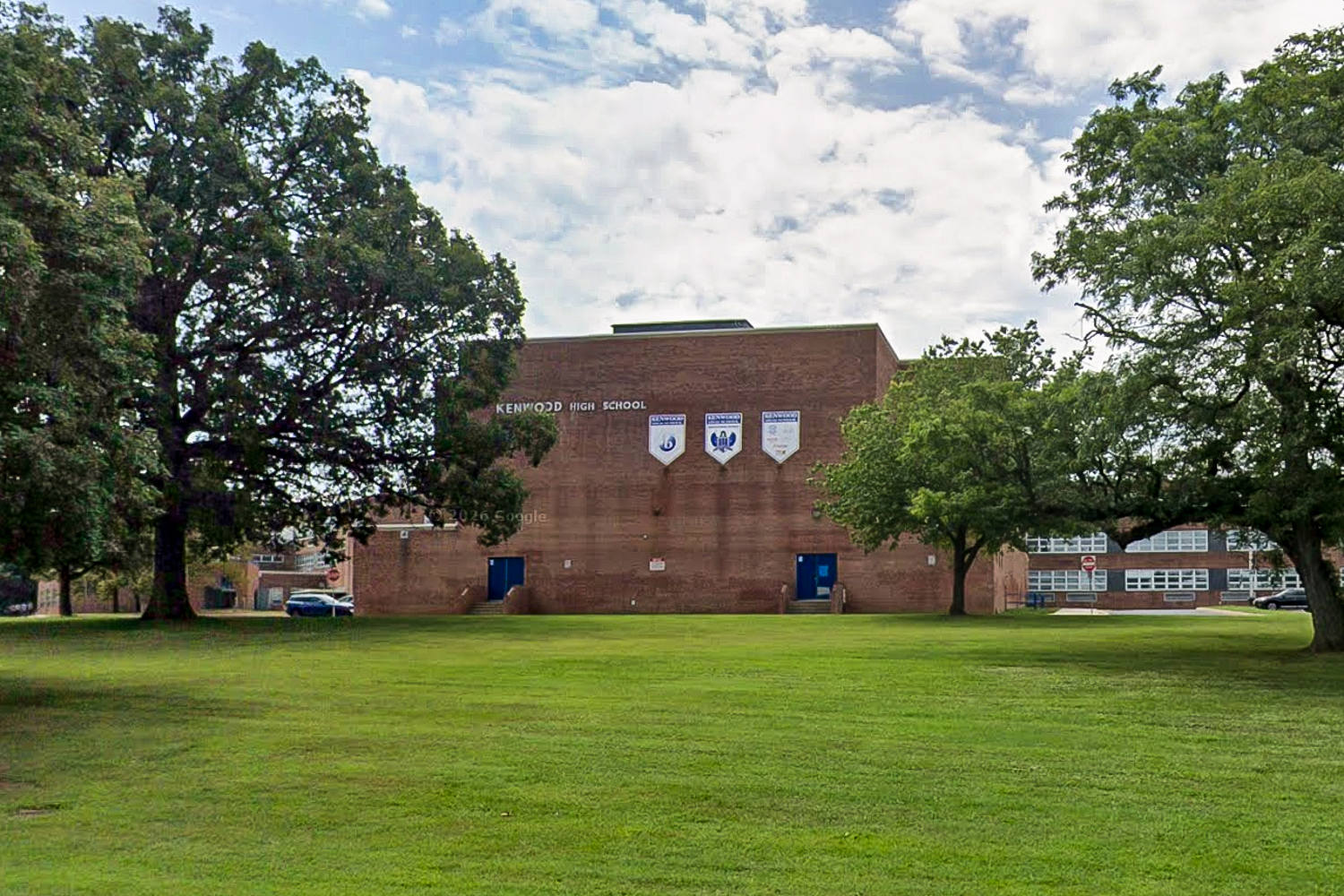
Imagine walking out of high school with a bag of chips, only to find yourself staring down the barrels of police weapons. That exact nightmare played out when a school AI gun detection system mistook a bag of Doritos for a firearm, triggering an armed law enforcement response against innocent teenagers.
It sounds like a bad joke. It wasn't.
Over the last several years, school districts across the United States have poured millions of taxpayer dollars into automated visual gun detection software. Vendors pitch these computer vision tools as an early-warning shield that spots weapons on existing security cameras before a shooter ever enters a building. Yet as real-world deployments expand, a troubling pattern has emerged. Algorithms trained to hunt for guns in grainy CCTV feeds routinely hallucinate weapons out of everyday teenage clutter—crumpled chip bags, umbrellas, musical instrument cases, and smartphones.
When an algorithm cries wolf, the human cost isn't an annoying email notification. It's a high-stress tactical response aimed directly at kids.
How a Bag of Chips Triggered an Armed Police Response
Security cameras in schools aren't cinematic. They're mounted high on walls, shooting wide angles through compressed video streams with harsh fluorescent glare or dim outdoor shadows. In that low-resolution environment, computer vision models don't "see" objects the way human eyes do. They calculate statistical probabilities based on pixel clusters, contrast edges, and geometric shapes.
In the incident involving the Doritos bag, a teenager holding the crinkled foil pouch at a specific angle created a silhouette and metallic reflection that matched a weapon profile inside the software's neural network. Once the system flagged a potential firearm, the alert cascaded through the school's emergency protocol and straight to local law enforcement.
Officers arrived expecting an active shooter threat. Instead, they found teenagers with snack food.
For the students involved, the psychological fallout doesn't vanish once the misunderstanding clears up. Being ordered to the ground or held at gunpoint by officers operating under high-adrenaline active-shooter training leaves lasting trauma. Parents rightly ask how a multi-thousand-dollar safety platform couldn't tell the difference between Nacho Cheese and a nine-millimeter handgun.
Why Computer Vision Struggles in School Hallways
To understand why these false positives happen, you have to look at how object detection models actually work under the hood. Most commercial weapon detection platforms rely on convolutional neural networks trained on millions of labeled images.
Here's the catch. Training datasets often contain clean, well-lit photos of firearms alongside synthetic renders. Real school hallways are chaotic. Students carry bulky backpacks, hold phones at waist height, grip water bottles by the neck, and crumple foil wrappers into L-shaped angles.
- Low pixel density: A person standing fifty feet from a hallway camera might only occupy a tiny fraction of the frame, leaving the AI with just a few dozen blurry pixels to analyze an object in their hand.
- Specular highlights: Shiny surfaces like foil chip bags, stainless steel tumblers, and phone screens reflect overhead lights in sharp streaks that mimic the metallic glint of a gun barrel.
- Occlusion and posture: When a student walks with one hand tucked near a hoodie pocket or holding an object partially behind a backpack strap, the software guesses at the missing geometry.
Vendors love touting "99% accuracy" in marketing brochures. That number usually reflects lab conditions or frame-level classifications where almost every frame contains zero guns. In a school district with thousands of cameras recording eight hours a day, even a 0.01% false-positive rate generates dozens of bogus alerts every single week.
The Hidden Flaw in "Human in the Loop" Verification
Whenever critics point out false alarms from AI security tools, vendors fall back on a familiar defense. They insist their software doesn't call 911 automatically—there's always a "human in the loop" reviewing alerts before police get dispatched.
In theory, a trained operator looks at the flagged clip, spots the Doritos bag, and dismisses the alert within seconds.
In practice, human verification breaks down under time pressure. Monitoring center operators are trained around one overriding fear—missing an actual school shooting. Nobody gets fired for escalating a suspicious image to police, while missing a real firearm carries unthinkable consequences. That asymmetry creates massive confirmation bias.
When a red bounding box flashes on a monitor with a high-confidence score next to a blurry object in a teenager's hand, the reviewer has roughly five to ten seconds to make a call. Under that kind of cognitive pressure, operators routinely defer to the machine. They forward the alert to school resource officers or local dispatchers "out of an abundance of caution."
Once an alert hits police radio as a "possible armed subject on campus," officers can't treat it casually. Departmental training dictates immediate, overwhelming force to neutralize a potential mass casualty event. The system's uncertainty gets stripped away the moment the dispatch call goes out.
Who Pays the Price When School Surveillance Gets It Wrong
False weapon alerts don't affect every student population equally. Civil liberties researchers and education advocates have repeatedly warned that automated surveillance tools amplify existing disparities in school discipline and policing.
Schools with higher proportions of Black and Hispanic students are statistically more likely to have heavy law enforcement presence and aggressive surveillance infrastructure. When an AI flags a benign object in these environments, the resulting police encounter escalates faster and carries higher risks of physical force or arrest.
Even when no physical injury occurs, the erosion of trust is immediate. Students begin treating hallways like detention facilities rather than places to learn. They avoid carrying ordinary items, second-guess how they hold their hands, and view school administrators with suspicion.
There's also a massive financial opportunity cost. School districts routinely spend hundreds of thousands of dollars—sometimes millions across multi-year contracts—licensing AI camera overlays, metal detectors, and monitoring subscriptions. Every dollar routed to unproven algorithmic surveillance is a dollar pulled away from school counselors, mental health staff, and behavioral intervention programs that actually prevent violence before a weapon ever reaches campus.
What School Boards and Parents Need to Demand Before Buying AI Security
If your local school district is evaluating AI gun detection software—or already running it—blindly trusting vendor sales pitches is a mistake. School boards have a responsibility to audit how these systems perform in messy, real-world conditions before renewing contracts.
Start by asking hard, specific questions at public board meetings and requesting written documentation rather than verbal assurances from salespeople.
- Demand independent false-positive data. Ask the vendor and district administrators for the exact ratio of false alerts to confirmed threats over the past twelve months across comparable school districts. Never accept generic lab accuracy percentages.
- Audit the escalation protocol. Find out precisely who receives an alert first, how many seconds they have to review it, and what visual proof is required before police are notified.
- Require strict liability and transparency clauses. Contracts should prohibit vendors from using non-disclosure agreements to hide system failures, and districts must commit to notifying parents whenever an AI false alarm triggers a lockdown or police response.
- Test the software against everyday clutter. Before signing a multi-year deal, insist on a live pilot where staff walk past cameras holding umbrellas, foil snack bags, binders, and brass instruments to see how often the system trips.
Technology can support school safety, but an algorithm that can't distinguish a snack bag from a handgun isn't ready to trigger armed police responses around children. Until districts enforce strict accuracy standards and transparent oversight, students will remain the test subjects for flawed surveillance software.