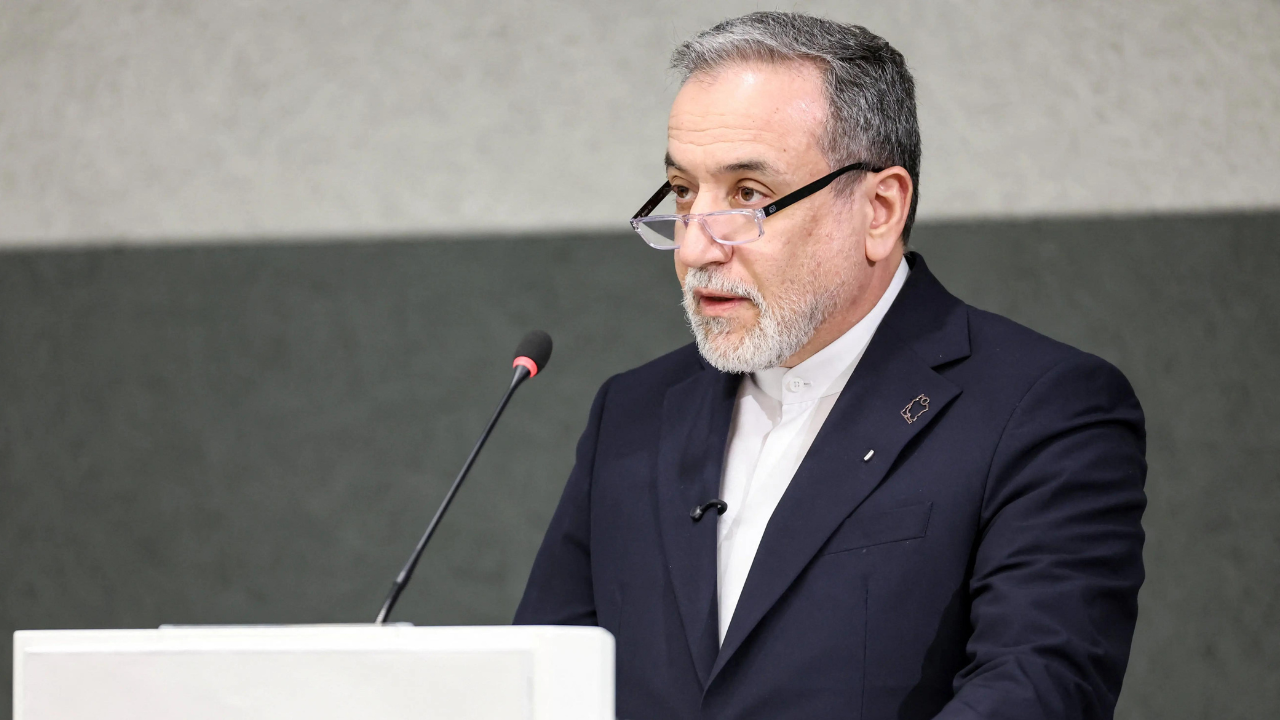
Two words.
That is all it took for Tehran’s diplomatic machinery to slam the door on a rumor that had already begun rippling through oil trading floors from Singapore to Houston: "Lie and fabrication." Read more on a similar subject: this related article.
When reports surfaced suggesting that Iran had quietly slipped a proposed deal regarding the Strait of Hormuz to the United States using Pakistan as a backchannel courier, the news didn't arrive like a standard press release. It landed like a dropped wrench in an engine room. On paper, it looked like a classic diplomatic skirmish—a denial here, an unnamed source there, another day in the endless chess match of Middle Eastern geopolitics.
Yet if you have ever stood on the steel deck of a container ship watching the rugged, sun-bleached cliffs of Musandam slide past the starboard bow, or watched your own retirement portfolio bleed red because a single tanker was delayed by six hours, you know that nothing involving the Strait of Hormuz is ever just ink on paper. More analysis by The New York Times delves into similar views on the subject.
The denial from Iran’s Foreign Ministry was swift, categorical, and sharp. There was no secret Pakistani envoy carrying olive branches to Washington. There was no quiet bargain over maritime transit. According to Tehran, the entire narrative was manufactured out of thin air.
So why did so many seasoned analysts, energy traders, and intelligence watchers pause before dismissing it? Why does a phantom deal carry almost as much weight as a real one?
To understand the anatomy of a diplomatic ghost story, we have to look past the podiums and into the narrow, salt-sprayed chokepoint where global ambition meets physical reality.
The Twenty-One-Mile Bottleneck
Imagine a massive, bustling metropolis where every single drop of drinking water, every gallon of fuel, and every loaf of bread has to pass through a single two-lane tunnel.
That tunnel is the Strait of Hormuz.
At its narrowest point, barely twenty-one miles of water separate the jagged coastline of Oman from the fortified shores of Iran. Within those twenty-one miles, the actual shipping lanes—the deep-water channels wide enough for fully laden supertankers—shrink to just two miles in each direction, separated by a two-mile buffer zone.
Roughly one-fifth of the world’s total petroleum consumption squeezes through this maritime needle every single day. Add to that nearly a quarter of the global liquefied natural gas trade, and you begin to grasp the terrifying geometry of the place. It is not merely a body of water; it is the jugular vein of the industrialized world.
To make this concrete, consider a hypothetical character—let’s call him Captain Mateo, a master mariner steering a Very Large Crude Carrier loaded with two million barrels of oil out of the Persian Gulf. To Mateo, geopolitics isn't a cable news debate. It is the hum of the radar screen at three in the morning. It is the sudden appearance of fast-attack skiffs on the horizon, the crackle of an unverified warning on VHF Channel 16, and the cold calculation of how fast a 300,000-ton vessel can alter course when the water turns shallow.
When Mateo hears rumors of a secret backchannel deal between Washington and Tehran, his shoulders drop an inch. When he hears the words "lie and fabrication" broadcast across international wires twelve hours later, his jaw tightens. Because in the Strait of Hormuz, ambiguity is the deadliest weather of all.
Why Pakistan Always Enters the Frame
Whenever whispers of secret diplomacy between the United States and Iran emerge, certain capitals inevitably appear in the footnotes. Oman is the classic quiet room—the neutral parlor where enemies have sipped tea for decades without admitting they were in the same building. Switzerland holds the formal protecting power mandate. Qatar steps in when prisoner swaps or frozen funds are on the table.
And then there is Pakistan.
Islamabad occupies one of the most precarious, fascinating tightropes in modern statecraft. Sharing a rugged, 560-mile border with Iran to the west while maintaining decades of complex, transactional military and diplomatic ties with Washington, Pakistan is uniquely positioned to hear whispers from both sides.
When rumors spread that Islamabad had carried an Iranian proposal on Hormuz to American officials, the story possessed what intelligence officers call verisimilitude—the texture of truth. It made geographic sense. It made diplomatic sense. Pakistan has spent years trying to balance its need for Iranian energy against the crushing weight of U.S. sanctions, all while attempting to keep its own border regions from boiling over. Acting as a discreet postal service between two adversaries who refuse to speak directly isn't just plausible for Islamabad; it is a survival skill.
That is precisely what makes a denial so complex to decode. In the shadow theater of international relations, a denial does not always mean a conversation never happened. Sometimes, it means a conversation happened too early, leaked too loudly, and had to be executed in public to save face at home. Other times, a third party floats a trial balloon to test how markets react—or an adversary plants a story specifically to force the other side into an awkward public rejection, thereby exposing internal divisions.
I will admit something that pundits rarely confess on television: from the outside, distinguishing between a genuine fabrication and a blown cover operation is nearly impossible in real time. Anyone who claims total certainty about what transpires in unrecorded rooms between Tehran, Islamabad, and Washington is selling you confidence, not truth.
What we can verify, however, is why Tehran reacted with such volcanic speed.
The Anatomy of a Necessary Denial
For Iranian leadership, the Strait of Hormuz is not a bargaining chip to be casually slid across a table through an intermediary. It is their ultimate strategic deterrent—their geopolitical insurance policy.
Think about the asymmetry of power in the Persian Gulf. The United States possesses aircraft carrier strike groups, stealth bombers, and satellite networks capable of tracking a license plate from orbit. Iran cannot match that conventional firepower plane for plane or ship for ship. Instead, Tehran spent forty years building an asymmetric doctrine designed around one simple, devastating premise: If we cannot export our oil, nobody exports their oil.
Through mines, coastal anti-ship missile batteries, swarms of fast-attack craft, and unmanned aerial systems, Iran turned the geography of the Strait into a force multiplier. To suggest that Tehran quietly offered a "Hormuz deal" to Washington—especially through a neighbor like Pakistan—strikes at the very heart of that deterrence posture. To domestic hardliners in Tehran, such a rumor sounds less like clever diplomacy and more like capitulation.
Consider what happens next when a story like that hits the wires:
- Hardline factions inside Iran immediately demand proof that the government isn't secretly trading away its strongest leverage behind closed doors.
- Regional allies and proxy networks begin questioning whether Tehran is cutting a separate peace that leaves them exposed.
- American lawmakers seize on the rumor either to accuse the White House of secret appeasement or to demand tougher concessions before any talks can even begin.
The denial—"lie and fabrication"—wasn't just aimed at foreign journalists. It was a fire extinguisher sprayed directly onto domestic political flames. By branding the report an outright invention, Tehran signaled to its own military establishment and regional partners that its red lines remain untouched.
The Invisible Tax on Every Household
You might be sitting thousands of miles away from the Persian Gulf, drinking coffee in a quiet kitchen, wondering why a diplomatic spat over an unconfirmed backchannel rumor should occupy even five minutes of your attention.
Let’s trace the invisible wire connecting that twenty-one-mile stretch of water to your bank account.
Oil is priced on the margin, and modern financial markets do not wait for ships to burn before they adjust prices. They price in probability. When traders read headlines about a secret Hormuz deal, oil futures dip by a dollar or two—a tiny exhale of relief across global markets. When Tehran blasts the report as a fabrication, a subtle risk premium creeps right back into the barrel.
To see how this works in practice, imagine a small logistics company owner in Ohio—let’s call her Elena—who manages a fleet of twelve refrigerated trucks hauling produce across the Midwest. Elena doesn't follow Iranian foreign ministry press briefings. She doesn't track Pakistani diplomatic cables. Yet when geopolitical friction in the Strait of Hormuz pushes global crude prices up by just five dollars a barrel, Elena’s diesel bill jumps by thousands of dollars a month.
She cannot absorb that cost alone, so she raises her freight rates. The regional grocery chain raises the price of apples and milk by twelve cents. Multiply Elena by millions of businesses across North America, Europe, and Asia, and suddenly a phantom diplomatic rumor in the Middle East becomes an invisible tax at your local checkout counter.
History proves how razor-thin the margin for error truly is. During the "Tanker War" of the 1980s, hundreds of commercial vessels were attacked in the Gulf, sending insurance premiums skyrocketing and forcing naval escorts into constant high-alert patrols. In 2019, a series of limpet mine attacks on tankers near the Gulf of Oman and the seizure of vessels in the Strait sent shockwaves through global shipping, proving that it doesn't take a full-scale blockade to rattle the global economy—just enough uncertainty to make maritime insurers hesitate.
The Trap of the Echo Chamber
There is another layer to this story, one that speaks to how information itself has become a weapon in the twenty-first century.
We live in an era where unverified diplomatic scoops travel at fiber-optic speed, stripped of context and nuance before an official spokesperson can even finish reading the morning briefing. In regions thick with intelligence rivalries, planted stories are routine tools of statecraft.
Think about who benefits when a false or premature rumor of a US-Iran deal circulates:
- A rival power might float the story to sow distrust between Washington and its Gulf allies, making Arab capitals nervous that America is cutting a secret side deal behind their backs.
- Market speculators stand to make millions off a two-hour swing in crude oil futures triggered by a single viral headline.
- Political factions in any of the three capitals—Washington, Tehran, or Islamabad—can use a leak to sabotage quiet exploratory talks before they ever gain momentum.
Once a rumor enters the bloodstream of modern media, the correction never quite catches up to the initial shock. Even after Tehran’s blistering rejection, doubt lingers in the corners of diplomatic salons. Did they deny it because it never happened, or did they deny it because it wasn't supposed to be known?
That lingering doubt is the true victory of information warfare. It forces diplomats to spend precious capital explaining what they aren't doing instead of negotiating what they could do.
Navigating Without a Map
Where does this leave the three nations tangled in the headline?
Washington remains locked in the same structural dilemma that has haunted multiple administrations: how to deter Iranian aggression and ensure freedom of navigation through the Strait of Hormuz without triggering a regional war that would instantly crater the global economy. Sanctions can squeeze an economy, and naval deployments can project resolve, yet neither alters the stubborn geography of a twenty-one-mile waterway.
Islamabad, meanwhile, will continue walking its tightrope—issuing polite diplomatic clarifications while keeping its channels open to both sides, knowing full well that geography does not allow Pakistan to choose only one neighbor or one superpower.
And Tehran will keep guarding its ambiguity like crown jewels. In the logic of asymmetric deterrence, letting your adversary wonder where your red lines truly sit is often more effective than drawing them in bright paint.
Back out on the water, far from the microphones and the press rooms, the tankers keep moving. Huge, slow, rust-streaked leviathans loaded with the lifeblood of modern civilization glide silently past the jagged cliffs of the Strait, their crews watching the horizon, listening to the static on the radio, and hoping that the men in suits thousands of miles away never mistake a rumor for a reason to pull the trigger.