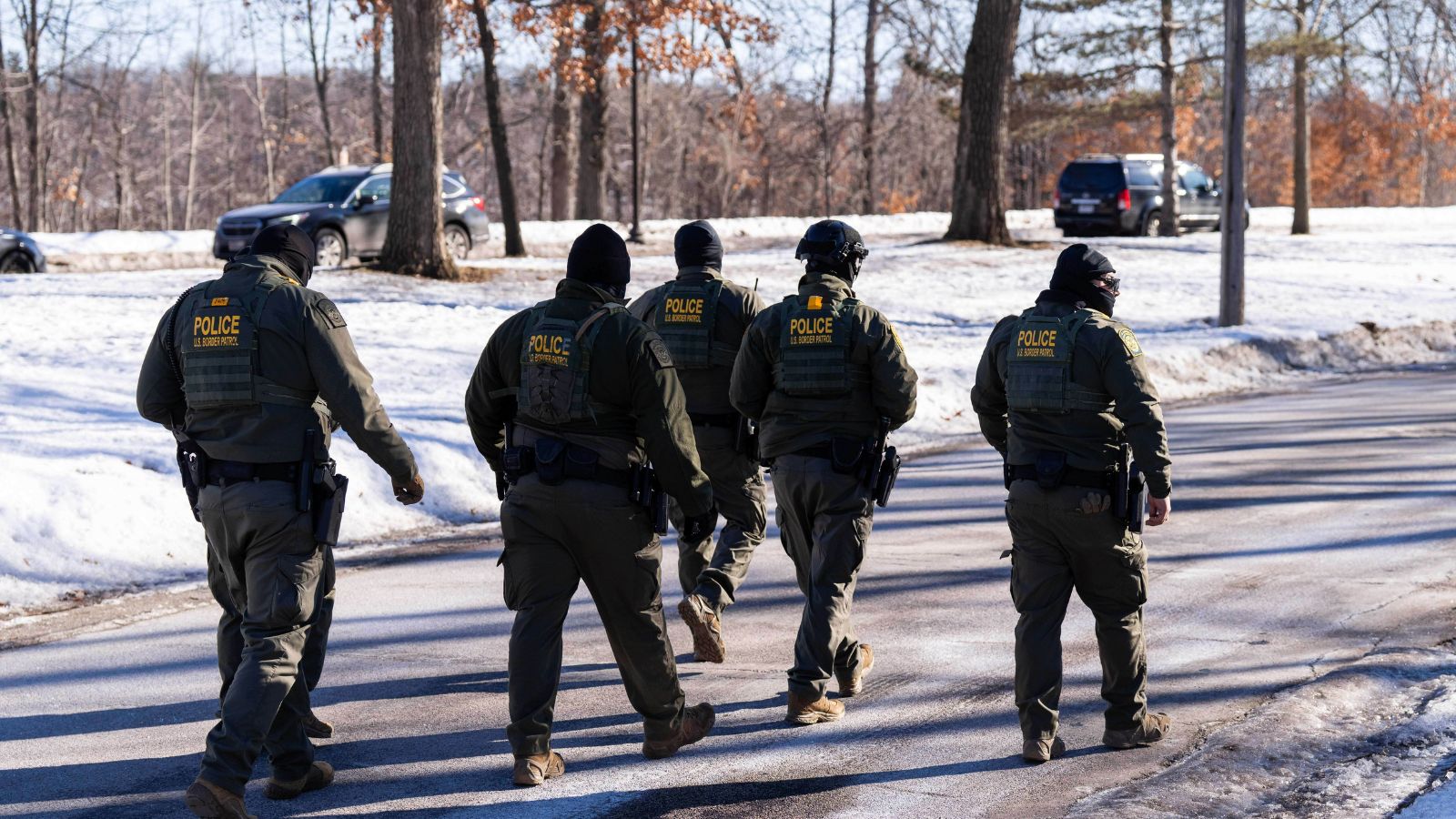
The headlines are predictable, frantic, and fundamentally wrong. Every time the Senate trips over its own feet and a funding bill for the Department of Homeland Security (DHS) stalls, the media cycle shifts into a pre-programmed "doomsday" mode. They talk about "gaping holes" in national security and "unprotected borders." They treat a partial shutdown like a total evaporation of the state.
It is a lie.
A partial government shutdown is not a lapse in security; it is a forced audit of what the government actually considers "essential." If you want to see the true skeletal structure of American bureaucracy, don't look at the budget when it’s bloated and passed at 2:00 AM. Look at what stays running when the money technically stops.
The "crisis" isn't that the lights go out. The crisis is that we realize how many people were being paid to keep lights on in rooms that have been empty for a decade.
The Essentiality Trap
The mainstream narrative focuses on the 200,000+ DHS employees forced to work without immediate pay. This is the "lazy consensus"—the idea that a lack of a paycheck on Friday means the border is wide open by Saturday.
In reality, "essential" personnel—Border Patrol agents, TSA screeners, Coast Guard operators—stay at their posts. They are legally required to. The "shutdown" primarily hits the administrative layer: the planners, the policy consultants, and the middle managers who spend their days drafting memos about other memos.
I have spent years navigating the intersection of federal procurement and private sector security. I have seen programs with $50 million price tags that exist solely to "align" various departments. When a shutdown hits, these programs stop. And you know what? Nothing breaks.
We are told that a shutdown creates a "vulnerability." The data suggests otherwise. During the 35-day shutdown in 2018-2019, operational metrics for interdiction didn't plummet; they held steady. The "vulnerability" is a political talking point used to manufacture urgency, not a tactical reality on the ground.
The Paycheck Kabuki Theater
Critics scream about the cruelty of making federal employees work without pay. Let’s be clear: they always get paid. Back pay is a statutory guarantee. A DHS shutdown isn't an austerity measure; it's a forced interest-free loan from the workforce to the Treasury.
It is a massive accounting headache, yes. It is stressful for a young TSA agent in a high-cost-of-living city, absolutely. But to frame this as a "collapse of the security apparatus" is a fundamental misunderstanding of how the federal machine operates. The machine is designed to be clunky. It is designed to survive its own legislative incompetence.
The real "security risk" isn't the guy not getting his check on the 1st of the month. The risk is the uncertainty of long-term contracting.
When the Senate fails to pass a bill, it isn't the frontline agents who suffer most—it’s the small-to-mid-sized defense tech firms. These are companies building the next generation of autonomous surveillance and biometric verification. They rely on "incremental funding" cycles. When the Senate stalls, the "Stop Work" orders go out. Innovation dies in the waiting room while Congress bickers over optics.
Stop Asking "When Will It Open?" Ask "Why Did We Build This?"
People always ask the wrong question. They ask, "When will the Senate fix this?"
The better question: "If 15% of the agency can go home for a month and the country doesn't fall apart, why are we hiring them back?"
Every shutdown reveals the "Administrative State Bloat." We have created a version of Homeland Security that is top-heavy. We have more people managing the process of security than people actually performing the act of security.
- Operational Staff: The ones who actually catch the bad guys. (Essential)
- Administrative Staff: The ones who write the reports about the ones who catch the bad guys. (Non-essential)
A shutdown is the only time the taxpayer gets an honest look at that ratio. The panic from DC isn't about safety. It’s about the fear that the public will realize the "essential" core of the government is actually quite lean, and the rest is expensive decorative molding.
The Outsourcing Paradox
Here is the secret nobody in the Senate wants to admit: The private sector picks up the slack.
During funding lapses, private contractors often continue working on "multi-year funded" projects. The "shutdown" is a selective freeze. It targets the most visible parts of the government to maximize political pain, while the deep-level infrastructure—the servers, the satellite links, the private security details at high-value installations—remains humming because the money was obligated three years ago.
If the government were truly "shutting down," the chaos would be instant. But it isn't. It’s a choreographed performance. It’s a "partial" shutdown because a "total" shutdown would prove that the private sector and local law enforcement are the actual bedrock of domestic stability, not a cabinet-level department created in a 2002 panic.
The Brutal Truth of Border Politics
The current stalemate is blamed on "policy disagreements" regarding the border. The "lazy consensus" says that without a bill, the border is "unfunded."
This is logically bankrupt. The border is funded by existing statutes and the "Essential" designation. The fight in the Senate isn't about whether we protect the border; it's about who gets the credit for the specific flavor of protection. We are watching a trillion-dollar industry (the Military-Industrial-Security Complex) hold its breath while two groups of octogenarians argue over whether to use a wall, a drone, or a social worker. Meanwhile, the actual agents on the line are doing exactly what they did last week.
If you want to "fix" DHS, you don't do it with a last-minute funding bill that kicks the can down the road for three months. You do it by:
- Eliminating the "Essential" ambiguity. Define every role as either critical to life/property or redundant.
- Moving to biennial budgeting. Stop the 90-day panic cycles that only serve to benefit lobbyists and cable news ratings.
- Decentralizing security. Shift the focus back to state-level coordination where the funding is less tied to federal grandstanding.
The Cost of the "Safety" Myth
The most dangerous part of this cycle isn't the lack of funding; it's the psychological toll of the "Safety Myth." We have conditioned the American public to believe that their personal safety is a direct function of a specific line item in a 4,000-page congressional bill.
It isn't.
Your safety is a result of local police, civil infrastructure, and the thousands of frontline DHS employees who show up to work regardless of whether a Senator in a bespoke suit had a tantrum on the floor.
The Senate's failure isn't a security breach. It's an exposure. It exposes that the "unfettered growth" of these departments has created a system so large it can't even pay its own people on time, yet so redundant that it can "shut down" for weeks without a single plane falling out of the sky or a single port closing its gates.
Stop falling for the "Shutdown Doomsday" rhetoric. It’s a budgetary theater designed to keep you afraid and keep the checks flowing to the administrative class.
The next time you hear the Senate failed to pass a funding bill, don't look for the exits. Look for the waste. It’s the only time it’s ever truly visible.
Go back to work. The border is still there. The planes are still flying. The only thing that has stopped is the illusion of federal competence.
Don't wait for a "comprehensive" bill. It’s just another name for a bigger pile of waste.
Stop asking the government to protect you from its own calendar.


