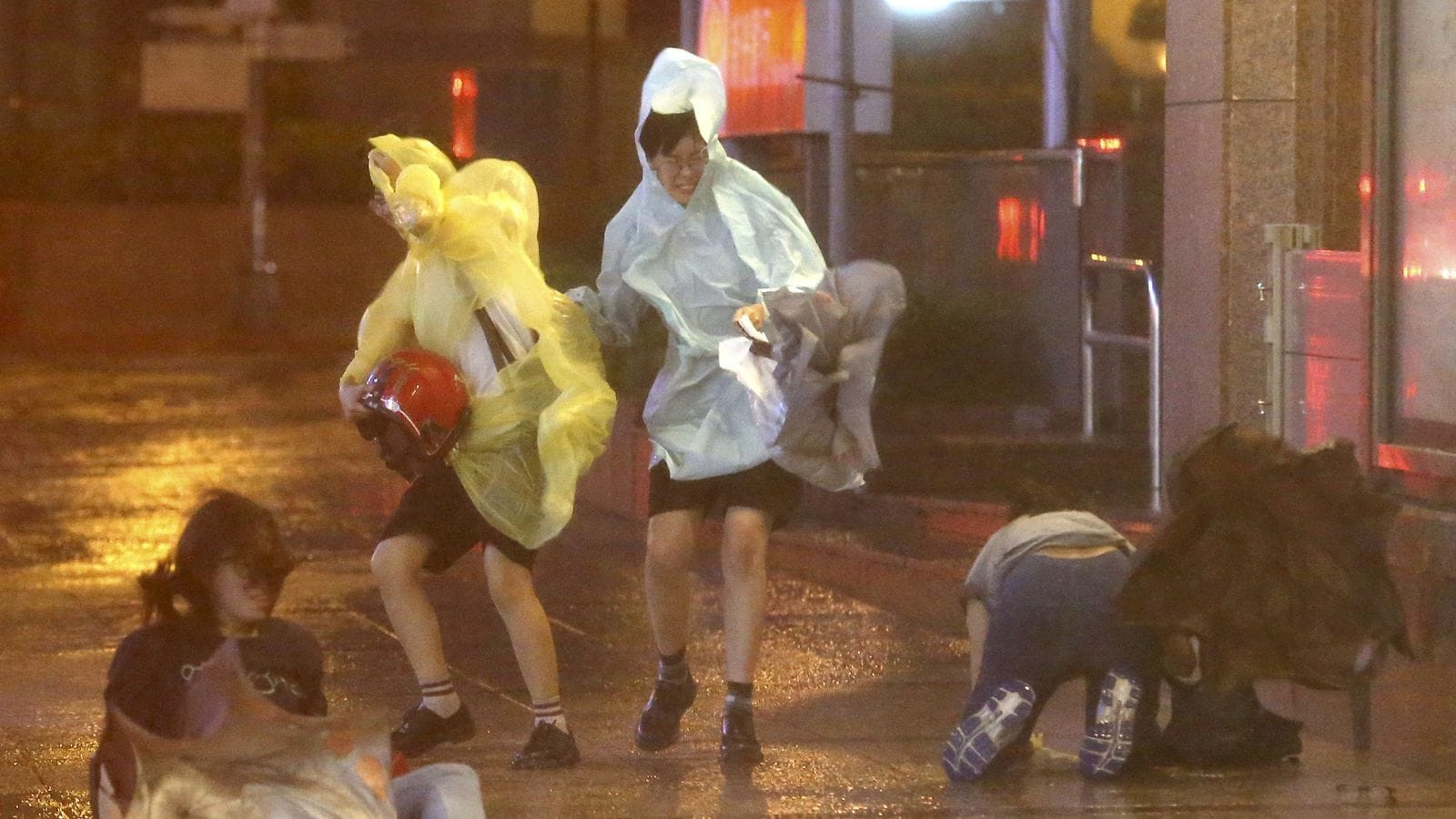
Halting trading on the Taiwan Stock Exchange, emptying classrooms, and grounding more than 900 flights ahead of Typhoon Champi feels decisive. It looks like leadership. It reads like caution.
It is mostly theater.
Whenever a major storm approaches Taiwan, the standard playbook kicks in before the first rainband even crosses the coast. Trading halts. Schools close. Airlines scrub schedules in bulk. Headlines then treat those shutdowns as proof that the system is protecting people and capital. That is the lazy consensus. It confuses visible caution with actual risk reduction.
A storm does not care whether a trading floor is dark or a school gate is locked. Wind gusts, storm surge, downed power lines, and flash floods hit physical infrastructure, supply chains, and human lives regardless of whether equity prices are frozen on a screen. Closing a market before landfall does not stop a single roof from peeling off or a single substation from tripping. What it actually does is turn a continuous, information-rich physical event into a blind spot where risk builds up behind closed doors.
The Real Bottleneck Isn't The Weather. It's The Blind Spot.
Most commentary around a storm like Typhoon Champi treats a market halt and a mass flight cancellation as roughly equivalent safety measures. They are not. Grounding an aircraft before severe crosswinds or heavy rain is a direct operational safety decision tied to flight envelopes, airport visibility, and crew positioning. Closing an exchange or shuttering schools across an entire island is a broad administrative pause designed to manage uncertainty and commute exposure.
Conflating those two creates sloppy analysis. When a market closes early ahead of a storm, price discovery stops while real-world facts keep changing. Power grids face strain. Ports evaluate berth closures. Factories check backup generators and raw material deliveries. Logistics teams track road washouts. None of that stops because the opening or closing bell did not ring.
I have watched global operations teams burn millions of dollars reacting to headline storm closures instead of tracking actual physical exposure. Years ago, during a severe Pacific storm season, a hardware buyer pulled rush orders out of northern Taiwan forty-eight hours before landfall based on school closures and flight cancellations alone, paying steep air-charter premiums to reroute components through other hubs. The plant never lost grid power for more than a few hours, the port reopened on schedule, and the buyer ended up eating massive expediting costs while competitors who monitored substation telemetry and feeder lines kept their margins intact.
That is the trap of treating administrative shutdowns as a signal of catastrophic damage. A closed exchange tells you regulators and exchange operators made a calendar and risk-control call. It does not tell you whether a fabrication line lost voltage or whether a container terminal will be flooded for five days.
Key Distinction: Price discovery is a market mechanism, not a weather shield. Freezing trades delays repricing; it does not prevent physical damage.
Imagine a scenario where a semiconductor fab relies on a single municipal water and power corridor during Typhoon Champi. Even if the stock market stays closed for two sessions, engineers on site still have to manage voltage dips, chemical supply lines, and cleanroom pressure. When trading resumes, the market does not price the storm's arrival—it prices whatever physical damage and logistics friction survived the night.
What People Also Ask (And Why The Usual Answers Miss The Point)
When a storm of Typhoon Champi's profile approaches Taiwan, the same questions flood search bars and news feeds. Most of the answers repeat comforting clichés instead of dealing with how complex systems actually fail.
Does closing the stock market protect investors when a typhoon hits?
It protects orderliness and gives clearing and settlement teams breathing room, which is a real operational benefit when power, telecom, or transport disruptions threaten back-office continuity. It does not protect asset values from storm damage. If a company's facilities, suppliers, or shipping lanes take a hit, the economic loss happens in the physical world first and shows up in the equity price later.
In fact, suppressing trading ahead of an uncertain landfall can create a pent-up gap when markets reopen. Investors who want to hedge exposure or reprice risk cannot use the primary venue during the halt. Instead, risk gets pushed into offshore derivatives, proxy stocks, or delayed reaction once trading resumes. Calling a halt "protection" mistakes a pause button for armor.
Are 900-plus flight cancellations proof that the storm will paralyze the region?
No. Flight cancellations are an optimization problem solved hours or days in advance, not a direct meter of devastation. Airlines cancel flights early to keep aircraft and crews out of bad weather, avoid stranding planes at closed airports, and prevent rolling schedule meltdowns across East Asia.
Because Taiwan sits inside one of the busiest air corridors in Asia, a single weather system can ripple across hundreds of regional and long-haul rotations even if the worst wind swath stays narrow or shifts slightly. A high cancellation count proves high interconnectedness and conservative airline scheduling. It does not automatically prove that every highway, port, and industrial park on the island will be knocked offline.
Why close schools everywhere if the storm track hasn't finished shifting?
Forecast cones widen the further out you look, and local officials face intense pressure to prioritize child safety over convenience. Closing schools early removes commuting risk before conditions deteriorate.
The flaw is treating a precautionary island-wide closure as a uniform severity rating. A storm like Typhoon Champi can bring torrential rain to mountain watersheds while coastal plains experience gusts that are manageable with basic precautions, or vice versa depending on how the circulation interacts with Taiwan's steep terrain. Treating every closure as a red alert flattens crucial geographic differences.
| Metric or Event | Common Headline Reading | What It Actually Signals |
|---|---|---|
| Stock Market Halt | Markets are terrified of imminent collapse | Operational continuity caution and delayed price discovery |
| 900+ Flights Cancelled | Total regional transport paralysis | Proactive fleet/crew positioning and hub ripple effects |
| Island-Wide School Closures | Every district faces identical extreme danger | Precautionary commute risk reduction ahead of forecast uncertainty |
| Post-Storm Reopen | The crisis is over once trading resumes | The real test of grid, port, and supply chain recovery |
The Mechanics Nobody Bothered To Check
To understand why Taiwan's storm response looks dramatic from the outside while functioning differently on the ground, you have to look at two things headline writers rarely examine: terrain-driven weather behavior and industrial redundancy.
Taiwan is compact, densely populated, and dominated by high mountain ranges running north-south. That topography does two contradictory things during a typhoon. First, it wrings massive amounts of rain out of moisture-laden winds, turning localized rainfall into landslides and river surges even when peak sustained winds moderate. Second, the Central Mountain Range can block, deflect, or reshape wind fields, creating sharp contrasts between windward and leeward areas.
At the same time, Taiwan's export manufacturing ecosystem—especially electronics, precision machinery, and semiconductors—has spent decades operating in a high-hazard environment. Severe weather, earthquakes, and grid transients are not novelty events in boardrooms there. Serious operators plan around backup generation, water storage, supplier diversification, and rapid recovery protocols rather than assuming calm skies.
In supply chain management, the concept of resilience—the ability of a system to absorb a shock and return to normal operating parameters—matters far more than brittleness, where everything looks smooth in fair weather and snaps at the first disruption. Observers who look only at halted trading screens and grounded planes often mistake a resilient physical system taking a scheduled administrative breather for a fragile system breaking down.
Classic works on high-reliability organizations and complex system failures, such as Karl Weick and Kathleen Sutcliffe's research on how high-hazard teams manage unexpected events and Charles Perrow's analysis of tight coupling in complex infrastructure, point to the same lesson: surface calm or surface stoppage tells you very little about hidden system stress. Real safety comes from operational discipline under uncertainty, not from looking busy before the storm arrives.
Where My Contrarian View Can Burn You
Pushing back against precautionary shutdowns has a real downside if you take the critique too far. Caution exists for a reason, and ignoring storm warnings in the name of "toughness" or "market efficiency" is how people get hurt.
If a business treats a storm warning like Typhoon Champi as noise and keeps staff commuting through flooded roads, high winds, or crumbling embankments, that is not contrarian insight. That is negligence. Likewise, dismissing flight cancellations as "overreaction" can leave travelers stranded without contingency plans when airspace closes or connecting hubs back up.
There is also a market-structure risk worth respecting. When communications, power, or banking infrastructure face potential stress during severe weather, orderly halts reduce settlement errors and panic execution. Saying that a market halt does not prevent physical storm damage is not the same as saying exchanges should stay open at all costs during an infrastructure emergency.
The honest trade-off is simple: precautionary shutdowns are blunt instruments. They save lives and prevent avoidable accidents, even when they create noise, delays, and false alarms for outsiders trying to read the situation from afar.
What To Do Instead Of Reading The Halt Headlines
If you trade, run operations, manage supply chains, or travel around a storm like Typhoon Champi, stop using market halts and flight tallies as your primary risk model. They are lagging indicators of caution, not leading indicators of physical impact.
- Track physical telemetry, not just closures. Watch official meteorological warnings for rainfall totals and wind gusts by county, grid status updates, port advisories, and road or rail closures. A closed bourse is background noise; a flooded arterial highway or an offline substation is a real constraint.
- Separate acute storm impact from post-storm recovery. The sharpest operational risks often show up after the eye or core rainband passes—when runoff peaks, mudslides trigger, repair crews deploy, and backlogged freight hits congested terminals.
- Audit single points of failure before the next forecast cone. Do not wait for a named storm to ask which suppliers, warehouses, or travel routes lack slack. If a two-day weather pause breaks your plan, the storm wasn't your real problem.
- Give travelers and field teams real buffers. Even when storm damage stays localized, airline schedule recovery after 900-plus cancellations takes days, not hours. Build margin into transit and delivery windows rather than betting on instant normalization.
Storms test physical reality, not financial calendars. The next time Typhoon Champi—or any system like it—lights up the tickers with halted trading, shuttered schools, and grounded planes, look past the drama of the shutdown and check what actually happens to the power lines, the water, and the roads once the wind dies down.