The earth does not roar until it is ready. It begins as a deep, subterranean groan, a vibration that rattles teacups before shaking foundations. Then comes the violent heave. In seconds, brick turns to dust, concrete crumbles like dry bread, and life as people knew it vanishes beneath gray rubble.
When the tremor finally subsided in Indonesia, the survivors were left standing in a haze of choking white powder. For outsiders looking at satellite maps, it was a disaster zone measured in magnitudes and fault lines. For the people on the ground, it was measured in something far more terrifying: silence. The kind of silence that follows when a neighborhood is instantly erased.
When Relief Becomes a Waiting Game
Consider what happens next. The ground stops moving, but the danger has only just begun. Roads are cracked ribbons of asphalt, swallowed by earth or blocked by landslides. Bridges hang like broken teeth over swollen rivers.
In the initial hours, trucks laden with rice, clean water, and medical supplies sit idling miles away. They cannot pass. A supply chain is only as strong as its weakest link, and when every single link snaps simultaneously, aid becomes an island of its own.
Hunger does not arrive with a dramatic announcement. It creeps in quietly. It starts as a gnawing in the stomach of a child who hasn't eaten since yesterday's breakfast. It turns into the quiet panic of a mother staring at an empty cooking pot, knowing that the nearest distribution center is a three-hour hike across treacherous debris.
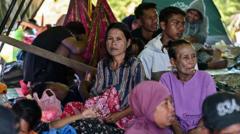
Statistics tell us that thousands are displaced. They tell us that emergency shelters are operating at double capacity. But numbers do not capture the chill of sleeping under a makeshift blue tarp while torrential tropical rain beats down on thin plastic. They do not capture the scent of smoke from damp firewood, or the haunting anxiety of wondering if an aftershock will finish what the main quake started.
The Geography of Vulnerability
Indonesia sits atop the Pacific Ring of Fire. This is not a secret. It is a geological reality etched into the daily lives of millions who build their homes on the restless seams of tectonic plates.
People ask why they stay. The answer is simple and complex: home is where the soil is rich, where ancestors are buried, where the community breathes together. Volcanoes and fault lines provide fertile earth, but they exact a heavy toll in return. When the earth breaks, the vulnerable bear the brunt. Concrete columns in rural villages rarely match the seismic codes of high-rise towers in capital cities.
Aid shortages are rarely tales of human malice. They are logistical nightmares compounded by geography. Imagine trying to thread a needle while riding a roller coaster. That is the reality facing relief workers navigating fractured islands, damaged harbors, and severed communication lines. Every hour of delay translates into escalating fears of starvation and preventable infection. Clean water becomes more precious than gold. A simple scratch, left untreated in the dust, turns into a battle against sepsis.
Rebuilding From the Rubble
Yet, human resilience defies mathematics.
Before the first heavy excavator arrives, neighbors are already digging with bare hands. They pull concrete slabs away with bleeding fingertips. They share the last handful of dry rice. In the face of overwhelming catastrophe, community is the first responder.
The road to recovery is long, steep, and paved with grief. Rebuilding isn't just about pouring new concrete or stringing power lines back across the hills. It is about restoring a sense of safety to children who flinch at the slamming of a door. It is about proving to a shattered village that the world outside has not forgotten them.
The ground may split, and the supply lines may stall, but the human spirit refuses to remain buried in the dust. The true measure of a disaster is not just how hard the earth falls, but how fiercely the living rise to meet it.