The Weight of a Closed Door
The postbox in London does not rattle with letters from Myanmar anymore. For years, the correspondence was sporadic, punctuated by the long, suffocating silences of house arrest. But today, the silence is different. It is heavy. Absolute.
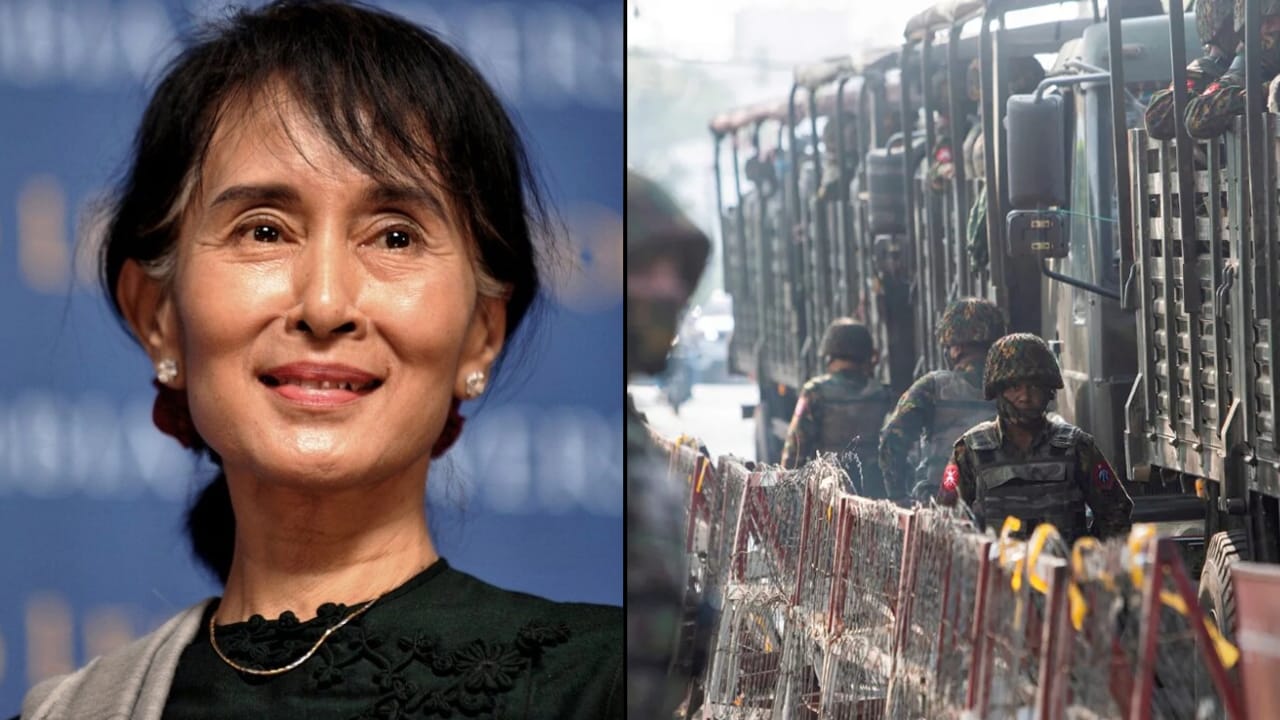
Kim Aris, a man living a relatively quiet life in the United Kingdom, watches the news like the rest of the world, but with an agonizingly personal stake. His mother is Aung San Suu Kyi. Once the international icon of democratic hope, the Nobel Peace Prize laureate, and the de facto leader of Myanmar, she has vanished into the opaque labyrinth of a military prison system.
She is eighty years old. She is reportedly ailing. And her family has no idea if she is still breathing.
When the military junta seized power in the February 2021 coup, they did not just overthrow a government; they attempted to erase a symbol. Suu Kyi was swept away in the pre-dawn darkness, subjected to a series of closed-door trials, and sentenced to decades in prison on charges ranging from corruption to violating state secrets—charges widely condemned by international observers as politically motivated theater.
Now, her son is demanding what should be the barest minimum of human decency: proof of life.
The Economics of Isolation
To understand why a military regime would hide an elderly woman so completely, we have to look past the headlines and examine the brutal logic of authoritarian survival.
Imagine a hostage situation where the captor refuses to let the hostage speak, not because they have nothing to say, but because their voice is a weapon. In Myanmar, Suu Kyi’s voice carries a gravity that decades of military propaganda have failed to erode. To the generals in Naypyidaw, she is not merely a prisoner; she is a rival center of gravity.
Consider the leverage she holds even in silence:
- The Symbol of Legitimacy: The National League for Democracy (NLD) won a landslide victory in 2020. By keeping her alive but invisible, the junta prevents her from rallying the fragmented resistance, while simultaneously keeping her as a potential bargaining chip for future diplomatic maneuvers.
- The Fear of Martyrdom: A sudden announcement of her passing under state custody could ignite an already volatile civil war into an uncontrollable firestorm. The military knows this. Thus, they offer vague assurances of her health, yet refuse to allow independent doctors, family members, or international envoys to see her.
This is the cruelty of state-sponsored ambiguity. It keeps the opposition off-balance, suspended in a state of perpetual anxiety, hoping for her release while preparing for the worst.
A Son’s Vigil
"I want to see some proof that she's actually alive and well," Kim Aris told journalists, his voice carrying the exhaustion of a man who has spent his entire life sharing his mother with a nation's struggle.
It is a struggle he knows intimately. During her previous fifteen years of house arrest under a prior military regime, Aris was repeatedly denied visas to see her. He grew up across oceans, watching his mother become a global saint, then a controversial political figure during the Rohingya crisis, and now, once again, a captive.
The human mind is poorly equipped for unresolved grief. Psychology calls it ambiguous loss—a state where a loved one is physically absent but psychologically present, or vice versa, with no closure in sight. For Aris, and for millions of citizens in Myanmar who still refer to her affectionately as "Amay Suu" (Mother Suu), the lack of concrete news is a psychological war of attrition.
The military claims she has been moved from her hot, solitary prison cell to a government building, supposedly to shield her from extreme heat waves. But without a photograph, a video, or a letter in her own handwriting, those claims are nothing but whispers in the dark.
The Broader Tragedy of a Forgotten War
The silence surrounding Suu Kyi is a microcosm of the silence that has blanketed Myanmar itself. Since the 2021 coup, the country has descended into a brutal civil war. The resistance forces, comprised of both ethnic armed organizations and civilian defense groups, have made unprecedented gains against the military junta, capturing key trade routes and military outposts.
In retaliation, the junta has turned to scorched-earth tactics. Air strikes on villages, internet blackouts, and mass displacement have become the norm. The world’s attention, easily distracted by conflicts in Europe and the Middle East, has largely drifted away from the jungles and cities of Myanmar.
By keeping Suu Kyi out of sight, the military hopes she will eventually slip out of mind. They are betting on the short memory of the international community. They are betting that if they wait long enough, the demands for her release will quiet down to a manageable hum.
But they underestimated the stubbornness of a son, and the deep-seated memory of a people who once tasted freedom.
The Empty Chair
At diplomatic summits and international forums, the seat reserved for Myanmar often sits empty or is occupied by a representative of a regime that represents no one but its own generals.
We often talk about geopolitics in terms of grand strategies, sanctions, and resource blocks. But at its core, history is shaped by the decisions of individuals facing immense pressure. The story of Myanmar is written in the lives of the thousands who have been imprisoned, the millions displaced, and an eighty-year-old woman sitting in a room somewhere in the sprawling, eerie capital of Naypyidaw.
Kim Aris continues to speak out, knowing that his voice is one of the few threads connecting his mother to the outside world. He does not ask for political miracles or immediate geopolitical interventions. He asks for a sign. A letter. A photograph. A simple confirmation that the woman who gave him life, and who gave her life to her country, is still breathing.
Until that proof arrives, the silence from Naypyidaw remains a loud, damning confession of the regime's own terror.
:max_bytes(150000):strip_icc():focal(749x0:751x2)/auschwitz-2-691cb034ee9e43cfa45a0969012c6337.jpg)