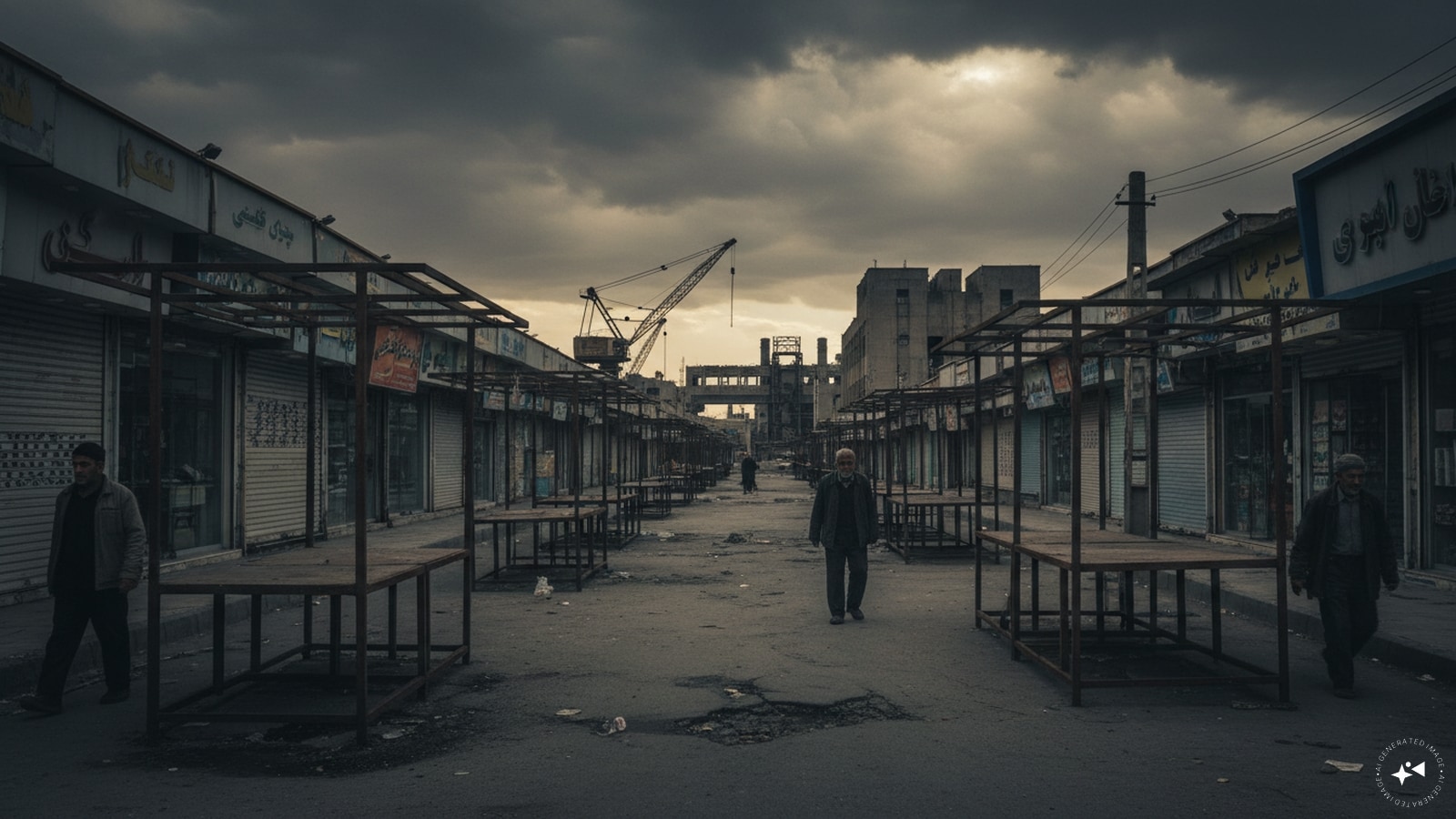
The workbench smells of stale machine oil, ozone, and cold steel.
Dmytro wipes his hands on a greasy rag that has seen three different uniforms and two different wars. He is fifty-two years old, with eyes the color of a winter sky over the Dnipro and fingers that have memorized the precise tolerance of a 155-millimeter artillery casing. He does not talk about geopolitics. He talks about micrometers. He talks about how a fraction of a millimeter’s variance turns a precision instrument into a useless hunk of scrap metal.
For months, Dmytro and his shift at one of Ukraine’s primary state-owned defense plants have worked under the low, rhythmic thrum of air raid sirens. They sleep in shifts on cots tucked behind heavy industrial lathes. They eat cold soup out of plastic containers while watching telemetry reports flash across cracked monitors. They are the invisible beating heart of a nation's defense, turning raw alloy into the thunder that holds the frontline together.
Or at least, they were.
Today, the lathe is quiet. The red emergency stop light blinks lazily against the concrete wall, casting a pulse of blood-colored light over idle machinery. There is no power. Worse, there are no raw components left in the staging bay.
The warning came down from the executive director’s office hours ago, typed on a single sheet of paper and pinned to the bulletin board where safety notices usually hang. Unless immediate funding injections materialize and the bottlenecked supply lines from Western partners clear up, the production lines are facing an imminent, catastrophic halt. Not a slowdown. A full stop.
To understand why that silence in Dmytro’s workshop matters, you have to look away from the grand maps flashed across evening news broadcasts. You have to look at the math of survival.
Modern industrialized warfare is an absolute consumer of mass. It is not just about courage or tactics; it is an industrial grinder. A single infantry brigade holding a contested treeline near Bakhmut or Kupiansk can burn through thousands of rounds in a single week just to keep enemy armor at bay. When the artillery speaks, the infantry lives. When the artillery goes silent, the infantry absorbs the full, unmitigated weight of an enemy advance.
Ukraine’s domestic defense industry, once a sprawling relic of Soviet military manufacturing, has undergone a radical, painful metamorphosis. Out of necessity, it has fractured, decentralized, and gone underground. Small, nimble workshops now turn out mortar rounds and drone components in abandoned warehouses, underground bunkers, and hidden industrial parks. They are hunted targets. Every missile strike aimed at electrical infrastructure is a calculated attempt to choke this decentralized network of ingenuity.
Yet, the heavy iron—the large-caliber artillery shells that serve as the backbone of defensive operations—cannot be hammered out in a garage. It requires heavy presses, specialized chemical propellants, precise electronic fuzes, and a continuous, unbroken chain of raw steel supply.
And that chain is snapping.
"People think we just push a button and magic happens," Dmytro says, gesturing vaguely toward a towering hydraulic press that sits dark and cold. "They think money is like water—you pour it into the top, and weapons spill out the bottom. But money doesn't machine steel. Supply chains do. Contracts do. Bureaucracy doesn't stop shrapnel, but a missing shipment of nitrocellulose certainly stops a shell."
The crisis unfolding across Ukraine’s premier artillery manufacturing facilities is a collision between urgent wartime demand and the grinding inertia of international procurement. While allied governments pledge billions in long-term aid packages, the funds often travel through a labyrinth of compliance checks, bureaucratic approvals, and procurement delays. Meanwhile, factories run on days, not quarters. They burn through their reserves of propellant powders and specialized steel casings faster than the replenishment pipeline can refill them.
Consider the anatomy of a delay. A contract is signed in a quiet European capital. Months pass in administrative review. By the time the raw materials clear customs, pass security vetting, and arrive at the loading docks of a Ukrainian munitions plant, the factory has already lowered its output capacity to ration remaining stocks. It is a slow-motion strangulation, disguised in the polite language of policy updates and budget debates.
The human cost of this administrative friction is measured in yards of lost ground and the lives of those holding it.
Down the line from Dmytro’s silent workshop, a young artillery spotter named Taras sits in a damp basement, his tablet glowing softly in the dark. He is twenty-four. Before the invasion, he wrote code for an app development startup in Kyiv. Now, his code calculates ballistics, wind drift, and impact coordinates.
Taras knows the rhythm of the war by the cadence of outgoing fire. When the guns are singing, there is a fierce, desperate punctuation to the days. When the guns fall silent, the dread creeps in.
"When we hear the big guns firing behind us, we breathe," Taras says, his voice flat with exhaustion. "We know we have the weight behind us. We know the enemy has to keep their heads down. But lately... you notice the gaps. You call for support, and instead of a rolling barrage, you get a few scattered shots. And then silence. And in that silence, you hear them moving."
The warning issued by Ukraine’s top artillery makers is not merely an economic grievance or a corporate press release. It is a five-alarm fire bell. It is the sound of the foundation cracking beneath the feet of a nation fighting an existential war of attrition.
The math is brutal and unforgiving. If domestic production lines halt, the burden shifts entirely to foreign stockpiles that are already dangerously depleted. Western nations have ramped up their own manufacturing capacities, but scaling heavy ordnance production takes years, not months. New factories in Europe and North America are still breaking ground or ramping up shifts, while Ukraine’s need is measured in right now.
To let the production lines go dark is to gamble with an entire front. It invites a catastrophic imbalance where courage alone is asked to stop high-explosive shells.
Back in the factory, Dmytro picks up his micrometer, opens the calibration case, and snaps it shut. There is nothing left to measure today. The lights overhead flicker once, twice, and then settle into a steady, uninterrupted glow as a backup generator kicks in somewhere in the bowels of the plant.
The machine doesn't start. The power is there, but the ingredients are missing.
He walks over to the small window looking out over the industrial yard. Snow is falling now, turning the shattered concrete and twisted metal of a previous missile strike into a soft, monochromatic landscape. Somewhere out there, thousands of miles away, politicians are debating the next tranche of funding. Somewhere closer, across frozen fields, the frontline waits for an answer that only heavy steel can provide.
Dmytro pulls his cap down over his forehead, picks up his jacket, and looks back at the cold lathe one last time.
The silence in the room is heavy, heavy as lead, and waiting to be broken.