The morning began, as it often does in a city living on the edge, with a deceptively mundane stillness. The air held the crisp, biting cold of an approaching change. In Kyiv, coffee shops opened their shutters. Steam rose from cups held by trembling hands. People walked to work, eyes darting upward, checking the sky not for rain, but for the sudden, impossible sound of a rupture in the air.
Then, the world split open.
It was not a roar that you hear with your ears alone. It was a pressure, a physical weight that pressed against the chest, knocking the breath out of the lungs. The explosions did not just rattle windows; they shook the foundations of the lives people had so carefully rebuilt amidst the ongoing conflict. When the dust settled, the silence that followed was heavier than the blast itself. It was the silence of lives suddenly, violently extinguished. Six. That is the number that appeared on screens across the globe. Six lives.
To the world, six is a statistic. A digit in a headline. A scroll on a ticker. But for those six people, existence—with all its complexity, its unfinished conversations, its morning routines—was brought to a screeching, total halt.
Consider a hypothetical resident, let us call him Anton, whose morning was defined by the simple act of preparing breakfast. Imagine the sunlight hitting his kitchen table, the way he might have been planning his afternoon, the mundane details of a Tuesday that would never reach its conclusion. When the sky breaks, the planning stops. The future vanishes. For the family who lost their loved one in that kitchen, the morning sun no longer represents a new day. It represents a wound that will never fully heal.
This is the invisible cost of the news cycle. We read about explosions in Kyiv, and then we swipe to the next story. We consume the shock, process the tragedy, and move on because the human mind cannot sustain that level of grief for long. But the ground remains. The craters stay.
Conflict has a way of erasing the nuance of a life. It reduces a person to their location, their nationality, their proximity to a blast zone. But every person claimed by these events was the sum of a thousand moments. They were the ones who knew exactly how to soothe a crying child. They were the ones who held the keys to homes that now sit empty. They were the ones who carried the history of a city in their memories.
When we talk about the conflict between Russia and Ukraine, we often lean on the language of borders, strategies, and geopolitical shifts. We speak of movements on a map as if they are pieces on a chessboard. But the board is made of flesh and blood. Every move has a recoil. Every strike leaves behind a void that no political theory can fill.
The reality of living under the constant threat of violence changes a person. It alters the way you walk down a street. You become hyper-aware of the exits in every room. You learn to interpret the pitch of a distant siren. You stop making long-term plans. You live in the present, not out of a sense of mindfulness or Zen, but out of a desperate, survivalist necessity.
Think about the sheer, exhausting work of enduring such a reality. It is not just the fear of death, but the fear of losing the rhythm of life itself. The loss of the six is not just a tragedy of the past tense; it is an interruption of the future. It is the loss of the art they might have created, the love they might have shared, the contributions they might have made to the world.
There is an inherent cruelty in the speed with which we report these things. "Explosions rock Kyiv," the headlines shout. The words are sharp, jagged. They carry the intent to inform, but they often fail to convey the human weight. We need to look closer. We need to recognize that beneath the headlines lie the fractures of individual lives.
If you have never stood in a city while the air raid sirens wailed, it is difficult to grasp the visceral nature of the experience. It is a sound that gets into your bones. It is not just a warning; it is a reminder that your safety is fragile, that your comfort is a luxury, that the world can turn against you at any moment.
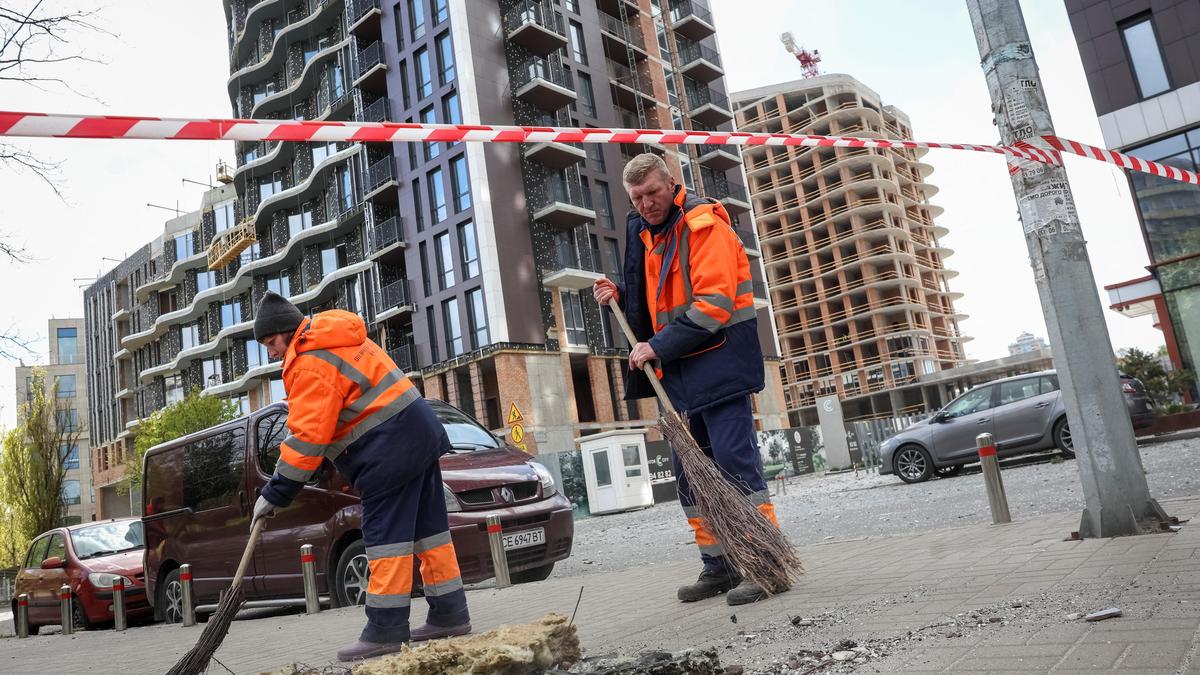
History teaches us that the cost of these moments is always paid by the civilian. The soldiers fight, the politicians negotiate, but the people—the shopkeepers, the teachers, the parents—are the ones who bear the physical and psychological marks. They are the ones who have to sweep up the glass and try to piece their lives back together while the earth is still vibrating from the last impact.
Look at how the world responds. There is the initial shock, the wave of sympathy, the social media posts, the fleeting attention. But eventually, the cycle resets. Another event takes over the news cycle. The names of the six are forgotten by the wider world, even as they are etched forever into the hearts of those they left behind. This collective forgetting is perhaps the greatest tragedy of all. It suggests that we have become accustomed to the violence, that we have allowed ourselves to become desensitized to the loss of human life.
But there is another truth, one that exists in the shadows of the conflict. It is the resilience of those who remain. It is the way a city doesn't just crumble; it fights to endure. Despite the damage, despite the grief, life persists. People still buy bread. They still hold hands. They still, in the face of impossible odds, choose to remain.
This resilience is not a romantic notion. It is a heavy, painful, and often ugly struggle. It is the defiance of existing when the world tells you that you should be a victim. It is the act of sweeping up the glass and opening the shop again, even with trembling hands.
Consider what happens next. The cleanup begins. The mourning process, which for many will take a lifetime, starts in earnest. The world moves on, but for the families of the six, the world has ended. They are the ones who walk through the ruins of their own lives. We owe it to them to look, to understand, and to carry the weight of that truth, however briefly, before we turn the page.
The distance between us and them is often measured in miles, but the true distance is in the lack of empathy. We think that because it is not happening to us, it is not our reality. But the world is smaller than we think. What happens in a city like Kyiv echoes in every corner of the globe. Every life lost in a conflict is a diminishment of our shared humanity.
When we read these reports, we should not just look for the numbers. We should look for the people. We should ask ourselves what it would be like to live in a place where the sky is no longer a source of light, but a source of terror. We should ask ourselves how we would hold onto our humanity if everything we knew was threatened.
It is a difficult exercise, but it is necessary. It prevents us from becoming the callous observers of tragedy. It forces us to acknowledge the dignity of those who are suffering. It forces us to remember that behind every statistic is a human story that deserved to continue.
The city is still there. The walls might be scarred, the windows might be shattered, but the life inside remains. It is a fragile, battered, beautiful defiance. And as the sun sets over the horizon, casting long, sharp shadows across the streets of Kyiv, we are left with the quiet acknowledgment of what has been lost, and the uncomfortable, persistent hope of what might survive.
The six are gone, but the echo of their existence remains in the city they loved. It remains in the quiet mourning of their families, in the unwritten chapters of their lives, and in the memory of those who knew them. That is where the real story resides. Not in the explosions, but in the aftermath. Not in the death, but in the life that, against all logic, continues to push through the cracks in the pavement.
Every time we look at the news, we are witnessing the fragility of our own reality. The same world that allows for beauty and growth also allows for destruction and loss. It is a precarious balance, one that we are all walking every single day. The difference is that for some, the ground has already given way.
The story does not end with the report. It begins there. The report is merely the notification of an ending, but the story is the life that led up to it and the legacy it leaves behind. It is a story of resilience, of grief, and of the enduring, indomitable spirit of human beings who, even when the sky breaks, refuse to stop looking up.
Night falls on the city. The sirens have stopped. For now, the air is still. But the weight of the day remains, etched into the dark, cold streets. Somewhere, a light flickers in a window. A hand reaches out to touch a wall that is still standing. Life, however changed, goes on. It is the only defiance they have left. And in that defiance, there is a profound, aching truth that no headline can ever fully capture.
It is the truth of the ordinary, the value of the mundane, and the heartbreaking beauty of a life—any life—that was once here, breathing, feeling, and being, and is now, only a memory. The city holds those memories tight, cradling them against the coming dark, waiting for a dawn that it knows, despite everything, will eventually come. And in that waiting, there is a grace that transcends the violence, a quiet strength that survives the blast, the grief, and the passing of time.
The sky, eventually, clears. The stars come out. They look down upon the city with the same indifference they showed before the explosions, but to the people below, they are no longer just lights in the void. They are markers of what remains. They are reminders that even in the deepest night, there is still something to see, something to hold onto, and something, despite the unimaginable loss, that still possesses the power to endure.
The final sound of the day is not the explosion. It is the sound of a door locking, a breath being drawn, a step being taken forward into the dark. It is the sound of survival. It is the sound of a city that, for all its wounds, is still breathing. And in that breath, there is a defiant, quiet assertion that the story is not over. Not yet. Not while there is still someone left to remember the six, to tell their story, and to carry the weight of their absence into the light of a new, uncertain day.