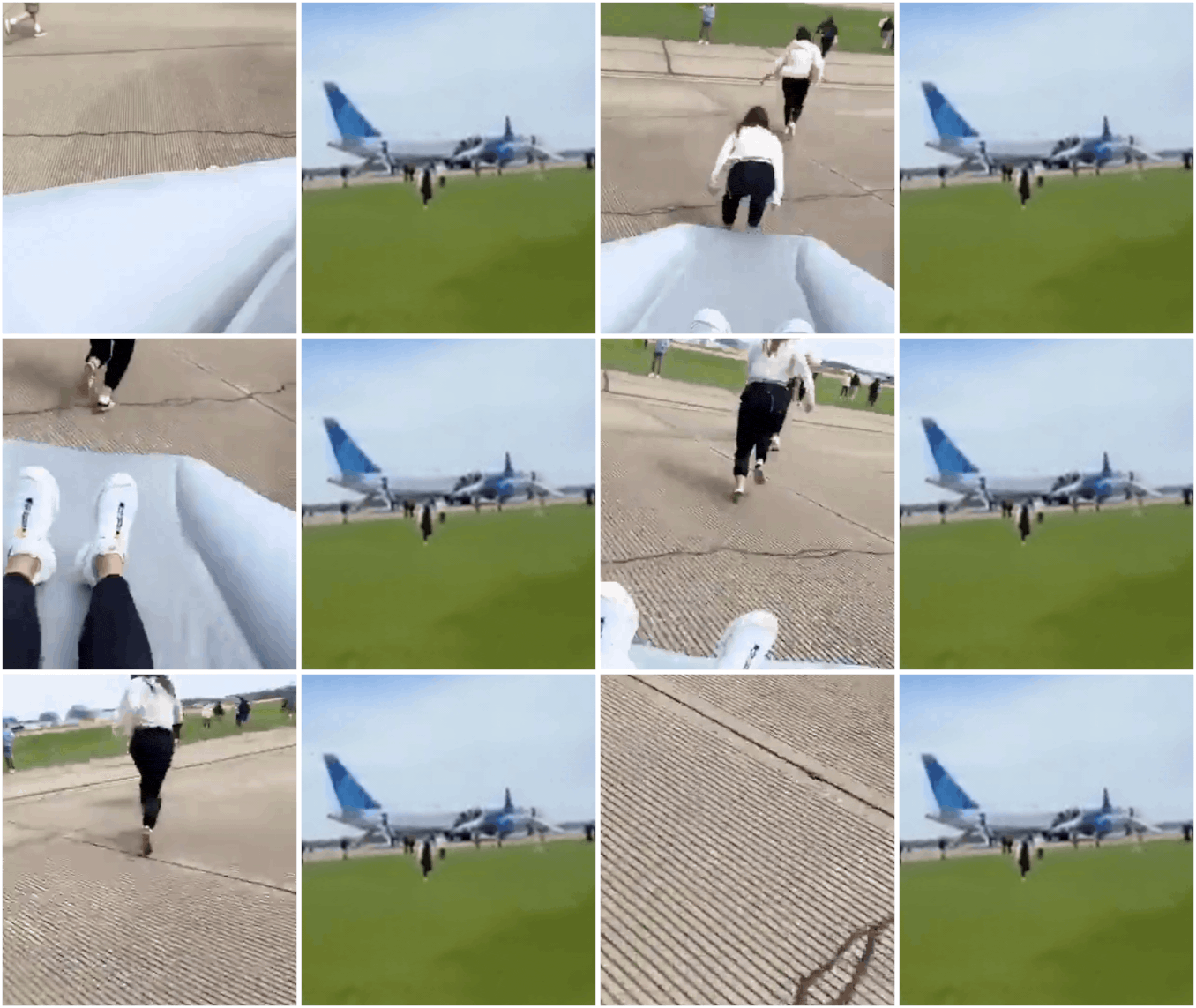
The cabin of a Boeing 737 is a pressurized tube of social contracts. We agree to sit shoulder-to-shoulder with strangers, to eat lukewarm snacks in silence, and to ignore the terrifying reality that we are suspended seven miles above the earth. We trade our autonomy for the promise of a destination. But on United Airlines Flight 1108, that contract didn't just expire. It shattered.
What began as a routine hop from Newark to Chicago transformed into a masterclass in collective adrenaline. Somewhere over the rolling geography of the American Midwest, the mundane hum of the engines was punctured by a word no traveler ever wants to hear over the intercom: "Diverting."
Security. It is a broad, terrifying umbrella. When the pilot announced they were dropping out of the sky toward Pittsburgh International Airport, he didn't mention a specific threat. He didn't have to. The lack of detail acted as a mirror, reflecting every passenger’s private nightmare back at them.
The Anatomy of an Abrupt Descent
Gravity feels different when it isn't invited.
As the plane banked hard toward Pennsylvania, the atmosphere inside the cabin shifted from boredom to a vibrating, electric tension. Imagine a woman—let’s call her Sarah—sitting in 14C. She was likely finishing a spreadsheet or halfway through a podcast about true crime, ironic given the circumstances. Suddenly, the flight attendants aren't offering ginger ale. They are moving with a calibrated, haunting urgency. Their faces are masks of professional calm that don't quite reach their eyes.
The descent into Pittsburgh wasn't the slow, rhythmic glide of a vacation’s end. It was a race. The pilots were dealing with a "possible security issue," a phrase so vague it carries the weight of a thousand catastrophes. On the ground, the machinery of emergency was already screaming into life. Fire trucks, ambulances, and tactical teams lined the tarmac like a grim welcoming committee.
When the tires finally barked against the runway, there was no sigh of relief. There was only the sound of the engines whining down and the sudden, jarring command that changes a person's DNA: "Evacuate. Evacuate."
The Yellow Path to the Tarmac
Most people spend their lives looking at the "Safety Information" card in the seatback pocket as a piece of abstract art. We know the slides exist. We see the little stick figures jumping into the void with their arms crossed. We never expect to be the stick figure.
The door pops. The hiss of the gas aspiration system fills the air as the emergency slides inflate in less than six seconds. It is a violent, beautiful bit of engineering.
For the passengers of Flight 1108, the world became a blur of yellow vinyl and cold Pittsburgh air. You don't "disembark" an emergency slide. You are ejected. There is no time for carry-on luggage. You leave your laptop, your expensive headphones, and your dignity in the overhead bin. You jump because the person behind you is jumping, and the person behind them is screaming.
Imagine the friction of the slide against your palms. The sudden, jarring hit as your feet find the pavement. The smell of jet fuel and ozone. It is a sensory overload that bypasses the logical brain and taps directly into the lizard brain. Run. Get away from the metal bird.
The Invisible Stakes of a False Alarm
In the aftermath, the investigation revealed that the "security issue" was a matter of caution rather than a ticking clock. But to the people on that tarmac, the distinction was irrelevant. The trauma of an evacuation doesn't care about the final police report.
We live in an era where the cost of safety is paid in the currency of peace of mind. Every time a flight is diverted for a "possible" threat, we are reminded of how fragile our systems truly are. We rely on the vigilance of air marshals, the intuition of flight crews, and the complex algorithms of ground security. When those systems flag a red light, the machine stops. Instantly.
Consider the ripple effect. It isn't just one plane in Pittsburgh. It’s the missed connections in Chicago. The father who didn't make it to the bedtime story. The surgeon whose hands are shaking too much to operate the next morning. The business deal that falls through because a signature didn't arrive on time.
The aviation industry operates on a razor-thin margin of trust. We trust that the person in the seat next to us isn't a threat. We trust that the baggage handlers did their jobs. We trust that the "possible" in "possible security issue" is an overestimation.
The Human Cost of Vigilance
Standing on the wind-swept taxiway, the passengers of United 1108 were no longer a cross-section of the American economy. They were survivors of a shared hallucination of disaster. In those moments, the CEO and the college student are identical. They are both shivering in shirtsleeves, watching their luggage—their entire lives—locked inside a silent plane surrounded by men with rifles.
The "security issue" ended up being a non-event in the eyes of the evening news cycle. A footnote. A "no credible threat found" headline that disappears by the next morning.
But for those who went down the slide, the story is different. They will never hear the chime of a seatbelt sign the same way again. They will look at the exit row not as extra legroom, but as a potential escape hatch.
We are obsessed with the "why" of these events. Was it a suspicious bag? A misunderstood comment? A technical glitch in a screening database? We want a culprit because a culprit provides a sense of control. If there is a bad actor, we can catch them. If there is a broken sensor, we can fix it.
The reality is far more unsettling. Sometimes, the system works exactly as intended, and the result is still a hundred terrified people sliding down a yellow ramp into the dark. We have built a world so safe that the mere hint of danger requires us to blow the doors off and run.
The plane sits on the tarmac, a hollowed-out shell of its former self. The slides flap in the wind like discarded skin. Eventually, the passengers are rebooked. The bags are screened again. The "security issue" is filed away into a cabinet of anomalies.
But as the next flight takes off, and the wheels tuck back into the belly of the craft, every passenger looks at the door. They check the handle. They measure the distance. They remember that the only thing keeping them in their seats is the collective hope that today, the slide stays folded in its box.
The sky is a beautiful, indifferent place, and the ground is always waiting.