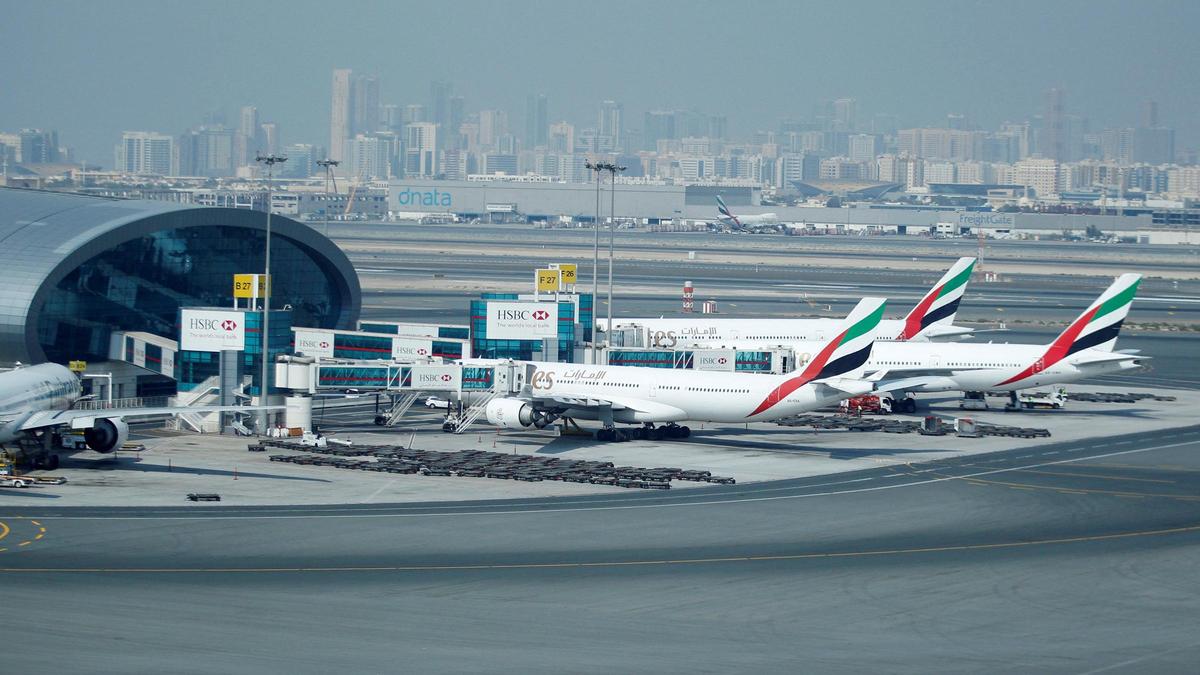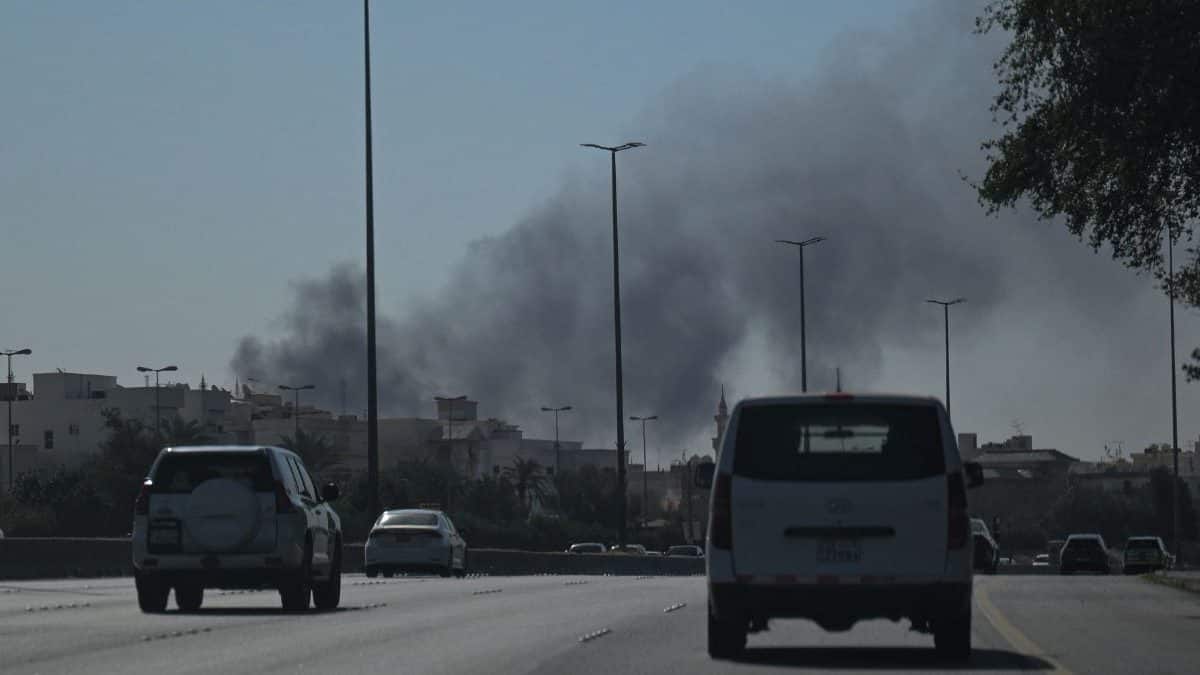
The coffee in Terminal 3 usually tastes like anticipation. It is the acidic, overpriced fuel of reunions and business deals, sipped by people looking at watches and dreaming of the cooling mist of London or the neon hum of Tokyo. But today, the air in the Dubai International departure hall carries a different frequency. It is the sound of phones vibrating in unison. It is the collective intake of breath as a thousand screens refresh at once, flashing a singular, sobering update from the United States State Department.
Level 3: Reconsider Travel.
For the uninitiated, these are just words on a government website. For the mother sitting on her suitcase near the Air India check-in counter, they are a physical barrier. They represent a sudden, invisible wall erected over the Gulf of Oman and the jagged mountains of Iran. When the geopolitical tectonic plates of West Asia shift, the first casualties aren't always on the battlefield. Sometimes, they are the holiday plans, the family weddings, and the fragile sense of normalcy that keeps a global hub spinning.
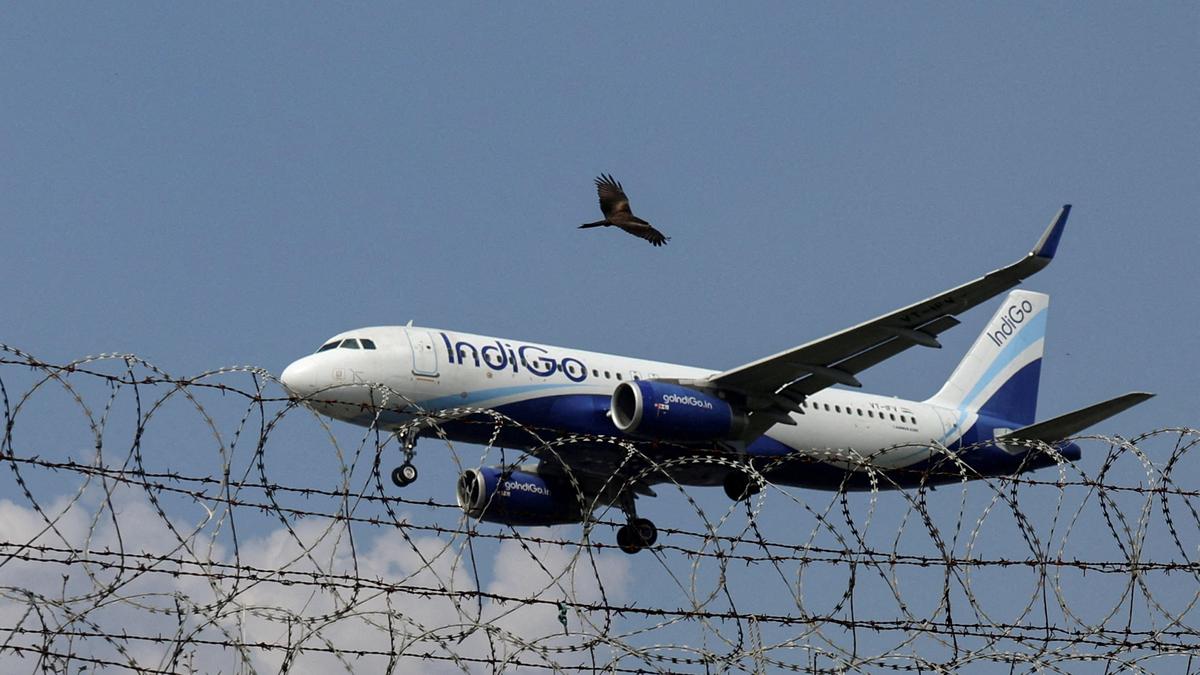
Consider Sarah. She isn't a real person in the legal sense, but she is the composite of every traveler I spoke to this morning. Sarah has lived in Abu Dhabi for six years. Her brother is getting married in Mumbai this weekend. She has the dress. She has the gifts. She had a flight. Now, she has a notification from Air India stating that operations have been suspended "amidst the evolving situation in West Asia."
This isn't merely a delay. When an airline like Air India pulls its fleet from the sky, it isn't because of a mechanical failure or a localized strike. It is a calculation of risk involving anti-aircraft batteries, ballistic trajectories, and the terrifying memory of MH17. The sky, which we usually treat as a seamless, borderless highway, has suddenly rediscovered its jagged edges.
The U.S. travel alert issued for the United Arab Emirates cited the "threat of missile or drone attacks." To the casual observer in a New York suburb, that sounds like a movie plot. To the residents of the skyscrapers in Dubai, it is a reminder that prosperity is often a neighbor to volatility. The UAE remains one of the safest places on earth in terms of domestic crime, but geography is destiny. You cannot move a peninsula.
The Calculus of the Cockpit
Why does a state department warning matter so much? It triggers a domino effect that reaches far beyond the embassy walls. Insurance premiums for aircraft skyrocket the moment a "Level 3" is slapped onto a destination. Reinsurance markets—the shadowy giants that back the household names—begin to recalculate the "war risk" clauses.
When Air India suspends flights, it isn't just about the safety of the passengers on that specific Boeing 787. It is about the logistical nightmare of having a multi-million dollar asset trapped on a tarmac if an airspace suddenly closes. It is about the crew’s ability to rest in a city where the "what if" hangs heavy in the hotel lobby.
The suspension of these routes creates a vacuum. Thousands of people who rely on the Dubai-India corridor—one of the busiest air arteries in the world—are suddenly scrambling. Prices for the remaining seats on other carriers spike. This isn't corporate greed; it’s the brutal math of supply and demand when the supply is being throttled by regional tensions.
The Invisible Stakes of a Canceled Flight
We talk about "West Asia tensions" as if they are weather patterns. High pressure over the Levant. Storm clouds over the Strait of Hormuz. But for the migrant worker whose two-year contract is up and who just wants to see his daughter, these tensions are a thief. They steal time. They steal the few weeks of joy carved out of years of labor.
I watched a man today staring at the blank space where his flight number used to be. He didn't look angry. He looked exhausted. The geopolitical maneuvering between superpowers and regional heavyweights often feels like a game of chess played by giants who don't notice the ants under the board.
The UAE has spent decades positioning itself as the bridge between East and West. It is the world’s transit lounge. When that bridge feels even slightly unstable, the tremors are felt in the boardrooms of London and the gold souks of Deira. The "Level 3" alert is a blow to the narrative of invincibility. It forces everyone—from the high-net-worth investor to the backpacker—to look at the map and realize how small the world actually is.
The Logistics of Uncertainty
What does "Reconsider Travel" actually mean for you?
If you are a U.S. citizen, it means your government is telling you that they might not be able to help you if things go south quickly. It means your travel insurance might have a "Force Majeure" or "Act of War" exclusion that suddenly looks very relevant. It means the "seamless" experience of international transit has been replaced by a series of high-stakes gambles.
Air India’s decision to halt operations is a bellwether. They are often the first to react to shifts in the security environment of the subcontinent and its neighbors. Their flight paths often cross the very corridors currently buzzing with military surveillance. To fly those routes right now is to navigate a maze where the walls are made of geopolitical ego and old grudges.
People ask: "Is it actually dangerous?"
The honest answer is that no one knows until the moment it is. Security is an illusion of stability maintained by millions of people agreeing to follow the rules. When those rules are challenged by state actors, the illusion thins. The UAE authorities are world-class at defense and monitoring, but a Level 3 alert is a signal to the world that the "risk profile" has changed.
The Sound of an Empty Gate
There is a specific kind of silence at a gate where a flight has been canceled. It isn't the quiet of a library. It’s the silence of a stopped heart. The digital displays, usually flickering with destinations like Kochi, Delhi, and Abu Dhabi, now simply read "CANCELED" in a red that feels more like a warning than a notification.
The staff at the counters are the frontline of this emotional war. They are the ones who have to explain to a crying grandmother that no, there isn't another flight tonight. They are the ones who have to absorb the misplaced rage of people who feel helpless. Behind the plexiglass, they are just as worried. They live here. Their families are here.
We live in an age of instant information, yet we have never felt more in the dark. We see the headlines about "West Asia tensions" and we look for the "Why," but the "Why" is buried under layers of historical grievance and strategic posturing. What we are left with is the "What": an empty seat, a lost deposit, and a phone call home to say, "I'm not coming yet."
The Resilience of the Hub
Despite the alerts and the suspensions, the city of Dubai doesn't stop. The Burj Khalifa still pierces the clouds. The malls remain air-conditioned cathedrals of commerce. There is a grit to this region that outsiders often miss. It is a resilience born of knowing that the neighborhood is complicated, but the mission is progress.
However, the current situation serves as a stark reminder of the fragility of our globalized life. We are all connected by these aluminum tubes in the sky. When one airline stops, when one embassy issues a warning, the ripples cross oceans.
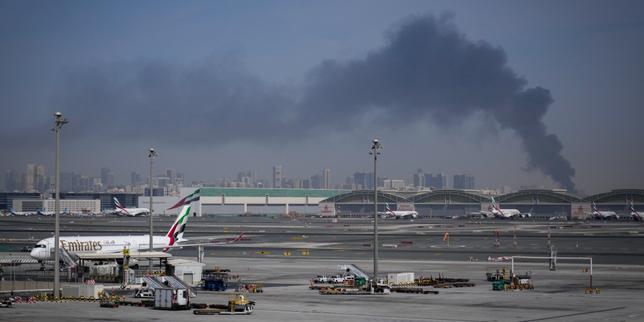
Tonight, the hotels near the airport will be full of people who were supposed to be somewhere else. They will sit in the bars and the lounges, scrolling through news feeds, trying to decode the cryptic language of diplomacy. They will look out the windows at the planes still taking off—the Emirates and Etihad birds that continue to defy the gravity of the situation—and they will wonder if they are watching the end of an era or just another blip in the long, turbulent history of the desert.
The sky over the Gulf is vast and, for the moment, clear. But as the sun sets, casting long, orange shadows across the dunes and the tarmac, the departure boards remain the only honest storytellers. They tell us that for now, the shortest distance between two points is no longer a straight line. It is a detour through patience, a navigation of fear, and a hopeful glance toward a horizon that currently feels much too far away.
The red text on the screen doesn't blink. It just stays there, a steady, glowing reminder that even in the most modern cities, we are still subject to the ancient whims of conflict.
Would you like me to analyze how these travel alerts specifically impact international insurance policies or provide a breakdown of alternative travel routes currently being utilized?