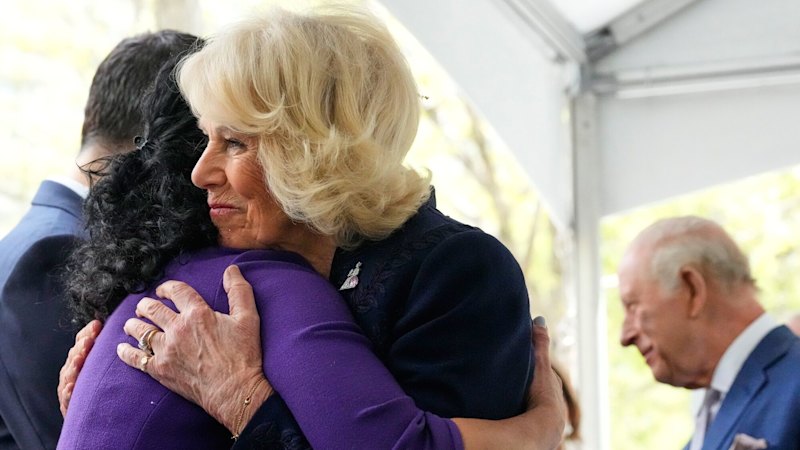
When the Prince of Wales and the Duchess of Cornwall stood amidst the hollowed-out silence of Lower Manhattan, they weren’t just there for the cameras. The visit to the National September 11 Memorial and Museum served as a calculated exercise in "soft power," a term often thrown around in diplomatic circles but rarely understood in its rawest form. While the media often frames these royal tours as mere photo opportunities involving wreaths and somber expressions, the reality involves a complex layer of international relations, historical grief, and the preservation of the "Special Relationship" between the United Kingdom and the United States.
At its core, this visit was about the 67 British citizens who perished on that Tuesday morning in 2001. By honoring them, the Royal Family reaffirms a blood bond that predates modern politics.
The Mechanics of Royal Mourning
Royal grief is never accidental. Every movement is choreographed by the Foreign, Commonwealth & Development Office (FCDO) to signal stability. When the future King Charles III walked through the memorial, he carried the weight of a thousand years of British continuity. This isn't just about showing up; it’s about the visual confirmation that the UK remains America's most steadfast ally.
The British Monarchy operates on a different timeline than elected officials. Presidents come and go every four or eight years, but the Crown remains. This longevity allows the Royal Family to act as a bridge across decades of shifting American policy. When they visit Ground Zero, they are not just mourning individuals; they are validating the American experience through a British lens.
The British Memorial Garden Strategy
A significant but often overlooked aspect of the royal itinerary was the visit to the British Memorial Garden in Hanover Square. This small pocket of Manhattan serves as a permanent piece of British soil in the heart of the financial district.
The garden’s design is intentional. It features plants native to the British Isles, like yew and daffodils, arranged in a way that mimics the English countryside. For the royals, this isn't just landscaping. It is a territorial marker of shared loss. The Prince and Duchess used this space to meet with families of the victims, a task that requires a specific kind of emotional labor that politicians often struggle to perform without appearing opportunistic.
Beyond the Wreaths
Critics often argue that these visits are expensive relics of a bygone era. They ask why a taxpayer-funded family from London needs to fly across the Atlantic to stand in front of a fountain. To understand this, you have to look at the "diplomacy of presence."
In the high-stakes world of international trade and security, the Royal Family acts as the ultimate door-opener. A royal visit to New York creates a "halo effect" for British interests. It softens the ground for trade envoys and military attaches who follow in their wake. By paying respects at Ground Zero, Charles and Camilla were effectively reinforcing the emotional infrastructure that allows for cooperation on intelligence sharing and counter-terrorism.
The Evolution of Camilla’s Role
This trip also marked a significant shift in the public perception of the Duchess of Cornwall. For years, her presence on the international stage was a subject of scrutiny. In New York, however, she adopted a role of quiet support and focused engagement.
She focused heavily on the families, particularly the women who lost partners or children. This wasn't the flashy, high-glamour approach of past generations. It was grounded and stoic. Observers noted that she spent more time listening than speaking—a rare trait in the age of the 24-hour news cycle. This helped humanize a monarchy that is often seen as distant or out of touch with modern American sensibilities.
The Weight of Sixty Seven Names
The 67 British victims represent the largest loss of life for the United Kingdom in a single terrorist incident. This fact is the engine behind the royal visit.
| Country | Number of Victims (Approx.) |
|---|---|
| United Kingdom | 67 |
| Dominican Republic | 47 |
| India | 41 |
| Greece | 39 |
| South Korea | 28 |
The list of names inscribed in the bronze parapets of the memorial includes traders, insurance brokers, and restaurant workers. By touching these names, the royals bridge the gap between the aristocracy and the working professional. It is a performance of solidarity that resonates deeply with the "Anglosphere"—that collection of English-speaking nations that share a common legal and cultural heritage.
The Security Architecture of a Royal Visit
Planning a royal walkabout in Manhattan is a logistical nightmare that requires months of coordination between the NYPD, the Secret Service, and the Royal Protection Command (SO14).
The goal is to make the royals look accessible while keeping them inside a bulletproof bubble. This paradox is the hallmark of modern royalty. Every "spontaneous" handshake is vetted. Every street corner is swept. The cost of this security is often the focal point of Republican (anti-monarchy) sentiment back in the UK, but from a New York perspective, it is seen as a necessary tribute to the status of the visitors.
The Cultural Impact on New Yorkers
New Yorkers are notoriously difficult to impress. They have seen every celebrity, world leader, and billionaire pass through their streets. Yet, the presence of the British royals at Ground Zero still manages to stop traffic.
There is a lingering respect for the way the UK handled the aftermath of 9/11. Many remember the Coldstream Guards playing the "The Star-Spangled Banner" during the Changing of the Guard at Buckingham Palace on September 12, 2001. That gesture has not been forgotten. When Charles and Camilla returned to the site of the towers, they were tapping into that reservoir of goodwill.
The Architecture of Memory
The memorial itself is a feat of engineering and psychology. Known as "Reflecting Absence," the twin pools sit in the footprints of the original towers.
The water falls 30 feet into a square basin and then drops another 20 feet into a smaller central void. This design is meant to represent the void left by the attacks. For the Royal Family, who are masters of ceremony and symbolism, this environment is where they thrive. They understand the power of a long pause and a bowed head. They know that in these moments, the silence is more communicative than any speech they could give at a podium.
Environmentalism Meets Diplomacy
During the visit, Charles also managed to weave in his long-standing commitment to sustainability. Even in a place focused on the past, he looked for ways to discuss the future of urban environments.
This is his "hook." While the primary mission was remembrance, the secondary mission was influence. He met with local leaders to discuss how New York is adapting to climate change, using the platform of the 9/11 visit to pivot toward shared global challenges. It is a clever bit of tactical maneuvering: use the universal language of grief to establish common ground, then move the conversation toward the Crown’s preferred policy areas.
The Unspoken Friction
Not everyone views these visits through a lens of reverence. There is always an undercurrent of tension regarding the British Empire’s history and the relevance of a monarchy in the 21st century.
However, the 9/11 memorial is one of the few places where these debates are temporarily suspended. The sheer scale of the tragedy at Ground Zero acts as a leveling field. Even the staunchest anti-monarchist finds it difficult to criticize a family for paying respects to the dead. The royals know this. They use these moments of national mourning to reset their public image and remind the world that they are the keepers of national memory.
Looking at the Infrastructure of the Museum
The royal party also toured the subterranean museum, which houses remnants of the original structure, such as the "Survivor’s Stairs" and the "Last Column."
Inside these walls, the narrative is one of resilience. The Prince of Wales has often spoken about the "built environment" and the importance of architecture in shaping the human spirit. Seeing the twisted steel of the North Tower provides a visceral backdrop to his philosophy. The museum isn't just a collection of artifacts; it is a testament to the fact that things can be rebuilt, a message that aligns perfectly with the Royal Family’s own narrative of survival through the Blitz and various social upheavals.
The Economic Undertow
While the headlines focused on the emotional weight of the visit, the business community was watching the "brand" value.
The UK remains one of the largest foreign investors in New York City. Royal visits act as a high-level marketing campaign for "Brand Britain." Every time the Prince is photographed in a well-tailored Savile Row suit against the backdrop of the New York skyline, he is reinforcing the image of British excellence and reliability. This helps maintain the flow of capital between the City of London and Wall Street.
The visit to Ground Zero provides the moral authority that makes the subsequent business meetings feel less like cold transactions and more like a partnership between old friends.
The Reality of Royal Duty
What many fail to realize is the physical and mental toll of these tours. For Charles and Camilla, the New York visit was a marathon of intense emotional engagement.
Meeting survivors and the families of the bereaved requires a high level of empathy and the ability to stay composed under the global spotlight. It is a specialized form of service that they have been trained for since birth (in Charles's case) or through years of public life (in Camilla's). They are the ultimate professionals in the industry of mourning.
The visit concluded not with a grand statement, but with a quiet departure. There were no press conferences to explain their feelings. The image of the two of them standing at the edge of the North Pool, looking down into the cascading water, was the only statement required. In the world of high diplomacy, the most effective messages are the ones that don't need to be spoken at all.
This visit reminded the world that while the towers are gone, the alliances forged in their shadow remain intact. The "Special Relationship" isn't found in treaties or trade agreements; it is found in the shared silence of two nations remembering their dead.