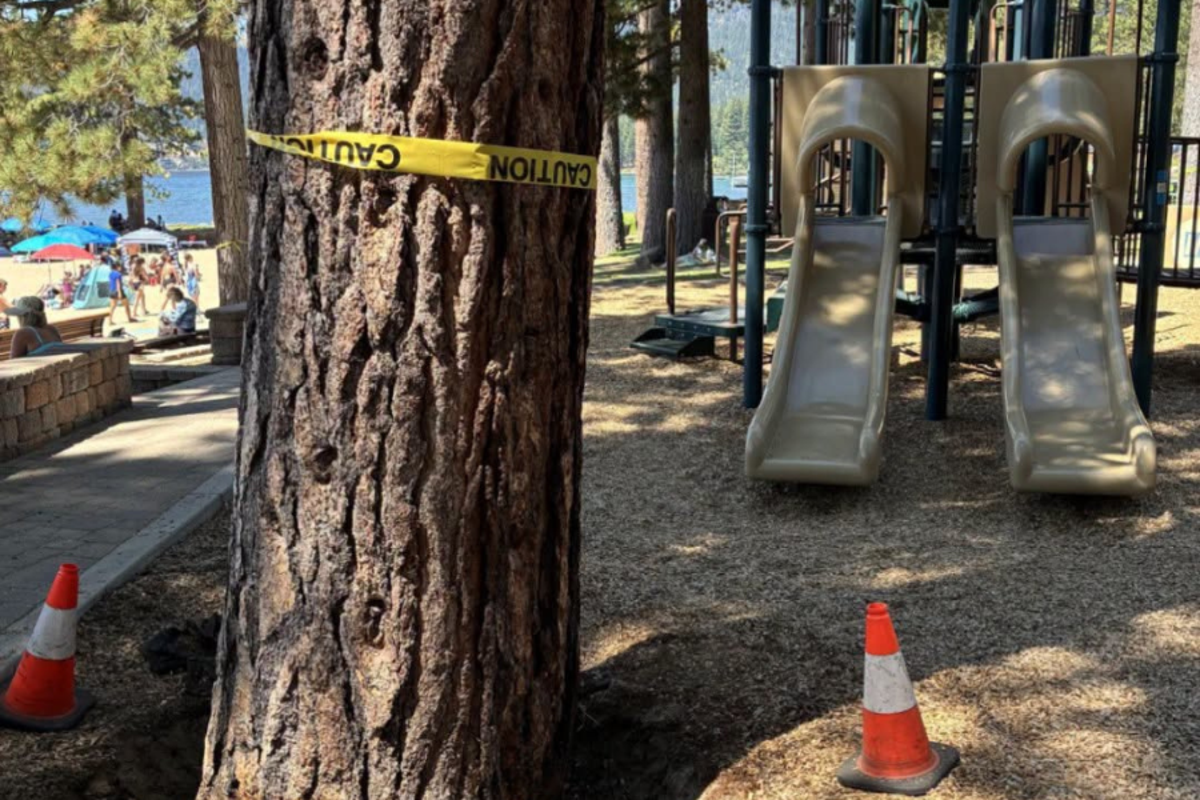
Salt spray hits your windshield before you even catch the scent of the water. You roll the window down an inch, letting that heavy, damp coastal air rush in, carrying the unmistakable, ancient perfume of pine needles and damp earth. For decades, this particular stretch of private beach community has worn its trees like a crown. Towering oaks, resilient pines, and sprawling maples stand shoulder-to-shoulder against the Atlantic gale, acting as the living, breathing architecture of a neighborhood built on seclusion and natural beauty.
Then you notice the bare spots.
Not the gentle, seasonal thinning of autumn, but a sudden, violent skeletonization. Entire canopies have turned the color of rust overnight. Needles drop in heavy carpets during July. The bark looks scorched, weeping strange, sticky amber resins that smell of chemical death rather than sap.
Something is killing the sentinels. And it is not nature.
The Anatomy Of A Slow Motion Crime
Walk down the winding gravel paths of the community on a Tuesday morning, and you will feel the uncanny stillness. The birds seem to avoid the southern ridge. Investigators have spent weeks combing these exact footpaths, their boots crunching on brittle, premature leaf litter, searching for the invisible hand at work.
To understand what is happening here, you have to look past the dramatic headlines and examine the quiet mechanics of tree biology. A mature hardwood or pine is a hydraulic marvel. It draws thousands of gallons of water upward through microscopic capillaries called xylem, pulling moisture from deep in the earth against the relentless pull of gravity.
When an investigator drives a hollow core sampler into the trunk of a dying oak, they are looking for a confession written in ring patterns. What they find instead is a localized chemical shock.
Investigators have landed upon a theory. It is a calculated one.
Picture, for a moment, a homeowner standing at the edge of their manicured lawn under the cover of a moonless night. They hold no grudge against the soil, but they hold a deep, burning grievance against the horizon. That magnificent oak tree, standing eighty feet tall and fifty years old, has a singular flaw.
It blocks the ocean view.
It turns out that trees can be murdered with surgical precision. Environmental protection officers and local arborists working the case point to a specific, insidious method: base girdling combined with systemic root injection. The perpetrators do not need to chop down a protected landmark and risk the heavy fines and community outrage. They simply drill a series of discrete, pencil-width holes around the root flare, dipping just beneath the bark layer into the living vascular system.
Into these hidden wounds, they pour concentrated herbicides. Glyphosate. Triclopyr. Chemicals designed to disrupt amino acid synthesis, effectively starving the plant from the inside out. Within weeks, the leaves wither. Within months, the tree is dead.
And once it is dead, local ordinances often permit the removal of hazardous, hazard-rated deadwood to protect property.
Problem solved. View restored. Ecosystem sacrificed.
The Human Element Beneath The Canopy
It is easy to view this as a localized botany problem, a dry dispute over property values and aesthetic lines. But walk the property lines with someone who has lived here for thirty years, and the grief changes shape.
Take Arthur. (This is a composite character based on interviews with long-term residents and local environmental officials, though his frustration is entirely real). Arthur remembers when the community was just a collection of summer shacks tucked beneath a dense maritime forest. He spent his childhood climbing the very oaks that are now turning brown and brittle.
"You do not just lose a tree," Arthur says, his hand resting on the rough, flaking bark of a dying pine. "You lose the privacy buffer. You lose the owls that nesting couples have watched for five years. You lose the very reason anyone moved to this sanctuary in the first place. People come here to escape the concrete, and then they bring the concrete mentality right down to the roots."
The tension in the community is palpable. Whispers travel down the private driveways faster than the ocean breeze. Neighbors eye each other with suspicion over backyard fences. Did the new owner in the corner lot hire someone? Was that mysterious utility truck parked near the access path last month actually a crew of rogue landscapers?
The stakes are higher than a single view. Maritime forests are fragile, interconnected biological webs. The root systems of these massive trees do not respect property deeds. They interlock underground, sharing nutrients, water, and fungal networks in a subterranean federation. When a chemical poison is introduced to one tree, the toxins can leach through root grafts, threatening neighboring foliage that belonged to someone who would have given anything to save it.
Furthermore, the loss of a mature canopy destabilizes the delicate coastal dunes. Without deep root systems to anchor the sandy soil, heavy coastal storms carve deeper into the properties, threatening foundations and accelerating erosion.
Following The Chemical Trail
How do authorities prove a crime that leaves no obvious footprint?
Forensic arboriculture is a painstaking discipline. Investigators collect tissue samples from the dying cambium layer and send them to state laboratories for chromatography testing. They look for synthetic chemical residues that do not belong in a natural forest ecosystem.
When the lab results return positive for concentrated weed killers, the investigation shifts from a wildlife nuisance to an environmental crime scene. Local code enforcement agencies and state departments of environmental protection treat these incidents with growing severity. In many jurisdictions, poisoning a protected tree on common or private land carries massive civil penalties, mandatory replacement costs that can scale into tens of thousands of dollars per tree, and occasionally, criminal charges for destruction of property.
Yet, catching the culprits in the act remains notoriously difficult. The application takes minutes. The death takes months. By the time the leaves turn color in the dead of summer, the trail has gone cold, washed away by the very rains the tree used to drink.
Consider what happens next: the community association is left holding the bill for hazardous tree removal, while the view from the third-story balcony opens up just enough to catch a sliver of white-capped waves.
The Cost Of A Clear Horizon
We live in a culture that hungers for unobstructed vistas. We pay premiums for panoramas, trading intimacy with nature for the cold, wide sweep of the sea. But there is a profound moral hazard in engineering our environment to suit our immediate desires at the absolute expense of the living things that came before us.
The sentinel trees of this private beach community did not ask to be part of a real estate calculation. They stood their ground through nor'easters, droughts, and changing decades, offering shade, shelter, and a quiet, dignified permanence.
The investigation continues. Soil samples are analyzed. Drones fly overhead, mapping the spread of the brown canopy with thermal and multispectral cameras, hunting for the signature heat signatures of decay.
Out on the water, the tide rolls in, steady and indifferent. But on the shore, the silence of the dying forest speaks volumes, a stark reminder that some of the deepest wounds inflicted on our world are done in secret, by hands that only wanted a better look at the sunset.