Long before the scientific papers were written or the courts heard a single testimony, the animals of Minamata tried to warn us.
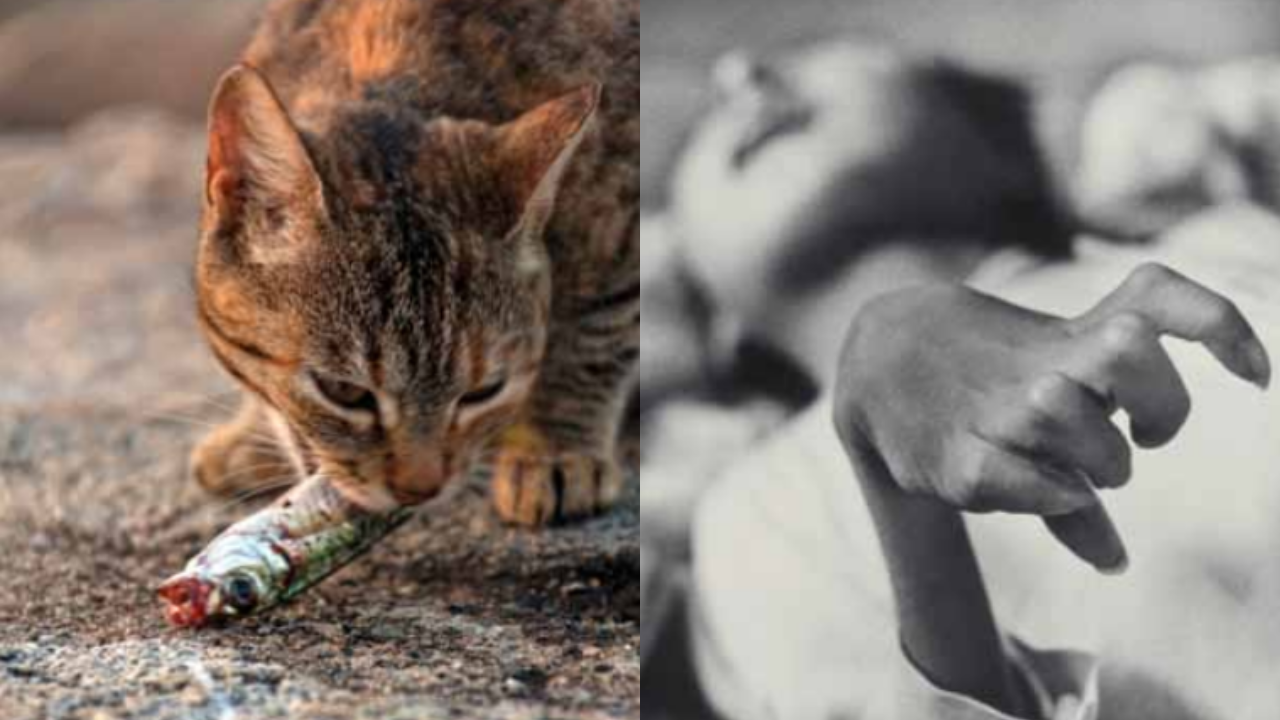
Imagine waking up to a coastline where the natural order has quietly unraveled. In the coastal fishing community of Minamata, Japan, during the early 1950s, the first signs of disaster were not human. They belonged to the creatures closest to the sea. Local cats began to walk in erratic, frantic circles, foaming at the mouth before collapsing in violent seizures. Fishermen watched in disbelief as seabirds dropped mid-flight, tumbling uselessly into the waves. Fish floated belly-up or swam in bizarre, disoriented loops.
The villagers called it the dancing cat disease, a strange and macabre curiosity of nature.
It was neither a curiosity nor a natural plague. It was a slow-motion catastrophe born from industrial progress, chemical manufacturing, and the invisible accumulation of methylmercury.
To understand what happened along the shores of Kumamoto Prefecture, we have to look past the cold statistics of the Chisso Corporation's chemical plant and step into the kitchens of families whose entire livelihood depended on the bounty of the Shiranui Sea. For generations, the sea was life. Every morning, wooden boats pushed off into the mist, returning with nets heavy with silver fish and prized shellfish. Nobody knew that for decades, the local factory had been quietly discharging wastewater laden with inorganic mercury directly into the bay.
Microorganisms in the water did something terrifying with that industrial waste. They transformed it. They metabolized the inorganic metal into methylmercury, an organic compound that binds to living tissue and refuses to leave.
This is where the brutal mathematics of biomagnification takes over. Plankton absorb a microscopic amount. Small fish eat thousands of plankton, concentrating the poison. Larger predatory fish eat hundreds of smaller fish, multiplying the toxicity once more. By the time the seafood landed on the dinner tables of Minamata's fishing families, it was saturated with a neurotoxin thousands of times more concentrated than the water in the bay.
Consider what happens next inside the human body:
The poison does not strike immediately. It creeps.
By May 1, 1956, when doctors at the factory hospital officially reported a cluster of patients suffering from a baffling neurological disorder, the invisible tide had already claimed hundreds of lives and minds. Victims experienced numbness in their fingers and lips. Simple tasks like buttoning a shirt or holding a rice bowl became impossible. Then came the narrowing of their visual fields, as if the world was slowly closing through a shrinking tunnel. Speech slurred. Hearing vanished. Uncontrollable tremors wracked their bodies until many succumbed to violent convulsions, madness, and death.
The most heartbreaking tragedy unfolded in the cradles.
Mothers who ate the contaminated seafood often appeared entirely healthy, or experienced only mild symptoms. Yet, methylmercury crossed the placental barrier with ruthless efficiency, attacking the developing brains of unborn infants. Babies were born with severe cerebral palsy-like symptoms, profound intellectual disabilities, and physical deformities, paying the ultimate price for a meal they never ate.
Denial followed destruction. The company responsible, supported by a government desperate for post-war industrial output, fought to suppress the truth. Years passed in legal battles, protests, and corporate stonewalling while victims continued to suffer in social isolation, stigmatized by a public terrified of a disease they did not understand.
It took until 1968—twelve years after the official discovery and decades after the pollution began—for the Japanese government to officially declare that industrial wastewater caused Minamata disease. By then, the ecosystem was irrevocably altered, and thousands had been physically and psychologically broken.
We look back at Minamata not merely as a dark chapter in environmental history, but as a stark reminder of the hidden costs of unchecked ambition. The birds fell from the sky and the cats went mad because a community's connection to its environment was weaponized against them by invisible chemistry.
The sea still laps against the shores of Kumamoto, glittering under the Japanese sun, but the memory of the dancing cats remains—a permanent scar on the conscience of modern industry, whispering a warning that we ignore at our peril.