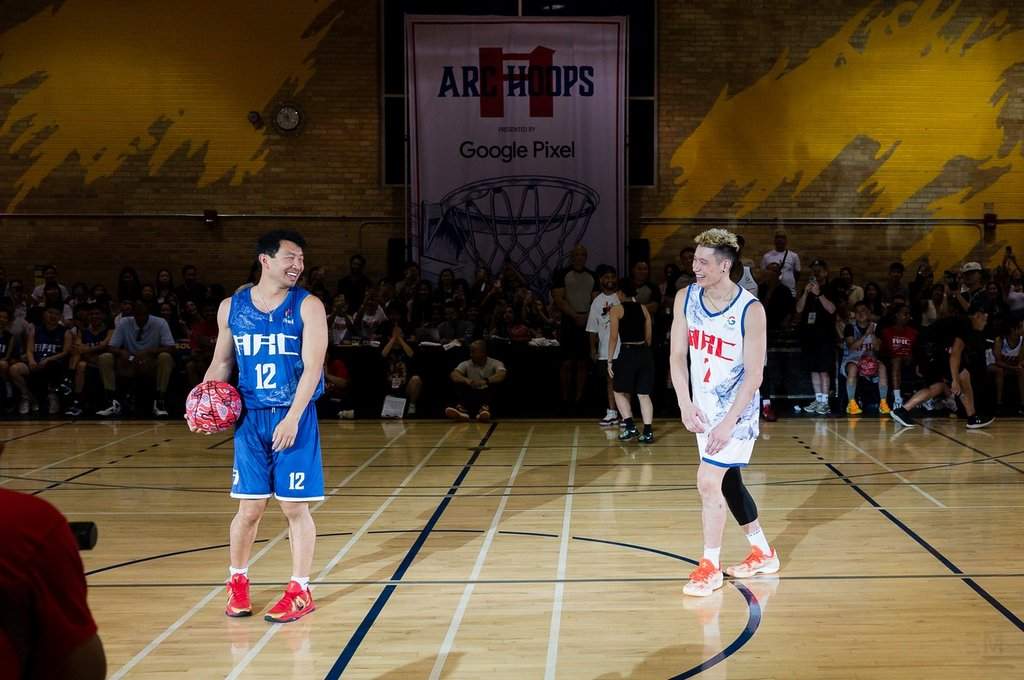
When Simu Liu and Jeremy Lin step onto a hardwood court in Markham, Ontario, they are executing a deliberate blueprint for community self-reliance. What began in 2019 as a modest charity basketball match under the banner of the Chinese Canadian Youth Athletic Association has morphed into ARC World, a massive cultural festival celebrating Asian diaspora excellence in sports, business, and the arts. This is not merely a celebrity-studded photo opportunity for the social media age. This is an exercise in institutional permanence, driven by two figures who understand the structural isolation of growing up outside the cultural mainstream.
The Roots of the Movement
To understand the weight of these events in Markham, one must look backward past the Marvel movie premieres and the NBA championship rings. The organization powering this initiative, now known as the Asian Roots Collective (ARC), started in 1995. Long before diversity became a corporate buzzword or Hollywood realized that representation drove box office revenue, grassroots organizers in suburban Toronto were simply trying to secure gym space for Chinese Canadian youth.
Recreational leagues were sparse. Mainstream sports infrastructure often ignored immigrant enclaves. In response, community leaders built their own tables.
Decades later, that regional grassroots grit caught the attention of high-profile figures. When Jeremy Lin played for the Toronto Raptors, his presence catalyzed a local energy that fused athletic fandom with cultural identity. Simu Liu, fresh off his ascent into global stardom, recognized an alignment of values. Together, they did not just lend their names to a flyer. They anchored a long-term engine for youth leadership and athletic access.
Suburban Infrastructure Versus Downtown Glamour
The decision to anchor ARC World back in Markham rather than downtown Toronto carries profound operational significance. Too often, cultural celebrations are vacuumed into metropolitan cores, serving tourists and downtown professionals while ignoring the actual neighborhoods where immigrant communities first put down roots.
Markham is a unique socio-economic ecosystem. It boasts one of the highest concentrations of Asian Canadians in the country, featuring dense commercial strips, culinary powerhouses, and multi-generational households. Yet, suburban hubs frequently lack the centralized civic scale required to project cultural gravity on a national level.
By pulling a major multi-industry festival out of downtown Toronto and planting it firmly in the Markham Civic Centre precinct, the organizers are making a spatial statement. They are declaring that suburban municipalities are not mere bedroom communities. They are cultural capitals in their own right.
[Grassroots Origins: 1995]
        │
        ▼
[The 2019 Catalyst: Lin & Liu]
        │
        ▼
[ARC World: Suburban Cultural Permanence]
The Economics of Representation
Celebrity charity matches are easy to dismiss as superficial spectacles. Look closer at the mechanics of the event, however, and a different picture emerges.
The proceeds directly fund the Jeremy Lin Foundation, which invests heavily in underserved youth leadership, alongside local athletic programming. More importantly, the festival pairs high-profile basketball culture with local entrepreneurship. Restaurants, small business owners, musicians, and digital creators share space with global stars.
This creates an internal economy of validation and support. For decades, Asian Canadian creatives operated in silos, navigating an industry that viewed them through narrow, tokenizing lenses. By consolidating talent across disciplines—bringing together actors, tech entrepreneurs, chefs, and professional athletes—the collective creates an alternative ecosystem. You do not need validation from traditional gatekeepers when you have built a parallel infrastructure that draws thousands of paying attendees.
Beyond the Spotlight
Skeptics might argue that a single annual festival cannot undo structural disparities in professional sports or media casting. They are correct. A weekend of celebrity jump shots and night market food does not instantly dismantle systemic barriers.
Yet, institutional memory matters. When a young athlete in Markham watches Jeremy Lin run the floor, or sees Simu Liu command a room with uncompromised confidence, the psychological barrier of "otherness" fractures. It establishes a baseline expectation of belonging.
The blueprint being written in Markham offers a lesson for other diaspora communities worldwide. Cultural preservation cannot rely solely on political advocacy or corporate diversity initiatives. It requires physical spaces, sweat equity, local gymnasiums, and shared meals.
The crowds will clear out. The temporary stages will be dismantled. But the institutional muscle memory built by decades of community organizing remains, ready for the next generation to take the floor.