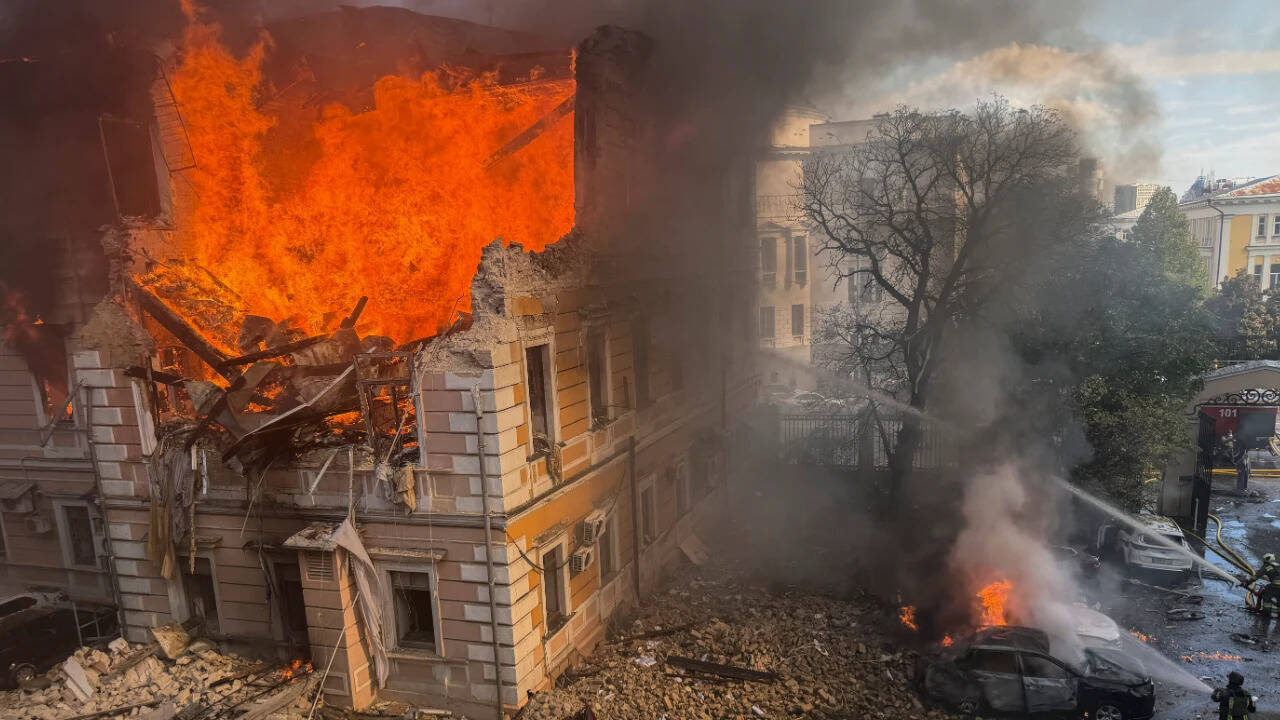
The coffee goes cold on the kitchen table. It always does when the metallic wail starts up outside, slicing through the gray dawn over the Dnipro River.
For months, the rhythm of life in the capital has been dictated by an invisible metronome of anxiety and endurance. People check their phones before their eyes are fully open, scanning notification channels for incoming trajectories, sirens, and warnings. Today, that digital pulse carries a heavier weight. Officials have issued stark advisories, and the diplomatic corps packing suitcases in quiet residential neighborhoods tells a story without needing a single headline.
Fear is not loud here. It is methodical.
Consider the mechanics of anticipation. When an escalation is promised, the city does not panic; it reorganizes. Subway stations—deep, echoing concrete vaults built during another era—prepare to absorb thousands of citizens seeking shelter beneath the earth. Storefronts tape their windows in intricate geometric patterns designed to catch flying glass before it can turn into shrapnel. Mothers zip heavy coats on children who have learned to sleep through the concussions of air defense systems firing miles away.
The warnings delivered to foreign embassies to urge personnel toward safer borders underscore a grim calculation. Diplomacy requires presence, but survival requires distance. Yet, the millions who call these streets home cannot simply board a flight out. Their roots are tangled in the pavement, the parks, and the history of a city that refuses to be erased from the map.
Silence follows the initial wave of alerts. It is a heavy, expectant silence. In that quiet space, ordinary routines persist against all reason. A baker kneads dough in a basement with the lights flickering. A street sweeper pushes wet leaves aside while checking the sky. These small acts of defiance are quiet, uncelebrated, and entirely essential. They represent a stubborn refusal to let tomorrow be stolen by decree.
History teaches us that cities under siege develop a distinct psychological architecture. The ephemeral boundaries between safety and danger blur until they become meaningless. Every apartment building becomes a fortress of shared breath and whispered updates. Every neighbor becomes part of an informal early-warning network built on trust and shared vulnerability.
When the inevitable strikes arrive, they test more than concrete and steel. They test the human capacity to endure the unendurable without losing gentleness. The explosions may shake the windows, but inside, someone is reading a bedtime story by flashlight, keeping the dark at bay one sentence at a time.