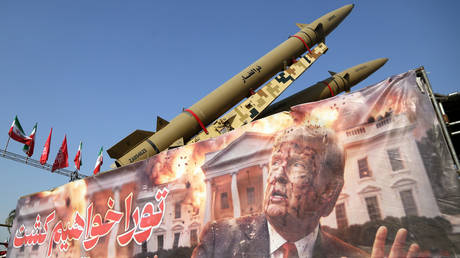
Every talking head on television is asking the wrong question about the six-month mark of the US-Israeli confrontation with Iran. They sit in sterile studios, adjusting their lapel mics, breathlessly debating whether the Strait of Hormuz will close entirely or if missile defense batteries in the Gulf can maintain a ninety percent interception rate against incoming ballistic packages. They treat this escalation like a weather pattern. They look for tactical barometers, missile counts, and diplomatic off-ramps as if this conflict were a conventional chess match governed by predictable rules of statecraft.
It is not.
The lazy consensus dominating the security sector claims this standoff is a prolonged war of attrition defined by mutual deterrence, proxy skirmishes, and sanctions pressure. That reading is worse than wrong; it is dangerously nostalgic. It assumes Washington and Jerusalem are operating from a position of strategic design, steadily grinding down an isolated adversary through superior economic and military architecture.
Look closer at the actual mechanics on the ground, and you see the opposite. This is not a grand strategy playing out according to a blueprint. It is a slow-motion institutional panic disguised as deterrence. The establishment is mistaking motion for progress, treating every tactical parry as a strategic victory while the underlying architecture of Western leverage in the Middle East quietly disintegrates.
I have spent decades watching defense analysts invent sophisticated rationales for policy paralysis. I have seen administrations burn billions of dollars on deterrence models that assume rationality while ignoring structural insolvency. When you look at the six-month ledger of this conflict, the dominant narrative falls apart under the weight of basic logistics, economic reality, and modern military math.
The Deterrence Trap That Actually Invites Escalation
The core myth of the current posture is that massive military deployment equals credible deterrence. Walk into any think tank in Georgetown or Tel Aviv right now, and you will hear hymns sung to carrier strike groups and integrated air defense architectures. The theory goes that if you park enough hardware off the coast, Tehran will calculate the cost of defiance, blink, and back down.
History screams that this logic is entirely backwards.
When you over-index on conventional naval and air power to manage an adversary whose entire doctrine is built around asymmetric, distributed, and subterranean warfare, you are not projecting strength. You are advertising your own vulnerability. A billion-dollar destroyer sitting in the Gulf is not an iron wall; it is a fixed, highly visible target for inexpensive, mass-produced loitering munitions and anti-ship ballistic missiles.
Think about the basic economics of modern defense. When an adversary can manufacture a thousand low-cost drones for the price of a single interceptor missile, the math of deterrence flips against the defender. Every time a Patriot or Arrow battery fires to swat down a swarm, the cost curve heavily favors the party absorbing the strike, not the one stopping it.
The conventional establishment refuses to admit this because it invalidates their entire procurement budget. They want you to believe that more hardware solves a crisis born of miscalculated engagement. In reality, the constant accumulation of defensive assets in theater creates a false sense of security while locking the military into a defensive crouch. You cannot deter a network with a wall. Networks do not break against walls; they route around them, bleeding the defender through a thousand small cuts while the treasury bleeds cash.
The Sanctions Myth and the Illusion of Isolation
Parallel to the military hallucination is the enduring faith in maximum pressure economics. The prevailing wisdom insists that tightening financial nooses around Tehran will eventually trigger domestic collapse or force a return to the negotiating table on Western terms.
This is financial magical thinking.
Iran has spent decades building a sanctions-resistant grey economy. When you cut a nation off from the dollar-dominated formal banking system for forty years, you do not destroy its economy; you inoculate it. You force the creation of underground trade routes, barter systems, crypto-settlement rails, and robust bilateral energy corridors with powers that have zero interest in enforcing Western edicts.
Look at the trade data coming out of Eurasia. While Washington obsesses over compliance reports, crude oil continues to flow eastward through maritime grey fleets operating outside Western insurance and maritime tracking protocols. The domestic opposition within Iran, while genuinely brave and deeply fatigued by clerical misrule, does not automatically translate into a pro-Western color revolution just because inflation hits triple digits. In many cases, external economic warfare has the perverse effect of rallying a nationalist populace around the flag, turning the state's domestic victims into defenders against foreign coercion.
To assume that more economic sanctions will suddenly yield a diplomatic breakthrough is to misunderstand how authoritarian regimes survive under siege. They do not calculate policy based on the price of bread for the working class; they calculate survival based on the loyalty of internal security apparatuses. And as long as oil finds a buyer in Asia, those security apparatuses stay well-funded, sanctions or no sanctions.
The Proxy Network Is Not a Side Show
Another critical failure of contemporary analysis is treating regional militias—from Lebanon to Yemen and Iraq—as mere extensions of Tehran receiving remote-control orders from the Islamic Revolutionary Guard Corps.
This paints a dangerously lazy picture.
These groups are not puppets dangling from Iranian strings. They are deeply localized political and military actors with their own domestic grievances, territorial ambitions, and governance structures. Tehran provides funding, training, and hardware, yes, but the fuel that powers these movements is local instability, state failure, and legitimate anger at Western interventionism.
When analysts talk about "cutting off the head of the snake" by striking regional proxies, they reveal a profound ignorance of how insurgency works in the twenty-first century. You cannot bomb an ideology, nor can you eliminate a decentralized network by striking its nodes. Every time a command bunker is hit or a regional commander is eliminated, two local recruits step into the vacuum, hardened by the strike and radicalized further against the architects of the attack.
The six-month mark of this conflict has proven that non-state actors operating with asymmetric capabilities can effectively shut down vital global maritime chokepoints—like the Bab el-Mandeb strait—despite the presence of the most advanced naval task forces on earth. That is not a temporary disruption. That is a permanent shift in geopolitical reality. Maritime security is no longer an absolute guarantee maintained by a single global hegemon. It is a contested space where a localized actor with cheap anti-ship missiles can hold global supply chains hostage indefinitely.
The Strategic Bankruptcy of Forever Management
So what does an honest assessment of this six-month stalemate yield?
It yields a grim truth that nobody in power wants to articulate: Washington and Jerusalem are managing a decline, not winning a conflict. There is no clean endgame here. There is no unconditional surrender waiting at the end of the tunnel, no democratic transformation of the Iranian state, and no permanent pacification of the Levant through tactical strikes.
The choice was never between total victory and total defeat. The choice is between continuing an open-ended, resource-draining posture that stretches alliances and depletes strategic reserves, or accepting a messy, unpalatable reality of regional containment and diplomatic friction.
By pretending that victory is just one more sanctions package, one more naval deployment, or one more targeted strike away, leadership is dodging the hard work of realpolitik. They are shielding themselves from the public admission that Western hegemony in the Middle East has structural limits, and those limits have just been brutally exposed by six months of asymmetric attrition.
Stop looking for the turning point. There is no turning point coming. There is only the long, grinding process of reckoning with a world that has learned how to bypass American power entirely.