Salt.
Sixty-three years of salt fog rolling off the Pacific, settling into every rivet, every gusset plate, every hidden crevice of steel high above the Los Angeles harbor.
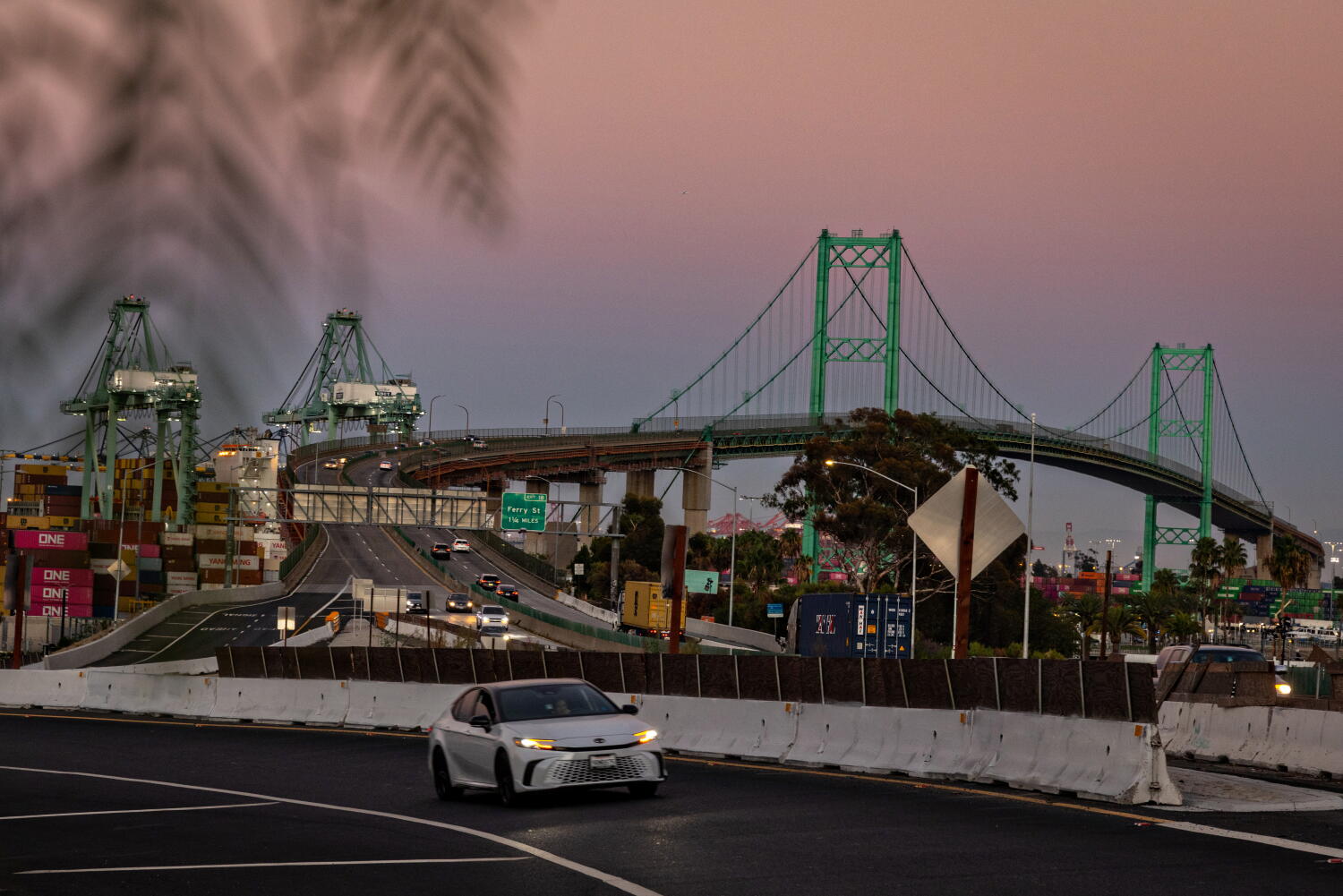
Up close, an iconic suspension span does not look like a postcard. It looks like a giant steel organism sweating through a long shift. When engineers talk about a sixteen-month closure of the Vincent Thomas Bridge, it is easy to hear a bureaucratic sentence—a line item on a transit agency spreadsheet, a warning on a changeable message sign above State Route 47, a mild inconvenience for people who only glance at the harbor from a hillside in San Pedro or a boat deck near Terminal Island.
It is not a mild inconvenience. Not when you know what happens to thousands of cars, heavy drayage trucks, and neighborhood lungs when a primary harbor artery goes quiet for more than a year.
I have stood on coastal overpasses watching bumper-to-bumper diesel rigs crawl through chokepoints while exhaust hangs low in the marine layer like gray wool. You can taste the metallic tang of unburned fuel before you even see the backup. When a bridge closes for sixteen months, the detour is never just a line drawn on a map. The detour is a sixteen-month tax paid in stolen hours, frayed tempers, and microscopic soot settling onto windowsills and playgrounds.
Even if you have never driven across the Vincent Thomas Bridge—and even if you do not live anywhere near San Pedro, Wilmington, or Long Beach—you feel the ripples of a harbor slowdown. Southern California’s port complex moves a staggering share of the nation’s containerized goods. Every delay on a bridge or connector road near the docks compounds across freight corridors, warehouse schedules, and regional highways.
Still, the rawest cost is local. It is personal. It belongs to the people who wake up before dawn, check their phone batteries, count down the minutes until a shift starts, and breathe the air outside their front doors.
When a Shortcut Becomes a Siege
To see what a sixteen-month bridge closure actually looks like on the ground, let us step into a hypothetical scenario grounded in real harbor traffic dynamics and well-documented freight patterns around the Port of Los Angeles and Port of Long Beach.
Picture Elena, a hypothetical warehouse shift supervisor living in San Pedro whose job requires her to cross toward Terminal Island five mornings a week. Her alarm rings at 4:15 a.m. Normally, the drive is a clean, steady arc—a few minutes of rise, the cool Pacific wind hitting the windshield, the cranes of the container terminals rising against the dark sky like sleeping giraffes.
Now subtract the bridge.
Suddenly, every car and big rig that used to vault cleanly across that span has to funnel onto surface streets, alternative freeways, and industrial connectors that were never built to absorb all that displaced volume at once. Elena leaves at 3:45 a.m. instead. By 4:05 a.m., her brake lights are already glowing behind a line of tailpipes stretching toward the horizon.
A bridge is like a valve in a circulatory system. Keep the valve open, and blood moves briskly through the main channel. Clamp it shut for sixteen months, and pressure spikes in every side vessel.
Drivers do not simply vanish when a major span closes. Some reroute onto neighboring freeways like the 110 or the 710, thickening bottlenecks that already groan under commuter and freight pressure. Others cut through residential streets, turning quiet morning blocks into informal bypasses. For someone like Elena, losing thirty or forty-five minutes each way every single day adds up to hundreds of hours lost over sixteen months—time stolen from sleep, from family dinners, from doctors’ appointments, from simply being a human being instead of a stationary occupant inside a metal box.
And what happens when an emergency vehicle tries to thread through that gridlock? Or when a dockworker misses a vessel window? Or when a parent tries to get a child across town before a clinic closes? Traffic congestion is often dismissed as a mundane complaint, yet it quietly erodes patience, safety, and economic margin week after week.
The Invisible Cargo Inside Every Traffic Jam
Traffic is loud. You hear the low rumble of idling diesels, the hiss of air brakes, the occasional frustrated horn.
Pollution is quiet. Until it isn’t.
Consider what happens next: thousands of vehicles idling, accelerating from a dead stop, crawling at five miles an hour, and idling again. Internal combustion engines are at their dirtiest when they are lugging heavy loads through stop-and-go congestion. Heavy-duty trucks hauling shipping containers burn massive amounts of fuel when forced onto longer detours or stuck in prolonged backups, releasing nitrogen oxides, fine particulate matter (known as PM2.5), and diesel exhaust that clings to the humid coastal air.
Think of a harbor basin on a calm morning as a wide glass bowl. When wind moves cleanly across the water, exhaust disperses faster. When stagnant air and marine inversion layers trap emissions low to the ground, those pollutants linger right where people live, walk, and breathe.
I want to be honest here: air quality science can feel intimidating, full of acronyms, ppb readings, and atmospheric modeling that leaves ordinary readers wondering what any of it means for a Tuesday afternoon. You do not need a degree in environmental engineering to understand the basic physics of a tailpipe in a traffic jam. If a factory runs its chimney twice as long near a neighborhood because its main exhaust pipe was blocked off, more smoke goes into the surrounding air. Rerouting heavy traffic and prolonging idle times works the same way.
For families living near port corridors and major highway detours—communities that already bear a disproportionate share of freight and industrial emissions in Southern California—even a temporary spike in traffic pollution is no small matter. Children whose lungs are still developing, older adults, and anyone living with asthma or cardiovascular strain feel the difference first. A scratchy throat in the morning. An inhaler reached for a little more often. A lingering unease when windows are left open to catch a breeze.
Why Sixteen Months Feels Like an Eternity—and Why Steel Demands It
If you are asking yourself why a bridge closure has to stretch across sixteen months instead of a frantic weekend or a single month, you are asking the right question. It is fair to be skeptical whenever officials announce long disruptions. We have all lived through road projects that seemed to drag on forever behind orange cones.
Yet bridges are not paved driveways. You cannot patch a major suspension structure with a quick asphalt pour and hope for the best.
To understand the timeline, picture a metaphor of restoring an antique pocket watch while it is still ticking on someone’s wrist. Every gear matters. Every tension point is calibrated to hold immense weight under constant motion and weather stress. Over decades, marine air corrodes steel coatings, fasteners wear, deck joints fatigue, and structural components require deep inspection, rehabilitation, or replacement that cannot be safely rushed while heavy traffic pounds overhead.
If crews try to work piecemeal under live traffic, repairs take longer, safety risks rise for workers suspended over open water, and partial lane closures can sometimes create messy, unpredictable bottlenecks year after year. A full sixteen-month closure—when planned around major structural scopes—gives engineers uninterrupted access to the bones of the bridge so the fix actually holds for generations rather than just buying a few more years.
Still, knowing why something takes sixteen months does not magically erase the pain of living through it. That tension is real. Engineers look at structural longevity and worker safety; commuters and neighbors look at their calendars, their gas receipts, and their air quality. Both perspectives come from rational self-interest, and clashing them head-on is why infrastructure projects so often spark fierce pushback.
What Happens When Fears Turn Into Action
Fearing traffic and pollution during a sixteen-month bridge closure is not overreacting. It is pattern recognition. People who live near busy ports and highways have seen what happens when detours are treated as an afterthought.
The real test is what happens before the first barrier goes up—and every single week after.
If transit agencies, port operators, city planners, and employers treat a sixteen-month closure as a mere calendar event, the fallout will hit hard: gridlocked arterials, angry commuters, overburdened surface streets, and heavier diesel plumes drifting into nearby neighborhoods.
What if instead the closure forces smarter choices that actually stick?
Consider the levers that can blunt the worst of the squeeze:
- Aggressive freight shifts and off-peak movement: Moving more cargo by rail or shifting drayage and warehouse operations outside peak commuter hours reduces the number of heavy diesels competing with morning and evening rush-hour cars.
- Real-time transit and commuter incentives: Expanding shuttle options, park-and-ride links, flexible work hours, and carpool incentives gives people practical ways to leave a single-occupancy car out of the bottleneck.
- Targeted air and street mitigation: Monitoring local air quality closely, keeping detour routes well-timed and clear of double-parked hazards, and prioritizing zero- or low-emission equipment where feasible helps protect sensitive neighborhoods along alternate corridors.
- Radical candor on timelines and detours: Clear, honest updates—without sugarcoating delays or pretending alternate routes won’t back up—let people plan their lives around reality instead of guesswork.
None of these steps will turn a sixteen-month bridge closure into a breeze. Let’s not pretend otherwise. Removing a major bridge from daily service for over a year will test everyone’s patience.
The Weight Left Behind After the Detour
Sixteen months is long enough for a toddler to learn to run, for a high schooler to graduate, for seasons to turn twice and come back around to the same coastal fog.
When the Vincent Thomas Bridge eventually reopens to full traffic, the ribbons will be cut, the cameras will pan across the gleaming steel, and headlines will celebrate the end of the detour. Most people will exhale and drive on.
Yet the true measure of those sixteen months will not be written in how fast cars cross the span on opening day. It will live in the quieter ledger: how many hours of life were ground away in bumper-to-bumper lines, how heavily diesel exhaust settled over harbor neighborhoods while the detour ran, and whether the city respected the people who had to breathe the consequences.
Steel can be painted, bolted, and strengthened to outlast us all. Lungs cannot.