The steel doesn’t feel like a miracle anymore. It feels like a cage.
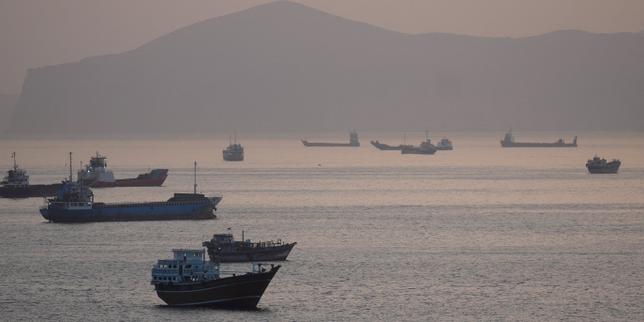
For two months, the crew of the Starlight Glory has looked out at the same shimmering, oppressive horizon. They are anchored in the Strait of Ormuz, a narrow strip of water that functions as the jugular vein of the global economy. To the left, the arid coast of Iran; to the right, the jagged cliffs of Oman. Between them, billions of dollars in crude oil and consumer goods sit rotting, or at least stagnating, as a geopolitical chess match holds the world’s supply chain hostage.
We talk about "shipping delays" in the abstract. We check our tracking numbers and sigh when a package is three days late. But for the men and women on these vessels, the delay isn't a status update. It is the hum of a generator that never stops. It is the taste of desalinated water that has begun to metallicize. It is the crushing realization that they are pawns in a game played by people who will never smell the stagnant salt air of a deadlocked tanker.
The Weight of Twenty Percent
When the Strait of Ormuz chokes, the world gasps. This isn’t hyperbole; it is a matter of fluid dynamics. Roughly 21 million barrels of oil pass through this passage every single day. That is twenty percent of the world’s liquid petroleum consumption.
Imagine a highway where every fifth car is carrying the fuel that keeps your local hospital running, your grocery store cooled, and your commute possible. Now imagine that highway is blocked by a series of invisible fences—sanctions, threats, and "security concerns" that have effectively paralyzed dozens of ships for sixty days.
The economic pressure builds like steam in a pipe without a relief valve. Behind the scenes, the numbers are dizzying. Insurance premiums for these vessels have skyrocketed. Demurrage fees—the price paid for failing to discharge cargo on time—are racking up millions per ship. But the real cost is the erosion of certainty. In the world of global trade, certainty is the only currency that actually matters.
The Trump Intervention
The stalemate broke not with a diplomatic whisper, but with a characteristically loud roar. Donald Trump has announced a massive, multi-national operation to forcibly unblock the strait. It is a move that mirrors the "Tanker Wars" of the 1980s, but with the high-octane intensity of modern satellite surveillance and drone warfare.
Trump’s plan isn't just about moving ships. It is a projection of raw power. By declaring a "zero-tolerance" policy for the interference of commercial transit, he is attempting to reset the rules of the ocean. He isn't asking for permission from regional powers; he is asserting that the flow of oil is a fundamental right of the global market, one that the United States is willing to defend with a carrier strike group.
Consider the optics: a fleet of American-led destroyers flanking rust-streaked tankers, escorting them through the narrowest point of the strait—the "Gate of Grief," as sailors have called it for centuries. It is a spectacle designed to prove that the "America First" doctrine doesn't mean "America Alone" or "America Quiet." It means the gears of commerce must turn, even if those gears have to be greased with the threat of overwhelming force.
The Human Geometry of a Crisis
Let’s look at a hypothetical sailor named Elias. He is a third engineer from the Philippines. He hasn’t seen his daughter in six months. He was supposed to rotate off the ship in Dubai eight weeks ago.
Elias doesn’t care about the intricacies of the Joint Comprehensive Plan of Action (JCPOA) or the nuances of Iranian territorial waters. He cares about the fact that the ship’s chef is running low on fresh vegetables. He cares that the internet connection on the ship is too weak to video call home, leaving him with only grainy photos and the echoing silence of the engine room.
There are thousands of Eliases currently floating in the Strait.
When the news of the American operation reached the bridges of these ships, the reaction wasn't a cheers-and-applause moment from a Hollywood movie. It was a cautious, weary exhale. For these crews, the "liberation" of the strait brings a new kind of anxiety: the fear of being caught in the crossfire. If a stray missile or a "misidentified" drone strike occurs during this operation, these tankers—effectively floating bombs filled with millions of gallons of flammable liquid—are the most vulnerable objects on earth.
The Invisible Stakes
Why does this matter to someone sitting in a coffee shop in Des Moines or a suburb of Paris? Because the Strait of Ormuz is the invisible thread sewn through your entire life.
If those ships stay stuck, the "butterfly effect" becomes a hurricane. It starts at the pump. A five-cent increase, then ten, then fifty. But it doesn't stop there. The cost of plastic rises. The cost of shipping a container from Shanghai to New York rises. The cost of fertilizer—derived from petroleum products—rises, which means the bread you buy next month will cost more.
The operation to unblock the ships is an attempt to stop a global inflationary spiral before it gains terminal velocity. It is a recognition that in the 21st century, a blockage in a single twenty-mile-wide channel can do more damage to a nation’s stability than a conventional invasion.
The Architecture of the Strait
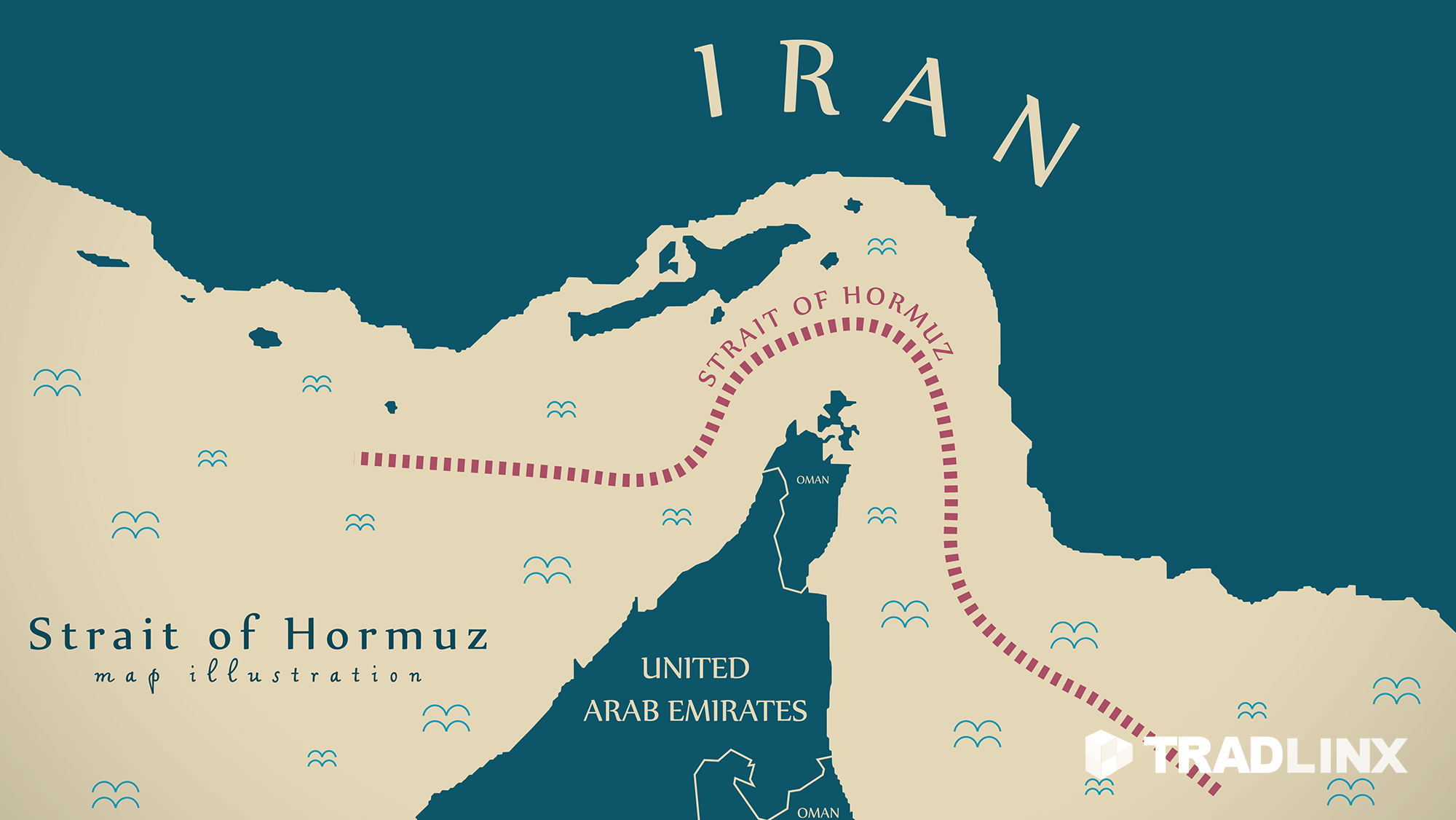
To understand why this is so difficult, you have to understand the geography. The strait is shaped like a hook. The "shipping lanes" are only two miles wide in each direction, separated by a two-mile buffer zone. It is a tightrope walk for a vessel that is three football fields long and takes miles to come to a full stop.
Navigating this area under normal conditions is stressful. Navigating it while Iranian speedboats buzz your hull and American destroyers loom on your radar is a nightmare. The "operation" isn't just about moving the ships; it's about de-mining the waters, providing constant electronic jamming to prevent drone attacks, and establishing a "corridor of steel" that allows the merchant mariners to feel a modicum of safety.
But safety is a relative term here. The Strait of Ormuz is a place where a single misunderstanding, a single nervous finger on a trigger, or a single mechanical failure can spark a conflagration that lasts for decades.
Beyond the Oil
This operation is about more than just petroleum. It’s about the precedent of the "Global Commons." If a regional power can successfully shutter a primary international waterway for sixty days without consequence, then the very idea of international law becomes a ghost.
Trump’s gamble is that the world prefers a forceful reopening to a slow, agonizing strangulation. He is betting that the European and Asian nations, who rely even more heavily on this oil than the U.S. does, will eventually fall in line once the tankers start moving again. It is a "fait accompli" strategy: act first, deal with the diplomatic fallout later.
The ships are starting to weigh anchor. The black smoke from their funnels is beginning to smudge the pristine blue sky of the Persian Gulf. For the crews, the long wait is ending, but the most dangerous part of the journey is just beginning. They are moving through a corridor of tension, flanked by the might of a superpower, carrying the lifeblood of a world that took their presence for granted until the moment they stopped.
The silence is over. The engines are screaming. And the world is watching to see if the "Gate of Grief" will finally swing open, or if it will slam shut for good.
The first ship in line, a massive VLCC (Very Large Crude Carrier), begins to creep forward. Its bow cuts through the water, creating a small, white wake in the turquoise sea. It looks small against the backdrop of the rugged mountains, but it carries enough energy to power a city for weeks. As it enters the narrowest point, the shadow of an American F-35 sweeps across its deck—a fleeting, dark silhouette against the scorched steel.
The sailor on the deck doesn't wave. He just watches the horizon, waiting for the moment the open ocean finally swallows the land.