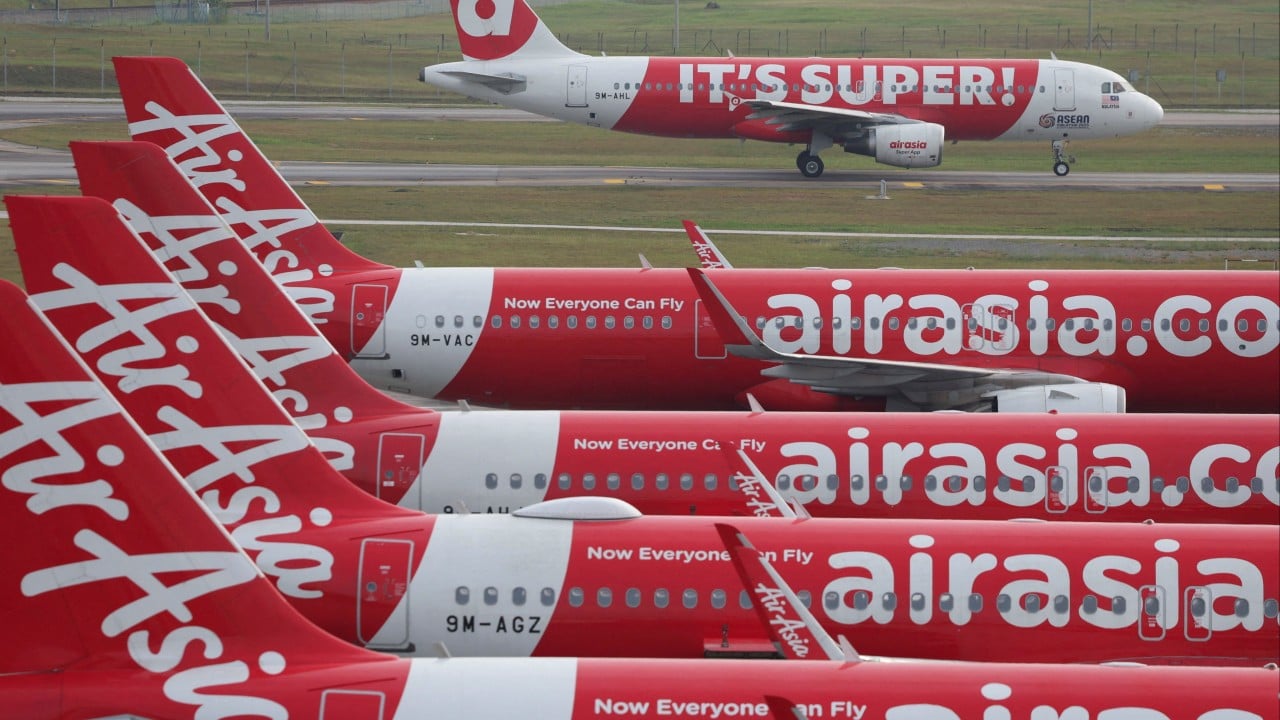
The boarding pass in your hand is more than paper. It is a promise. For millions across Southeast Asia, that slip of thermal paper meant visiting a grandmother two islands over for a wedding, securing a contract in a booming metropolis, or simply seeing the ocean for the first time. The airline that made those dreams cheap enough to touch did not just sell seats. It sold possibility.
And now, the bill has arrived.
When the Tarmac Gets Cold
Let us walk through the departure lounge of Kuala Lumpur International Airport on a rainy Tuesday. The departure boards hum, clicking rows of white letters into place. Destination: Jakarta, Bangkok, Manila, Singapore. Red uniforms move with practiced grace through the crowds. To the casual observer, the machine is running. The planes are silver tubes cutting through clouds.
Look closer.
Behind the glass panels of corporate boardrooms, the math is unraveling. Balance sheets do not care about romance. They do not care about the working-class family taking their first flight or the backpacker catching a cheap red-eye. They only care about columns of numbers. Red numbers. Millions of them.
When an empire is built on the philosophy of flying everyone cheaply, every economic shockwave hits like a lightning strike to the fuselage. Fuel spikes. Currencies fluctuate. Pandemics lock the world behind closed doors. Suddenly, the planes sit silent on the tarmac, burning money just by sitting there. The debt accumulates quietly at first, a whisper in the footnotes of quarterly reports, before swelling into a roar that shakes the entire holding company.
The Weight of a Vision
To understand how we reached this precipice, we have to look back at the architect of the dream. Imagine sitting in a worn leather armchair across from a man who mortgaged his house to buy two secondhand passenger jets. He wore jeans and a baseball cap while the aviation industry wore tailored three-piece suits. He told anyone who would listen that the sky belonged to everyone, not just the elite who could afford traditional carriers.
It sounded absurd. It sounded reckless. It worked.
AirAsia democratized the skies. They turned air travel from a luxury into a bus ride with wings. Passengers crowded into tight rows, paying pennies for the ticket and extra for everything else, from a bottle of water to a square inch of legroom. It was clever. It was relentless.
Yet hyper-growth requires constant momentum. Like a cyclist racing up a steep mountain path, stopping is not an option; stopping means falling over. When the global economy seized up, the momentum broke. The company faced a stark choice: ask governments for a lifeline that might strip away its independent soul, or aggressively shrink, cutting routes, selling assets, and shedding staff like a shedding skin.
The Human Cost Behind the Ledger
We talk about restructuring plans as if they are abstract chess moves. They are not. They are kitchen tables in suburban Kuala Lumpur where a father of three sits staring at a termination notice. They are flight attendants who spent years perfecting a smile while dealing with turbulence, now told their uniforms are no longer needed.
Consider a hypothetical ground crew worker named Amir. For a decade, Amir marshaled aircraft into their bays under a punishing tropical sun. He knew the whine of those engines better than his own children's laughter. When the crisis deepened, Amir's department was thinned out. The workload doubled for those who remained, while their safety margins grew razor-thin.
That is what a mounting deficit actually looks like. It is not just red ink on a digital spreadsheet. It is frayed nerves, delayed maintenance checks, and the quiet erosion of morale among people who keep the metal moving.
Observers argue about the mechanics of a bailout. Should the state step in with public funds to rescue a private titan? Critics shout about moral hazard. They argue that businesses should fail if their models cannot weather a storm. Supporters counter that losing a regional carrier of this magnitude breaks the supply chains of tourism, hospitality, and trade across an entire subcontinent.
Both sides are right. And both sides miss the heartbeat of the issue.
Turbulence Ahead
The restructuring strategy currently on the table resembles a surgeon's knife rather than a magic wand. Assets are pruned. Non-performing routes are cut. The sprawling network contracts back toward its profitable core.
It is painful. It is necessary.
Yet, as the company fights to rebrand and stabilize its financial footing, a deeper question lingers over the aviation sector. Can an ultra-low-cost model survive in a world where fuel is volatile, climate regulations are tightening, and consumers demand both rock-bottom prices and immaculate service?
The era of cheap, frictionless travel is hitting a wall. Every discounted ticket sold in the past twenty years borrowed against an uncertain future. Now, the ledger demands payment.
Outside the terminal window, a Boeing taxiing down the runway lifts its nose toward the gray dusk. Inside, passengers lean against the windows, watching the runway lights blur into streaks of amber. They do not think about debt ratios or restructuring terms. They just want to land safely.
The plane climbs anyway, punching through the clouds into the blinding, silent sunlight above.