The air didn't smell like pine anymore. It smelled like the end of something.
In the valleys of southern Vancouver Island, summer usually arrives with a quiet, golden reverence. The Douglas firs stand like ancient pillars, holding up a canopy of blue, and the Pacific breeze carries the crisp, salt-tinged scent of the coast. But when a wildfire takes root in rugged, unforgiving terrain like Mount Jack, the rhythm of life fractures in a single afternoon. The sky turns the color of a bruised peach. The sun is reduced to a dull, angry ember suspended in a shroud of ash.
For the families living near the foothills, the transition from peace to panic is rarely cinematic. It does not happen with a grand explosion. It arrives as a whisper of wind, a sudden shift in barometric pressure, and the unmistakable, low-frequency roar of timber combusting miles away up the ridgeline.
Consider what happens next: a frantic check of the weather radar. A hurried calculation of escape routes. The heavy, sickening knot in the stomach when you realize the wind is blowing directly toward your property.
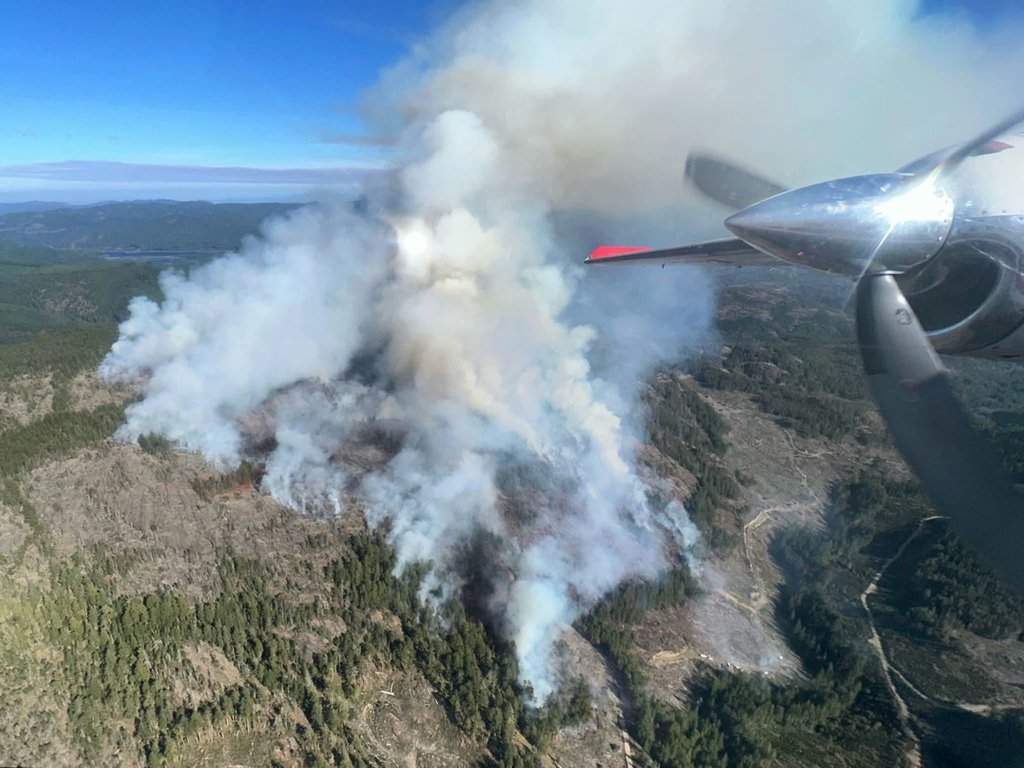
Wildfires on Vancouver Island are not abstract news items reported on a screen. They are visceral, breathing entities shaped by topography, drought, and wind. When a fire breaks out on Mount Jack, it exploits the very geography that makes the island so breathtakingly wild. Steep slopes act like chimneys, drawing superheated air upward and launching burning embers across canyons where firefighting crews cannot safely tread on foot.
To understand why a fire burns out of control, you have to look past the smoke and examine the mechanics of the forest itself. Years of accumulated underbrush, combined with prolonged dry spells, turn the landscape into a tinderbox. When a spark touches that fuel, the fire does not merely crawl along the forest floor; it climbs the trunks, leaps from crown to crown, and creates its own weather system. Pyrocumulus clouds billow into the stratosphere, generating erratic gust fronts that can push flames in three directions simultaneously.
Firefighters speak a specialized language of containment lines, retardant drops, and wind vectors, but on the ground, the reality is stark and exhausting. Picture a crew of initial attack firefighters digging handlines in knee-deep ash, hours away from the nearest road, breathing air thick enough to chew. They work in silence broken only by the crackle of cedar and the mechanical whine of distant helicopters bucketing water from mountain lakes.
The human cost of these events extends far beyond the immediate evacuation zone. Entire communities hold their breath. Grocery store parking lots in nearby towns become impromptu meeting grounds where neighbors exchange rumors, check satellite maps on cracked phone screens, and offer spare bedrooms to strangers fleeing the smoke. It is a strange, paradoxical grace that emerges in crises: the sudden realization of how deeply connected we are to the people living down the road, people whose names we may never have known before the smoke rolled in.
As climate patterns shift, these scenarios are no longer statistical anomalies. They are the new baseline for summers in the Pacific Northwest. Every acre of charred timber on Mount Jack represents a collective failure to adapt fast enough to a warming world, a reminder that the wild places we cherish are fragile ecosystems under siege.
There is no neat resolution when the flames finally recede. The ash settles, turning cars gray and coating garden leaves in a fine, gritty powder. Residents return home to find power lines down, fences scorched, and a landscape stripped of its comforting green shroud, reduced instead to a cathedral of black skeletons.
Yet, beneath that ash, life persists with stubborn quietude. Roots buried deep beneath the mineral soil survive the heat. Within months, green shoots will push through the charred earth, proving that destruction is rarely the final chapter in a forest's history. But until that green returns, the memory of the smoke remains on the wind, a lingering reminder of how quickly the world we know can transform, and how fiercely we must fight to protect what is left.