Armored vehicles and uniformed soldiers standing watch outside Milan’s Gothic cathedral are no longer an emergency anomaly; they have become the standard operating procedure for European public order. Across the continent, from northern Italy to major capitals in France, Germany, and Spain, thousands of demonstrators are filling public squares to protest intersecting crises of living costs, geopolitical alignment, and state overreach, only to be met by heavily militarized perimeter defenses. While wire reports focus on crowd counts and localized clashes, the real story is the permanent normalization of domestic military deployments to manage civil unrest.
For decades, a clear bright line separated external defense from internal policing in Western Europe. Police forces, trained in de-escalation and community management, handled strikes, marches, and civil disobedience. The military stayed in the barracks unless a catastrophic natural disaster struck. Today, that boundary has dissolved. When soldiers guard the center of Milan while thousands march across European cities, governments are signaling that conventional policing can no longer contain the scale, frequency, or volatility of modern public anger.
The Anatomy of a Continental Boil-Over
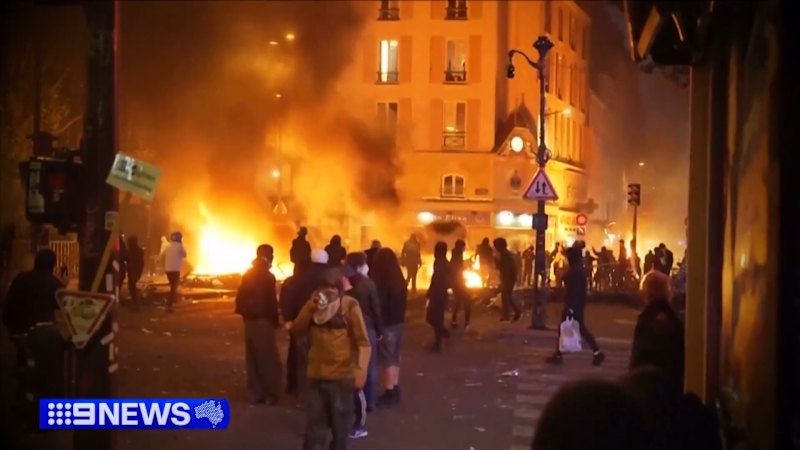
To understand why troops are stationed near luxury boutiques in Lombardy while riot police fire tear gas in Paris and Berlin, you have to look past the immediate slogans on the placards. European street protests rarely ignite over a single policy failure anymore. Instead, they operate as pressure valves for a compounding series of economic and political shocks that have eroded household purchasing power over half a decade.
Energy costs remain structurally higher than their pre-2022 baselines, quietly eating into disposable income even when headline inflation figures cool down. Housing shortages in major urban centers have turned rent into an existential crisis for younger workers and students. Simultaneously, national governments are tightening fiscal belts to meet European Union debt rules, cutting subsidies and public services at the exact moment citizens feel most exposed.
When a specific trigger occurs—whether a controversial labor reform, a foreign policy decision, or an environmental mandate—the resulting crowd is a coalition of the exhausted. Labor unions march alongside climate activists, student groups, and anti-austerity networks. This convergence makes the demonstrations massive, decentralized, and notoriously difficult for traditional police intelligence to predict.
Why Milan Matters More Than Most Capitals
Milan is not Italy’s political capital, yet it sits at the center of the country’s security calculus. As the engine of Italian finance, fashion, and manufacturing, any disruption in Milan carries an immediate economic price tag. The city’s layout—dense historic streets radiating outward from the Piazza del Duomo—creates natural bottlenecks where a peaceful march of twenty thousand people can quickly paralyze commercial transit.
Italy has utilized military personnel for domestic street patrols for years under initiatives like Operation Safe Streets (Strade Sicure), originally launched to deter street crime and guard sensitive infrastructure. Over time, however, the mission creep has become unmistakable. Soldiers armed with assault rifles now routinely backstop local Carabinieri and municipal police during high-tension political demonstrations.
The visual optics are deliberate. Placing camouflage-clad troops around symbolic landmarks is a form of preventative deterrence designed to raise the psychological cost of property destruction before a single window is broken. Yet, veteran security analysts point out a glaring flaw in this strategy. Soldiers are trained to neutralize threats with decisive force, not to absorb insults and manage fluid, chaotic crowds without escalating violence.
The Quiet Militarization of European Public Order
What is happening in Milan reflects a broader doctrine taking hold across European interior ministries. Facing chronic recruitment shortages in municipal police departments and rising burnout among riot squads, governments are leaning on military reserves and paramilitary gendarmeries to plug the gap.
Consider how European crowd control has evolved over the past ten years:
- Buffer Zones and Hard Perimeters: Rather than allowing protests to pass within sight of parliaments or financial exchanges, authorities now establish multi-layered exclusion zones miles away, staffed by overlapping agencies.
- Surveillance Integration: Drone networks, facial recognition trials, and real-time mobile phone tracking allow commanders to map crowd density and isolate suspected organizers before marches even reach their starting points.
- Preemptive Restrictions: Interior ministries increasingly rely on administrative bans, rerouting marches through industrial districts where they cause zero disruption—and receive minimal media coverage.
These tactics succeed in protecting glass storefronts and government facades, yet they often backfire politically. When citizens see soldiers guarding central plazas, the state appears brittle rather than strong. It reinforces the exact narrative that drives many protesters into the streets in the first place—that an out-of-touch political class relies on armed force because it has lost democratic consent.
The Economic Toll of Constant Containment
Maintaining a permanent security perimeter across dozens of European cities is staggeringly expensive. Every major weekend mobilization requires thousands of hours of overtime pay, fuel for armored transport, logistical coordination, and intelligence monitoring. Those costs fall directly onto municipal and national budgets already strained by debt servicing and defense commitments.
There is also a quieter, secondary economic drag. Tourism and retail sectors in historic city centers suffer predictable slumps whenever images of armored vehicles and barricaded squares circulate on international news feeds. Business owners in central Milan, Barcelona, and Brussels frequently complain that heavy-handed lockdowns choke off foot traffic far more effectively than the protesters themselves ever could.
The Intelligence Blind Spot
Traditional protest movements had clear hierarchies. Police commanders could pick up the phone, call a union boss or a student federation president, and negotiate a march route, stewarding arrangements, and a dispersal time. Both sides had an interest in keeping the event orderly.
Modern European protests largely reject that structure. Mobilizations organized through encrypted messaging channels lack formal leadership capable of enforcing discipline on the street. When a march has no designated marshals, small factions intent on confrontation can easily hijack the momentum of thousands of peaceful participants.
Security services have struggled to adapt to leaderless networks. Unable to negotiate with an algorithm or a Telegram channel, interior ministries default to overwhelming physical presence. The result is a self-fulfilling prophecy: heavy militarization attracts confrontational elements looking for a spectacle, which in turn justifies even heavier deployments the following month.
The Democratic Friction of Domestic Deployments
Civil liberties organizations and legal scholars across the European Union have spent years warning about the normalization of emergency powers. Laws passed to counter terrorism or manage public health emergencies rarely disappear once the immediate threat subsides; instead, they are repurposed for routine public order management.
In France, expanded administrative powers allow prefects to ban demonstrations on broad grounds of potential public disorder. In Italy, successive governments have introduced tougher criminal penalties for blocking roads or resisting public officials during protests. In Germany and the United Kingdom, new regulations target disruptive protest tactics with preemptive arrests.
Supporters of these measures argue that democracies have an absolute duty to protect critical infrastructure, maintain freedom of movement for non-protesting citizens, and prevent small radical minorities from holding cities hostage. That argument carries genuine weight. A shopkeeper whose livelihood is destroyed during a riot cares very little about the sociological root causes of the demonstrators' grievances.
However, squeezing the space for lawful, visible dissent creates a dangerous pressure cooker. When peaceful marches are pushed to the margins of cities and surrounded by armed troops, moderate citizens stop attending. The streets are left exclusively to the most radicalized fringes, hardening the divide between the public and the institutions meant to represent them.
A Strategy Without an Exit Ramp
The most troubling aspect of soldiers guarding the center of Milan is the total absence of an exit strategy. Military deployments are meant to buy time while political leaders address the underlying grievances driving people into the streets. Right now, European governments are using troops as a substitute for political resolution.
Fiscal constraints leave national leaders with almost no room to offer major economic relief. Geopolitical pressures demand higher defense spending, not expanded social safety nets. Deepening political polarization makes legislative compromise nearly impossible. Without the ability to ease the economic pain fueling the unrest, governments are left with only one reliable lever to pull: containment.
Every weekend that passes with armored vehicles parked beside cathedral squares lowers the threshold for the next deployment. A generation of Europeans is growing up viewing armed soldiers at train stations and civic centers as an unremarkable backdrop to daily life. Once a democracy accepts that permanent military deterrence is required to keep its own cities quiet, taking the troops off the streets becomes an act of political courage few leaders are willing to risk.