The mainstream geopolitical press is hypnotized by a fairy tale. When Turkey announced its intentions regarding aerospace infrastructure in Somalia, the headlines practically wrote themselves. Analysts rushed to their keyboards to regurgitate the same lazy thesis: Ankara is building a equatorial spaceport to bypass its domestic geographic limitations, tap into optimal orbital physics, and secure a slice of the global satellite economy.
It is a beautiful, deeply flawed fantasy. If you found value in this article, you should check out: this related article.
If you believe Turkey is spending an estimated $350 million in Mogadishu just to exploit the Earth's rotational velocity, you are falling for a classic geopolitical shell game. The "equatorial advantage" narrative is a mathematically true but logistically irrelevant smoke screen. Ankara is not building a gateway to the stars in the Horn of Africa. Turkey is anchoring its permanent military, maritime, and economic hegemony in the Indian Ocean, using rocket boosters as the ultimate diplomatic camouflage.
To understand why the standard analysis is completely wrong, we have to look past the orbital mechanics and stare directly at the harsh realities of aerospace logistics, local stability, and raw naval power. For another angle on this story, check out the latest coverage from Ars Technica.
The Equator Myth and the $350 Million Lie
Let us dismantle the physics argument first. Geopolitical commentators love to point out that launching from the equator provides a natural velocity boost of roughly 465 m/s due to the Earth's rotation. This reduces the amount of fuel required to reach Geostationary Transfer Orbit (GTO). For a country like Turkey, whose domestic territory sits between 36° and 42° North latitude, launching heavy payloads southward over the Mediterranean or eastward over densely populated neighbors is a diplomatic and physical nightmare.
On paper, Somalia looks perfect. It boasts a massive eastern coastline sitting right on the equator. But space program architecture is not a textbook physics problem solved in isolation. It is a brutal exercise in supply chain security.
I have spent years analyzing aerospace infrastructure deployments, and I can tell you that successful spaceports require an incredibly dense, highly specialized ecosystem. You need cryogenic propellant production plants. You need ultra-high-purity nitrogen and helium supply lines. You need cleanrooms that meet cleanroom class ISO 5 standards. Most importantly, you need a highly skilled, specialized workforce of thousands of technicians, safety officers, and engineers willing to live and work at the facility.
Now look at Mogadishu.
The city lacks reliable baseline electrical grids, let alone the infrastructure required to support a modern spaceport. Every single component—from the launch pad’s flame deflector plates to the liquid oxygen storage tanks—must be imported.
- The Logistical Nightmare: If a critical valve fails during a launch countdown in French Guiana (Arianespace’s base), a replacement can be flown in or sourced from deeply integrated Western supply chains. If that happens in Somalia, the entire operation grinds to a halt.
- The Talent Vacuum: Aerospace engineers do not relocate their families to active conflict zones or semi-stable states because of a nice equatorial breeze. Turkey would have to fly its entire workforce in on rotating shifts, creating a hyper-fragile, unsustainable human supply chain.
Turkey is an elite manufacturing hub, but it cannot bend reality. Building a fully functional, commercially viable orbital launch complex in Somalia would not cost the heavily reported $350 million. It would cost billions, take decades, and remain a permanent target for local militant factions like Al-Shabaab.
What the "People Also Ask" Crowds Get Completely Wrong
When people search for information on this project, the questions reveal how deeply the public has swallowed the cover story.
"Can Turkey launch rockets from its own territory?"
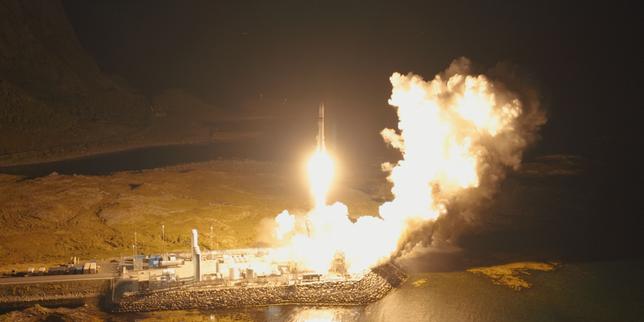
Yes, but with massive limitations. Turkey's Roketsan has successfully launched suborbital sounding rockets from its Test Center in Kırklareli. However, full orbital launches require vast downrange drop zones for spent rocket stages. Launching East from Turkey means dropping burning metal onto Iran or Central Asian states. Launching South means flying over the powder keg of the Middle East.
But the flawed premise here is assuming that a Somali base solves this. Shipping volatile solid rocket motors or delicate liquid-fueled stages across thousands of miles of pirate-infested waters just to launch them from a volatile coast does not decrease your risk profile. It multiplies it exponentially.
"Why is Somalia partnering with Turkey on aerospace?"
The common answer is "technology transfer and economic development." This is pure fiction. Somalia does not have the educational pipeline or industrial base to absorb aerospace technology transfer.
The brutal reality? Somalia is trading access to its strategic coastline in exchange for hard currency, military protection, and drone-backed security guarantees. Turkey has been training Somali soldiers at the TURKSOM facility since 2017. Ankara is not exporting rocket science to Mogadishu; it is exporting security in exchange for a sovereign footprint.
The True Agenda: Naval Chokepoints and African Trade
If the spaceport is a logistical absurdity, why is President Recep Tayyip Erdoğan actually pursuing it?
The answer lies on the water, not in the clouds.
[Bab-el-Mandeb Strait] ---> 10% of Global Maritime Trade
       |
[Gulf of Aden / Somali Coast] ---> Turkey's Deep-Water Footprint
       |
[Indian Ocean Access] ---> Direct Leverage Over Red Sea Shipping Lanes
Look at the map. Somalia sits on the rim of the Gulf of Aden, commanding the entrance to the Red Sea and the Bab-el-Mandeb Strait. This is one of the most critical maritime chokepoints on the planet, carrying over 10% of global seaborne trade and a massive chunk of Europe's energy supplies.
By establishing a massive, heavily fortified "aerospace facility" protected by Turkish military personnel, Ankara achieves several objectives that have nothing to do with satellites:
1. Permanent Naval Power Projection
Under the guise of protecting high-value space assets, Turkey can justify the permanent deployment of advanced air defense systems (like the Hisar class), radar installations, and major naval surface combatants along the Somali coast. This is not a launchpad; it is a forward operating military base with an incredibly expensive PR campaign.
2. Geopolitical Leverage Against Regional Rivals
The Horn of Africa is a geopolitical chessboard. The UAE, Saudi Arabia, Egypt, and Qatar are all competing for influence, ports, and military bases in the region. By securing a massive territorial concession for "space exploration," Turkey locks down a massive piece of real estate that its rivals cannot touch without provoking an international incident.
3. The Ultimate Dual-Use Cover Story
If Turkey tries to build a massive, offensive military garrison on the Indian Ocean, the international community, regional neighbors, and domestic critics raise alarm bells. But if Turkey builds a spaceport, it frames the venture as a peaceful, high-tech leap forward for an emerging Muslim superpower. It is the ultimate dual-use loophole. The tracking radars used for satellite launches are fundamentally the same systems used for long-range ballistic missile tracking and maritime surveillance.
The Risks of the Contrarian Reality
Let us be completely fair: this strategy is brilliant, but it is incredibly dangerous. Ankara’s plan relies entirely on maintaining a delicate balance in one of the most unstable regions on earth.
If Turkey treats the space facility purely as a military stronghold masquerading as a science center, they risk alienating local federal member states in Somalia who feel bypassed by the central government in Mogadishu. Furthermore, dragging its rivalry with nations like the UAE into a hot security zone could turn this alleged spaceport into a magnet for proxy warfare.
But the biggest risk is financial. If Turkey actually tries to launch orbital vehicles from Somalia to save face and validate the lie, they will bleed capital. The cost per kilogram of launching from a hyper-remote, insecure, imported infrastructure base will far exceed the costs offered by established commercial players like SpaceX or even India’s ISRO.
Stop Looking at the Sky
The Western defense establishment needs to stop analyzing Turkey's space agency (TUA) budgets through the lens of Cape Canaveral or Baikonur.
Turkey is playing a 19th-century game of naval containment wrapped in 21st-century techno-nationalist rhetoric. Every dollar earmarked for the Somali space program is a dollar spent on securing Turkey's seat at the table of Indian Ocean maritime masters.
The next time you see a slick rendering of a Turkish rocket lifting off from a pristine Somali beach, ignore the exhaust trail. Look instead at the radar domes, the naval docks, and the security perimeter surrounding the pad. That is where the real power is being built.