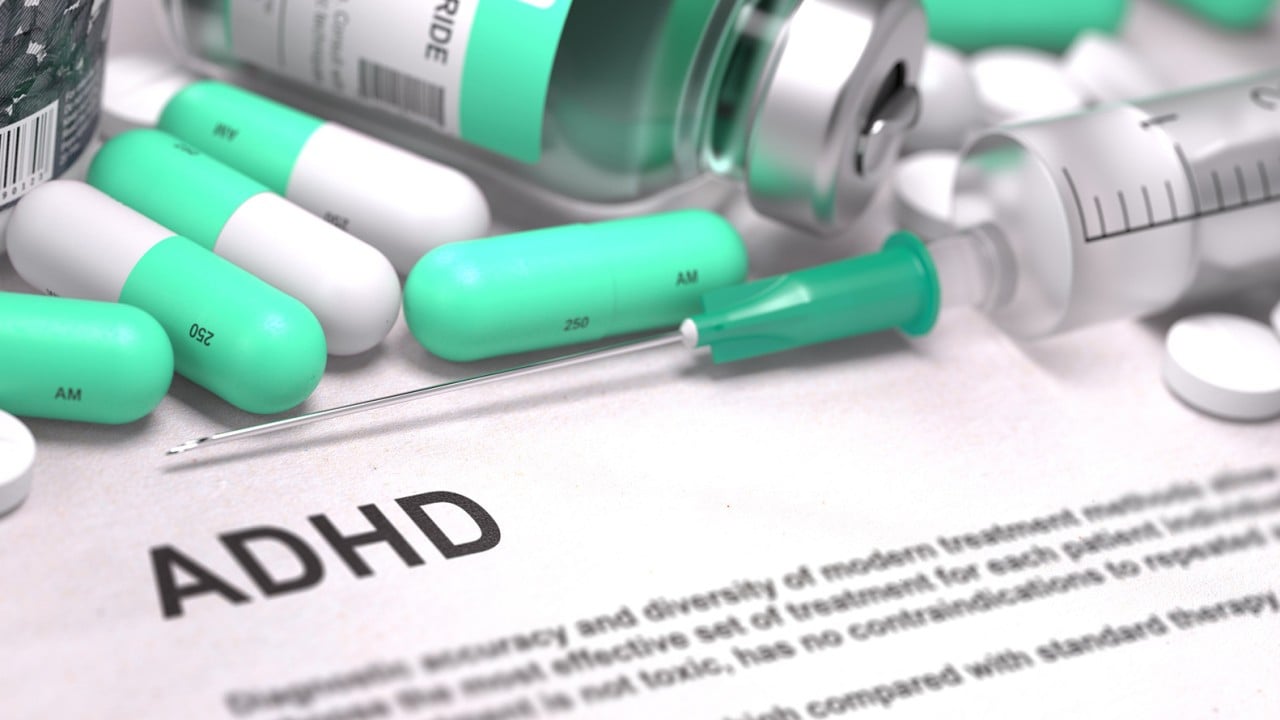
Every November, right on schedule, South Korean regulators stage a press-friendly war against black-market study drugs.
They scrub a few hundred social media listings. They issue stern warnings about illegal methylphenidate sales. The mainstream media dutifully prints the press releases, patting the Ministry of Food and Drug Safety on the back for protecting the youth ahead of the Suneung, the nation’s brutal college entrance exam. For a more detailed analysis into this area, we suggest: this related article.
And every single year, nothing changes.
If you actually look at how prescription stimulants circulate through Gangnam’s cram schools, you realize the annual online crackdown isn't stopping the crisis. It is pure security theater. By focusing exclusively on sketchy Telegram dealers and online posts, regulators are swatting at mosquitoes while ignoring the systemic factory manufacturing the demand—and the licensed clinics quietly feeding it. For further information on this development, in-depth analysis can also be found at Mayo Clinic.
The Lazy Consensus About "Study Drugs"
Standard reporting on South Korea’s exam pill phenomenon follows a predictable, comforting script. Bad actors online exploit anxious teenagers and desperate parents by hawking ADHD medications as "smart pills." The government steps in, deletes the posts, and warns parents about side effects like insomnia and heart palpitations.
This narrative is lazy because it frames the problem as a supply-side aberration caused by internet scammers.
It ignores the glaring reality of the Korean healthcare and education markets. You do not get an explosion in black-market methylphenidate without a massive, legally sanctioned pipeline generating the excess supply in the first place. When a country sees a multi-fold spike in juvenile ADHD diagnoses concentrated almost exclusively in ultra-wealthy, hyper-competitive school districts, you aren't looking at a sudden neurological epidemic. You are looking at medicalized academic doping.
The Pharmacology Nobody Wants to Explain
Before we dissect the hypocrisy of the crackdown, let's get the biology straight. Most articles lump all "exam pills" together as vague brain boosters. That is medically illiterate.
The primary drugs driving this market are central nervous system stimulants—specifically methylphenidate (sold under brand names like Ritalin and Concerta) and, to a lesser extent in Korea due to stricter bans on amphetamines, off-label eugeroics like modafinil.
Here is how methylphenidate actually works in the brain:
- Dopamine and Norepinephrine Reuptake Inhibition: It blocks the transporters that clear dopamine and norepinephrine from the synaptic cleft, artificially flooding the prefrontal cortex with these neurotransmitters.
- Arousal vs. Intelligence: Norepinephrine spikes alertness and wakefulness. Dopamine increases task salience—meaning it makes boring, repetitive tasks feel artificially rewarding.
- The Cognitive Illusion: In individuals with genuine Attention-Deficit/Hyperactivity Disorder, this corrects a baseline neurochemical deficit, bringing executive function up to normal levels. In neurotypical students, it does not raise IQ. It does not improve fluid intelligence, creative synthesis, or long-term memory consolidation.
Research from institutions like the University of Cambridge and Harvard has repeatedly demonstrated this catch. Stimulants make healthy brains feel smarter because they increase motivation and stamina. A student on methylphenidate can stare at a practice test for fourteen hours without feeling bored. Meanwhile, their actual cognitive flexibility—the ability to pivot and solve novel, complex problems—often degrades.
When students take these pills for the Suneung, they aren't buying intelligence. They are buying chemical endurance to survive an inhumane study schedule.
Why Online Sweeps Are a Gift to Offline Dealers
I have spent years analyzing pharmaceutical diversion and gray-market compliance across East Asia. Every time a regulatory body announces a "crackdown on online listings," two things happen immediately on the ground.
First, the amateur sellers vanish. The panicked university student trying to sell half a bottle of Concerta on a public forum gets scared off. The regulators tally those deleted URLs, put them in a press release, and declare victory.
Second, the real distribution networks simply move deeper into encrypted channels and offline word-of-mouth circles. In neighborhoods like Daechi-dong, nobody needs to search public social media to find stimulants. The information travels through private parent group chats and hagwon (private academy) whisper networks.
Worse, scrubbing public listings actually helps entrenched dealers by eliminating their competition and driving up street prices. When parents believe a drug is scarce and fiercely policed, their panic-buying intensifies. I have seen this exact pattern play out across multiple Asian markets: enforcement theater inflates the perceived value of the contraband while leaving the core supply chain untouched.
The Elephant in the Psychiatric Clinic
If regulators actually wanted to stop healthy teenagers from taking Schedule II-equivalent stimulants, they wouldn't be bragged-about scraping websites. They would be auditing prescription data by zip code.
Let’s look at the mechanics of legal diversion. Under South Korea's National Health Insurance system, every prescription is tracked. The government knows exactly which clinics are diagnosing ADHD at ten times the national average. They know which psychiatrists are writing prescriptions for maximum dosages of extended-release methylphenidate right before midterm exams and the November Suneung, only for those "patients" to magically stop needing their medication in December.
Why doesn't the crackdown target those clinics with aggressive license revocations?
Because going after licensed doctors and wealthy, politically connected parents is messy. It triggers legal battles over medical autonomy. It forces the government to confront the fact that the Suneung itself has become a public health hazard. Deleting a thousand anonymous posts on X or Naver takes an afternoon and makes for a great evening news segment. Shutting down a boutique psychiatric clinic in Gangnam starts a war.
Answering the Questions Parents Are Actually Asking
When anxious parents search for information about exam pills, they are usually asking the wrong questions. Let's dismantle the most common myths circulating in parent forums.
"Do study pills actually improve Suneung scores?"
No. If your child does not have ADHD, stimulants will likely hurt their performance on high-level reasoning sections. The Suneung is notorious for "killer questions" that require lateral thinking and deep conceptual integration. Stimulants induce cognitive tunnel vision. Your child will spend forty minutes obsessively perfecting their notes on a single passage while running out of time on the rest of the exam. Furthermore, the crash that follows a stimulant binge destroys sleep architecture, which is the exact biological mechanism the brain uses to turn short-term studying into long-term recall.
"Isn't a prescription from a real doctor safe?"
A prescription pad does not alter human neurochemistry. When a doctor writes an off-label or fabricated diagnosis to give a neurotypical teenager methylphenidate, the cardiovascular and psychiatric risks remain identical to buying it off the street—minus the risk of counterfeit fentanyl or rat poison, which is admittedly a massive difference. However, chronic stimulant use in a developing adolescent brain carries severe risks: severe anxiety disorders, rebound depression, substance dependence, and sudden cardiac events under extreme sleep deprivation.
"What is the actual alternative to survive the exam?"
If you want a genuine, legal cognitive edge that doesn't fry your child's dopamine receptors, look at sleep architecture and metabolic stability. Strategic napping (20-minute non-sleep deep rest protocols), strict circadian anchoring, and eliminating high-glycemic sugar spikes during study marathons outperform stimulants on memory retention tests every single time. It isn't sexy, and you can't buy it in a blister pack, which is why nobody wants to hear it.
The Uncomfortable Truth About the Suneung Economy
To be completely fair to the regulators, they are fighting a losing battle against a cultural juggernaut. You cannot easily police a black market when the entire society rewards the exact behavior the drugs facilitate.
South Korea's educational system treats human beings like servers that just need more overclocking. When a teenager's entire adult trajectory—their university, their corporate career, their marriage prospects—hinges on a single eight-hour test taken on one Thursday in November, taking a pill to stay awake until 3:00 AM doesn't look like substance abuse to a desperate family. It looks like a rational investment.
Admitting this is the downside to any policy critique: there is no regulatory silver bullet. Even if the Ministry of Food and Drug Safety jailed every online dealer tomorrow and suspended fifty reckless psychiatrists, the demand wouldn't evaporate. Students would simply pivot to dangerous megadoses of caffeine, imported nootropics, or unapproved foreign pharmaceuticals routed through gray-market parcel forwarders.
Stop Applauding the Press Releases
The next time you read a headline praising South Korean authorities for deleting thousands of illegal exam pill advertisements, look past the numbers.
Ask why the headlines never mention how many doctors lost their medical licenses for fraudulent ADHD diagnoses. Ask why the government still relies on reactive keyword scraping instead of real-time prescription monitoring triggers that automatically flag geographic anomalies.
Until regulators are willing to bite the hand of the medical-academic complex feeding this crisis, the annual November crackdown is nothing more than a PR stunt. The dealers know it, the doctors know it, and the kids swallowing pills in the back of Daechi-dong study rooms definitely know it.