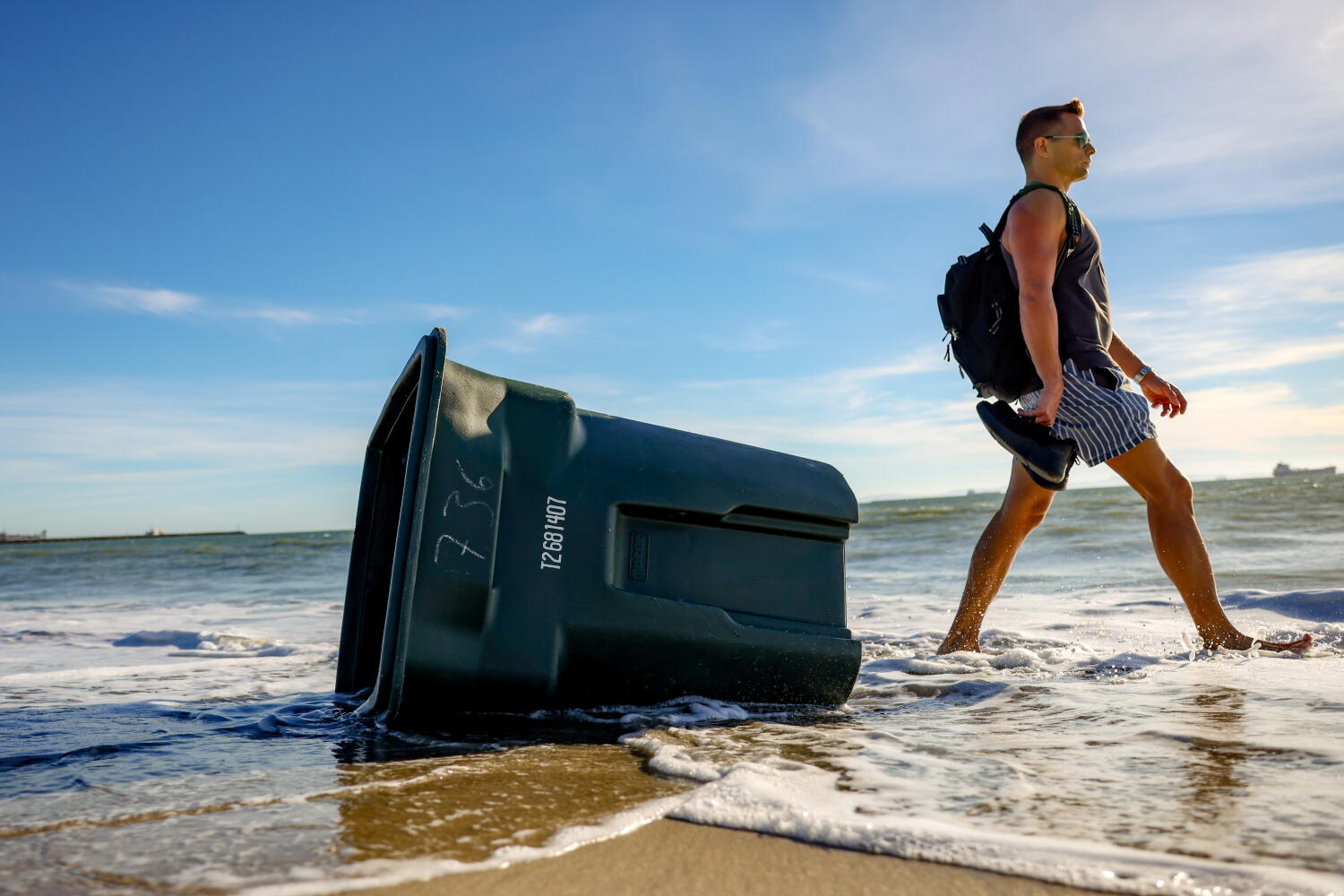
Every winter, the exact same headline gets recycled across local newsrooms from Santa Barbara to San Diego. "SoCal coast under siege from extreme sea levels." The B-roll is always identical. Water sloshing over a concrete seawall in Newport Beach. A lifeguard tower leaning at a tragic angle in Venice. Sandbags piled lazily outside a multimillion-dollar beachfront duplex in Malibu.
It makes for great television. It also completely misdiagnoses the problem.
The lazy consensus is that California’s coastline is suddenly under attack by an unprecedented, unstoppable oceanic invasion. Journalists love the word "siege" because it implies an external aggressor victimizing innocent coastal infrastructure. It absolves decades of catastrophic urban planning, reckless real estate speculation, and rigid coastal engineering.
Here is the reality nobody wants to print. Southern California is not being invaded by the ocean. We paved over a dynamic, breathing sediment transport system, froze a moving shoreline in concrete, and are now acting shocked when physics refuses to honor property lines.
The Myth of the Static Beach
To understand why the "under siege" narrative is intellectually bankrupt, you have to understand what a beach actually is. Most people, including the reporters writing these weather alerts, view a beach as a permanent geographical feature. A place you own. A fixed boundary where the dirt stops and the water starts.
Geologically, a beach is a river of sand.
In Southern California, sand does not just sit there. It is delivered from inland mountains by coastal rivers and creeks during winter rains. Once it hits the ocean, wave energy pushes it southward along the coast in what coastal engineers call littoral drift. Throughout the year, beaches breathe. Gentle summer swells push sand onshore, creating wide, flat, sun-baked playgrounds. Violent winter storms, driven by North Pacific low-pressure systems, strip that sand away and pull it offshore into submerged sandbars. Those sandbars then act as natural speed bumps, tripping incoming waves before they can slam into the bluffs.
When those waves coincide with king tides—the predictable, astronomical high tides that occur when the sun, moon, and Earth align—water levels spike. Add a strong El Niño event, which warms the eastern Pacific and causes thermal expansion of the water column while shifting storm tracks southward, and you get dramatic coastal flooding.
None of this is a surprise. We have known the astronomical tide charts years in advance. We have understood littoral cell dynamics since the mid-twentieth century.
Yet every time a king tide meets a winter swell, the media frames it as a freak natural disaster. I have spent years watching municipalities dump millions of dollars into emergency sand-pushing operations every single January, building temporary berms with bulldozers only to watch the ocean erase them in forty-eight hours. It is theater. Expensive, taxpayer-funded theater designed to protect structures that had no business being built on active sand spits in the first place.
We Starved the Coast Before the Water Ever Rose
If you want to know why winter swells are suddenly eating Pacific Coast Highway and flooding Balboa Peninsula, stop looking exclusively at the tide gauge and start looking inland.
Over the last century, we systematically starved Southern California’s beaches of their raw material. To build the sprawling metropolis of Los Angeles and its surrounding counties, we channelized the rivers. The Los Angeles River, the San Gabriel River, the Santa Ana River—we encased them in concrete and threw up debris basins and flood-control dams across the San Gabriel and San Bernardino mountains.
Those dams did their job. They stopped inland neighborhoods from flooding. They also trapped millions of cubic yards of sand and gravel behind concrete walls.
Consider the data from the United States Geological Survey (USGS) and researchers at the Scripps Institution of Oceanography. By damming coastal watersheds and paving over alluvial plains, human development cut off roughly half of the natural sand supply that used to feed Southern California’s littoral cells.
Think about what that means. Before climate-driven sea-level rise even became a measurable factor on local tide gauges, we put the coastline on a starvation diet. A wide beach is the ultimate shock absorber. It dissipates wave energy across hundreds of feet of gradual slope. When you cut off the sand supply, the beach narrows. The slope steepens. Waves no longer lose their energy gently rolling up a wide shore; they slam directly into coastal bluffs, boardwalks, and foundations at full force.
When a reporter tells you that extreme sea levels are tearing up the coast, they are leaving out the first half of the crime scene. The ocean did not suddenly get stronger. We stripped the coastline of its armor and left it naked in front of winter storms.
The Seawall Trap
When sand disappears and waves start lapping at backyards, coastal property owners inevitably reach for the same blunt instrument: armoring. Seawalls, revetments, riprap boulders.
On paper, a seawall looks like a decisive victory. You drop ten-ton granite boulders in front of your house, or pour a thirty-foot vertical concrete wall, and the waves bounce right off. Your living room stays dry. Problem solved.
Except in coastal engineering, you never actually solve wave energy. You just redirect it.
When a wave hits a sloping sandy beach, its energy is absorbed through friction and percolation. When that same wave hits a vertical concrete seawall, the energy is reflected straight down and outward. That reflected turbulence scours the sand directly in front of the wall, digging a deeper trench right at the base of the structure. Simultaneously, the wall blocks the natural erosion of the coastal bluff behind it—the exact bluff that was supposed to crumble and supply new sand to the beach.
Geologists call this passive erosion and active scour. The result is mathematically guaranteed: wherever you build a seawall, the beach in front of it eventually vanishes.
Gary Griggs, a distinguished professor of Earth and Planetary Sciences at UC Santa Cruz who has spent over fifty years studying the California coast, has documented this phenomenon relentlessly. You can see it playing out in real time along stretches of Solana Beach, Encinitas, and Malibu. First, one homeowner builds a seawall. The beach in front of their house disappears, and the wave energy deflects onto the neighbor's unarmored lot, accelerating their erosion. Panic ensues. The neighbor builds a wall. Within twenty years, an entire stretch of public coastline is transformed from a sandy beach into a submerged concrete canyon.
And here is the punchline: those walls are temporary. Saltwater is relentless. Rebar rusts, concrete spalls, waves overtop the crest during king tides, and scour undermines the footing. Seawalls do not save beaches. They kill beaches to buy private real estate a few extra decades of borrowed time.
Why "Beach Nourishment" Is a Ponzi Scheme
Whenever coastal cities realize that seawalls are destroying their tourism economy, they pivot to the second favorite consensus solution: beach nourishment.
The pitch is seductive. If the beach is out of sand, let’s just dredge millions of cubic yards from offshore deposits and pump it onto the shore. Everyone wins. Homeowners get a wider buffer, tourists get a place to lay their towels, and politicians get a ribbon-cutting ceremony.
I have seen regional coalitions burn tens of millions of dollars on nourishment projects in San Diego County and Orange County, and the cold, hard truth is that pumping sand onto an eroding coastline is like painting a house while it is on fire.
Sand has no loyalty to municipal boundaries. The moment you dump offshore sand onto a beach in Oceanside or Imperial Beach, littoral drift immediately begins sweeping it down the coast. If you do not address the underlying deficit—the trapped sediment behind inland dams and the wave-reflecting seawalls—that newly pumped sand washes away in a fraction of the time promised in the environmental impact reports.
Worse, offshore sand is not infinite. Dredging marine sandbars disrupts benthic ecosystems, buries kelp beds, and alters local wave breaks. As sea levels continue to creep upward—even by the conservative estimates of a foot or two over the coming decades—the volume of sand required just to maintain current beach widths increases exponentially. You have to pump more sand, more often, at a higher cost per cubic yard, while competing with every other coastal city bidding for the exact same fleet of dredging vessels.
It is an infrastructure treadmill that never stops accelerating.
Dismantling the Questions Everyone Is Asking
When these "siege" headlines hit the front page, search engines light up with the same predictable questions from terrified residents and curious onlookers. Most of those questions are built on flawed premises. Let’s strip them down.
"How can we stop coastal flooding in Southern California?"
You cannot stop it. Framing the issue around "stopping" the ocean is the exact mindset that got us into this mess. Coastal flooding during king tides and El Niño storms is not a system malfunction; it is the baseline operating condition of the Pacific Rim. The only way to stop flooding low-lying coastal zones is to build massive, Dutch-style sea dikes across every harbor mouth and beach town from Point Conception to the Mexican border. Doing so would destroy the surf breaks, wipe out coastal ecosystems, bankrupt the state, and turn world-famous beach towns into depressing concrete basins. You do not stop coastal flooding. You get out of its way.
"Are Southern California beach homes going to fall into the ocean?"
Some of them already are, and plenty more will. Look at the San Clemente coastal rail corridor, where massive landslides have repeatedly shut down the only passenger and freight rail link between Los Angeles and San Diego. Look at the bluff-top homes in Isla Vista or Del Mar teetering over undercut sandstone cliffs. If a structure sits on an actively eroding marine terrace or a low-lying barrier spit like the Balboa Peninsula, its lifespan is finite. Insurance markets are already pricing this in, quietly retreating from high-risk coastal zones long before politicians admit defeat.
"Is climate change causing these extreme king tides?"
No. King tides are caused by gravity and orbital mechanics. The moon does not care about carbon emissions. What climate change does is raise the baseline water level upon which those king tides and storm surges sit. Over the past century, sea levels along the Southern California coast have risen by roughly six to eight inches. That sounds trivial until you realize that on a flat coastal plain, eight inches of vertical rise translates into dozens of feet of horizontal inland reach during a storm surge. Climate change did not invent the king tide; it just raised the floor so that normal winter storms now clear the threshold of our seawalls.
The Unspoken Trade-Off of Managed Retreat
If seawalls kill beaches and sand nourishment is an endless money pit, there is only one intellectually honest strategy left on the table: managed retreat.
Say those two words at a city council meeting in Malibu, Del Mar, or Laguna Beach, and watch the room erupt. To coastal homeowners, managed retreat sounds like government confiscation. To municipal tax collectors, it sounds like committing fiscal suicide by wiping out the highest-assessed property values in the county.
Let’s be brutally honest about the downsides of managed retreat, because advocates often gloss over the brutal economics. Moving roads, sewer lines, coastal rail tracks, and private homes inland costs billions of dollars upfront. It requires untangling nightmares of private property law, compensating landowners, or watching decades of litigation clog the courts. In cities where beachfront real estate funds local schools and emergency services through property taxes, shrinking the coastal tax base hurts immediately.
There is no painless option here. Every path costs billions. The difference is what you have left to show for it in fifty years.
If we choose armoring, we spend billions of dollars to end up with zero public beaches and a crumbling wall of concrete holding back a slightly higher ocean.
If we choose retreat and sediment restoration, we spend billions to relocate critical infrastructure—like moving the LOSSAN rail corridor into inland tunnels away from crumbling coastal bluffs—while tearing out obsolete seawalls, bypassing sediment around inland dams, and letting beaches migrate naturally inland as water levels rise.
Look at Ventura’s Surfers Point for proof that this actually works. For decades, asphalt parking lots and a bike path at Surfers Point were repeatedly destroyed by winter swells because they were built directly on top of the active cobble and sand berm. Instead of building a massive seawall, the city and local advocates pulled the parking lot and bike path back by sixty-five feet, removed the failing concrete armor, and restored a natural cobble berm and vegetated sand dunes.
When massive El Niño swells and king tides hammered the Ventura coast in recent winters, neighboring armored stretches suffered catastrophic damage. Surfers Point absorbed the blow, flexed with the waves, and kept its beach intact.
Stop Calling It a Siege
Words dictate policy. As long as media outlets describe predictable winter tides and storm surges as an "extreme siege," they reinforce the dangerous delusion that Southern California is an innocent victim fighting an unexpected battle.
It frames concrete seawalls as heroic defenses rather than destructive bandages. It convinces taxpayers to keep subsidizing the reconstruction of low-lying roads and luxury homes in zones that are geologically guaranteed to flood.
The Pacific Ocean is not attacking Southern California. It is simply reclaiming the space we borrowed during a remarkably calm, unusually dry stretch of the twentieth century—a brief meteorological honeymoon that tricked an entire generation of developers into believing the coastline was permanent.
The water is rising, the winter swells are rolling in, and the sand is moving south just like it has for ten thousand years. The only thing under siege is our collective delusion that we can pour enough concrete to tell the Pacific Ocean where to stop.