The water in a flooded cave does not look like the water in a swimming pool. It is not blue. It does not invite you in. It is a thick, churning slurry of pulverized limestone, topsoil, and ripped vegetation, moving with the weight of a freight train through a space no wider than a hallway. When it rises, it does not do so gently. It claims the air.
Most people view cave rescue through the detached lens of a news broadcast. They see the flashing lights of emergency vehicles parked in a muddy field. They see exhausted men and women in neoprene suits, dripping wet, blinking against the glare of television cameras. The crawl on the bottom of the screen provides the cold data: twenty-four hours trapped, rising water levels, three miles deep, successful extraction.
But facts are flat. They strip away the dampness. They mute the terrifying roar of trapped water vibrating through solid rock. To truly understand what happened beneath the earth during the recent, harrowing rescue operation, you have to leave the surface behind. You have to understand what happens to the human psyche when the world narrows down to a single, muddy pocket of trapped air.
The Weight of the Ceiling
Imagine the darkness first. It is absolute. It is a heavy, velvety blindness that exists nowhere else on Earth. If you turn off your headlamp in the deep recesses of a limestone cavern, the dark feels physical, pressing against your eyeballs with an almost tangible pressure.
In this specific rescue, a group of explorers found themselves cut off from the sun by an unexpected deluge. The weather report on the surface had promised clear skies, but nature rarely respects a forecast. A sudden flash flood miles away funneled millions of gallons of runoff into the cave’s intake system. Within minutes, the dry, sandy passage they had walked through became a roaring flume.
Consider the physics of the situation. Limestone caves are formed over millions of years by acidic water dissolving the rock. They are essentially giant, subterranean plumbing networks. When a surge of water hits, it fills the lower conduits first, trapping anyone in the higher, internal chambers. The victims were not injured initially. They were simply out of options. They retreated up a steep, muddy slope inside a chamber called a "bell," watching the muddy water rise inch by inch toward their boots.
This is where the psychological battle begins. The human brain is hardwired for the sky. When you deprive it of the horizon, it begins to loop. Every breath taken inside a sealed cave chamber feels like a countdown. Is the carbon dioxide rising? Is the oxygen bleeding away? The air grows thick, smelling of wet clay and the sharp, metallic tang of fear.
The Mechanics of the Impossible
When the call went out to the rescue community, it did not trigger a massive deployment of heavy machinery. You cannot bring a bulldozer into a subterranean squeeze. You cannot fly a helicopter through a flooded tunnel. Cave rescue is one of the few remaining endeavors where human muscle, raw courage, and specialized knowledge are the only tools that matter.
The divers who arrived at the staging area knew exactly what they were facing. Diving in open water—the ocean, a lake—is about managing depth and time. If something goes wrong, you can almost always make a controlled ascent to the surface. Cave diving removes that luxury. The ceiling is absolute. If your equipment malfunctions, if your vision is obscured by kicked-up silt, or if you panic, you cannot swim up. You have to swim out.
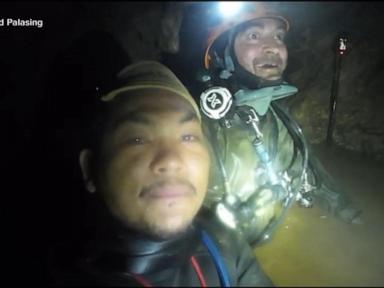
The rescue footage, captured on battered, waterproof cameras, reveals the claustrophobic reality of the operation. The water was so choked with sediment that the divers’ powerful lights could penetrate only a few inches. They were swimming by touch.
To navigate this liquid void, rescuers rely on a guideline—a thin, nylon string snaked through the cave system during previous explorations. The line is life. Lose the line, and you are lost in a labyrinth of blind alleys and false ceilings. The divers had to fight their way against the current, pushing heavy cylinders of breathing gas ahead of them through restrictions so tight they had to remove their gear just to squeeze their bodies through.
But the real challenge was not the journey in. It was the journey out with the survivors.
The Human Package
A frightened human being is a liability in the water. In a flooded cave, a panicked person is a death sentence for themselves and their rescuer. The victims were not trained divers. They were ordinary people who had gone for a hike and ended up in a nightmare. They had spent hours in the dark, shivering from hypothermia, listening to the roar of the water.
The rescuers had to make a choice that defies standard medical protocol but aligns perfectly with the brutal logic of survival. To get the victims through the flooded sections—some of which required navigating submerged tunnels for forty minutes at a time—they had to ensure the survivors could not panic.
The strategy required a level of trust that most people will never have to extend to a stranger. Rescuers fitted the survivors with full-face masks, which seal tightly around the eyes, nose, and mouth, preventing water from entering even if the wearer loses consciousness. They then administered sedatives. It was a calculated risk. The victims needed to be calm enough to allow themselves to be guided through the water like packages, their breathing monitored entirely by the diver swimming beside them.
The video shows this exact moment, stripped of any Hollywood glamor. It is chaotic. It is ugly. A diver emerges from a pool of brown water, gasping for air, hauling a limp, neoprene-clad body. For a second, the viewer wonders if the rescue came too late. The body is hauled onto a muddy ledge by a dozen slick hands. Someone checks a pulse. Someone clears mud from the mask's exhaust valve.
Then, a sharp, ragged breath breaks from the victim's chest. It is a ugly, beautiful sound.
The Anatomy of a Second Chance
The walkout was no easier. Once cleared from the fully submerged sections of the cave, the survivors had to be carried through miles of unstable, slippery passages. The rescue teams formed human chains, passing stretchers from hand to hand over jagged boulders and through deep mud.
Every step was a gamble. The limestone was slick as ice. A single slip could mean a broken bone for a rescuer or a fatal drop for the patient. The energy in the cave during those final hours was a mixture of frantic urgency and forced deliberation. Move fast, because the weather could turn again. Move slow, because a mistake is permanent.
What the standard news reports miss is the aftermath of such an event. The media tents pack up. The cameras are turned off. The mud on the rescuers' gear dries and flakes away into ordinary dust. But for those who were inside, the cave stays with them.
The transition from the absolute darkness of the earth to the blinding light of a hospital room is jarring. The body adapts quickly to survival mode, but the mind takes longer to catch up. Survivors often report a lingering sensitivity to sound, a sudden aversion to tight spaces, and a profound, quiet reverence for the simple act of looking at the sky.
The successful extraction of every single soul from that flooded mountain was not a miracle. Calling it a miracle cheapens the thousands of man-hours, the decades of accumulated caving expertise, and the cold, hard courage of individuals who chose to crawl into a flooded hole in the ground for people they had never met. It was a triumph of human will over fluid dynamics and geology.
Near the mouth of the cave, after the last survivor had been loaded into an ambulance, the rescue site fell quiet. The generators were shut down. The floodwaters inside the mountain continued to churn, invisible and indifferent, carving away at the stone in the dark. On the grass outside, a discarded, mud-caked helmet sat in the sun, its small LED light still switched on, casting a faint, unnecessary glow against the massive, overwhelming brightness of the afternoon.