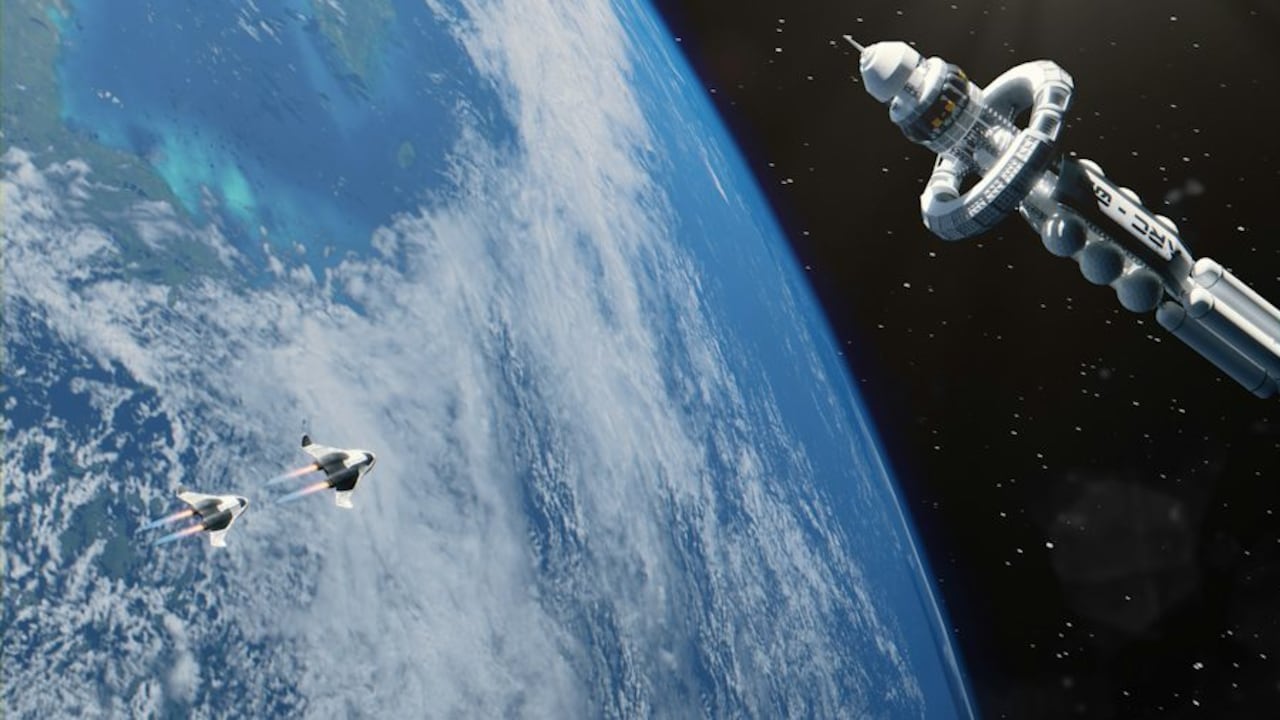
Every five years, someone writes a breathless headline warning that orbital combat is right around the corner. Laser battles. Dogfighting satellites. Kinetic strikes raining down from low Earth orbit. It makes great television. It sells defense conference sponsorships. And it treats orbital mechanics like a video game map where ships can bank left, slam on the brakes, and reload ammo at a space gas station.
They won't. Not like that. Not on that timeline. Also making headlines recently: While We Argue Over Price Tags, Someone Else Is Building the Storm.
The lazy consensus in modern defense commentary rests on two assumptions that sound urgent and look terrifying on a slide deck: first, that geopolitical rivals are racing to weaponize orbit; second, that because modern militaries depend on satellites for navigation, communications, and missile warning, a shooting war in space is both imminent and decisive.
Both assumptions miss the actual physics, economics, and operational trade-offs that govern orbit. When pundits talk about "space war," they usually picture starfighters or dramatic space-to-space duels. What they actually mean—though they rarely stop to unpack the mechanics—is interference, denial, jamming, cyber intrusion, and debris generation. Calling a GPS spoof or a temporary uplink disruption a "space war" is like calling a cut fiber-optic cable a naval battle. Further details on this are covered by USA Today.
I have sat in briefings where defense contractors and strategy consultants spent millions pitching grand orbital architectures that collapsed the moment someone asked a basic question about delta-v, propellant mass, or line-of-sight geometry. People fall in love with the drama of the high ground and forget that getting mass to orbit—and moving it once it gets there—remains brutally expensive and unforgiving.
Defining Terms Before We Panic About Star Wars
Before arguing over timelines, we need precision. "Space" is not a single place. It is a set of distinct orbital regimes with radically different physics, latencies, and economics.
Low Earth Orbit (LEO) generally spans altitudes from roughly 160 to 2,000 kilometers. Satellites here move fast—around 7.5 to 7.8 kilometers per second—completing a trip around the Earth in roughly 90 minutes. That speed gives high-resolution imaging satellites frequent passes and keeps communications latency low, especially in large constellations. It also means a satellite spends most of its time out of sight of any single ground station and moves rapidly relative to targets on the ground or in other orbits.
Medium Earth Orbit (MEO) sits higher, around 20,200 kilometers for systems like GPS. Orbital periods stretch to about 12 hours. The coverage footprint is wide, radiation exposure is harsher in parts of the Van Allen belts, and changing orbits requires serious energy.
Geostationary Orbit (GEO) sits roughly 35,786 kilometers above the equator. At that altitude, a satellite's orbital period matches Earth's rotation, making it appear fixed over a single point on the ground. That makes GEO prime real estate for persistent missile warning, weather monitoring, and high-throughput communications—and it also means assets there sit far away, making detection and interception harder than Hollywood implies.
Then there is cislunar space, stretching toward the Moon. A lot of ink gets spilled about cislunar competition. Most of it is premature for near-term military conflict. Building sustained military logistics out to lunar distances takes years of industrial groundwork and massive capital that no major power is currently dedicating to a five-year war clock.
When people warn that the next war could begin in space within five years, they conflate space-enabled warfare with kinetic space warfare. Modern terrestrial conflicts already rely heavily on space systems for targeting, reconnaissance, and command-and-control. That has been true since the Gulf War in 1991. Using satellites during a war is not the same thing as fighting a war in space.
Why Kinetic Space War Has a Physics and Blowback Problem
Direct-ascent anti-satellite (ASAT) missiles exist. Several countries have demonstrated the ability to boost an interceptor from Earth and hit a target in low Earth orbit. Co-orbital rendezvous and proximity operations (RPO) also exist; satellites can maneuver near other spacecraft to inspect, shadow, or potentially interfere with them.
So why doesn't a five-year timeline guarantee a kinetic space brawl? Three words: orbital mechanics and Kessler syndrome.
First, space is big, fast, and governed by unforgiving conservation laws. Changing a satellite's orbital plane or altitude requires propellant—and propellant is heavy. Every kilogram of fuel you launch requires more fuel to lift it. Unlike an aircraft that uses lift and thrust against air, a spacecraft moves along a trajectory dictated by gravity and velocity. A satellite cannot simply "fly over" to another orbit on a whim without spending significant delta-v, which shrinks its operational life and telegraphs its intentions to anyone tracking radar and optical catalogs.
Second, shooting things in LEO creates clouds of hypervelocity shrapnel. At orbital speeds of roughly 7.5 kilometers per second, even a small bolt or paint fleck carries immense kinetic energy. A kinetic kill in LEO doesn't just destroy your opponent's satellite. It scatters thousands of trackable and untrackable fragments across intersecting paths that can persist for years or decades depending on altitude.
The attacker doesn't get a clean, surgical win in a crowded LEO environment. Their own reconnaissance, communications, and commercial constellations share the same neighborhood. Blinding an adversary by turning your own orbital highway into a minefield is self-sabotage with extra steps.
A kinetic strike in low Earth orbit isn't a precision scalpel. It's tossing a handful of ball bearings into a wind tunnel and hoping they only hit the other guy's face.
Imagine a scenario where a major power launches three direct-ascent interceptors against enemy reconnaissance satellites at 800 kilometers altitude during a regional crisis. Within hours, space surveillance networks track hundreds of new debris objects crossing orbital inclinations used by weather satellites, Earth-observation platforms, and commercial broadband constellations belonging to neutral nations and the attacker's own allies. Diplomatic fallout spikes immediately, commercial insurers panic, and the attacker's own low-altitude assets face heightened collision risk for years. That isn't a clean opening move of a space war. It is an escalatory gamble with massive blowback.
Heavy hitters in orbital dynamics and space policy—from veteran astrodynamics researchers to longtime analysts at institutions like the Center for Strategic and International Studies and the Secure World Foundation—have long pointed out that reversible, non-kinetic tools are far more attractive to military planners than debris-generating explosions. Jamming uplink and downlink frequencies, spoofing signals, dazzling optical sensors with lasers, and launching cyberattacks against ground control stations achieve tactical disruption without permanently poisoning the orbital environment.
The Questions Everyone Gets Wrong
"Won't space be the first domain attacked in a major conflict?"
Probably not with kinetic weapons—and maybe not first at all.
This question assumes a neat, sequential escalation ladder where a war starts cleanly in orbit before touching land, sea, air, or cyber. Real crises rarely follow tidy scripts. Grey-zone friction—GPS jamming, AIS spoofing, cyber intrusions into contractor networks, or close proximity shadowing—already happens below the threshold of open war.
In an actual crisis, a military might degrade an adversary's space links right alongside strikes on air defenses, radar sites, and undersea cables. Space is tightly coupled to terrestrial networks. Ground stations, fiber backbones, power grids, and command centers are often softer, cheaper to target, and easier to hold at risk than a satellite sitting hundreds or thousands of kilometers up.
"Are space lasers and orbital weapons ready to dominate battlefields in five years?"
No. Five years is a blink in heavy aerospace engineering.
Directed-energy weapons in space face brutal power, thermal management, pointing accuracy, and atmospheric or distance attenuation challenges. Generating enough megawatt-class power in orbit without massive radiators, keeping optics aligned across jittering spacecraft, and surviving space weather and countermeasures takes far more than a five-year lab-to-fleet sprint.
Space-based kinetic interceptors—often discussed as kinetic bombardment or space-based missile defense—run straight into cost and architecture math. Putting enough mass into orbit to maintain persistent coverage over moving targets requires huge constellations, constant replenishment, and massive launch cadence. Even with falling launch costs from reusable rockets, physics still charges full price for every kilogram moved between orbits.
"If a war doesn't start in space, why do militaries keep building Space Forces and space commands?"
Because ignoring space is malpractice.
Organizing dedicated military branches and commands for space—such as the U.S. Space Force, established in 2019—isn't about preparing for TIE fighter dogfights. It is about centralizing talent, acquisition, and doctrine for a domain that underpins modern combined-arms warfare. Navigation, timing, missile warning, tactical communications, and battle management all rely on orbital infrastructure.
Giving space its own command structure fixes a real organizational flaw: treating satellites as an afterthought inside air or signal branches instead of core warfighting infrastructure. Bureaucratic reorganization, however, does not compress physics timelines into a five-year war prophecy.
What the Competitor Missed (And Where I Could Be Wrong)
The standard five-year alarmist narrative confuses capability with likelihood. Yes, more nations have anti-satellite tests, rendezvous experience, electronic warfare gear, and space situational awareness tools than they did a decade ago. Yes, competition in orbit is sharper.
What the competitor misses is deterrence by entanglement and cost asymmetry.
Modern space architectures are increasingly commercial and distributed. Proliferated LEO constellations—hundreds or thousands of smaller satellites rather than a handful of multi-billion-dollar monoliths—change the math. Hitting one or two satellites in a massive, resilient constellation doesn't turn off the lights. Meanwhile, blinding or confusing sensors with lasers or electronic warfare can be turned off or adjusted without creating permanent space junk.
Furthermore, attackers face an information problem. Attribution in space is improving thanks to commercial tracking telescopes and radar, and a high-profile kinetic attack broadcasts intent loudly. Quiet disruption—cyber intrusion into ground terminals, radio-frequency interference, or temporary sensor blinding—gives deniability, reversibility, and proportional control that blowing up a satellite simply cannot match.
Now for the part most pundits skip: where this contrarian view can go wrong.
First, desperation breaks rational cost-benefit models. If a regime faces imminent collapse or believes a rival is about to blind its nuclear command-and-control or decisive conventional strike network, leaders sometimes make reckless choices that violate peacetime logic. A bad decision by one desperate commander can trigger kinetic escalation even when the math says it's stupid.
Second, rapid breakthroughs in cheap launch, autonomous rendezvous, or low-power space-based sensors and lasers could shift timelines faster than conservative engineers expect. Military planners who assume "it's hard, therefore nobody will try it" get blindsided when an adversary tries something suboptimal anyway because they see no better option.
Third, even non-kinetic interference in space can have severe cascading effects if it degrades missile warning or naval targeting during a tense standoff. You don't need an explosion in orbit to trigger a real-world crisis on Earth.
Smarter Moves for Leaders Who Actually Care About Space Security
If you run a defense program, a commercial satellite company, or a risk team trying to prepare for the next five years, stop buying doom-scroll scenarios about orbital battlefields. Focus on what actually breaks—and what actually protects systems.
- Harden the ground segment and supply chain first. Most real-world attacks on space systems target ground stations, user terminals, cloud links, and software supply chains—not the spacecraft itself. Fix boring vulnerabilities before funding exotic space hardware.
- Design for graceful degradation, not invulnerability. Assume links will be jammed, spoofed, or delayed. Build autonomous fallback modes, multi-orbit diversity (mixing LEO, MEO, and GEO), and terrestrial alternatives like high-altitude platforms or fiber where appropriate.
- Invest in space traffic monitoring and attribution. Better tracking, open data sharing, and clear norms around safe proximity operations reduce miscalculation. When everyone can see who is maneuvering where, accidental collisions and escalatory misunderstandings drop.
- Price in debris and insurance risk. Commercial operators and defense planners alike need realistic modeling of conjunction risks and regulatory liability. A crowded orbit penalizes sloppy engineering long before a missile ever flies.
- Separate hype from procurement. Demand concrete physics, mass budgets, duty cycles, and test milestones from any vendor pitching space defense systems. If a five-year roadmap waves its hands past power and propellant math, walk away.
The next major conflict won't kick off with dramatic space dogfights in five years because orbital physics is a harsh taskmaster and blowing up satellites hurts everyone in the neighborhood. The real battleground is already here—in jammed signals, hacked ground links, resilient constellations, and the quiet math of keeping vital systems running when someone tries to turn them off. Stop watching for laser beams in the sky, and start fixing the fragile links on the ground.


